"Jesus lads, I'm ecstatic!" – Ciara Mageean is understandably delighted as she speaks to @DavidGillick after sealing a spot in the #WorldAthleticsChamps 1500m final pic.twitter.com/Zf3SrPZS0z
— RTÉ Sport (@RTEsport) October 3, 2019

Health & Wellbeing
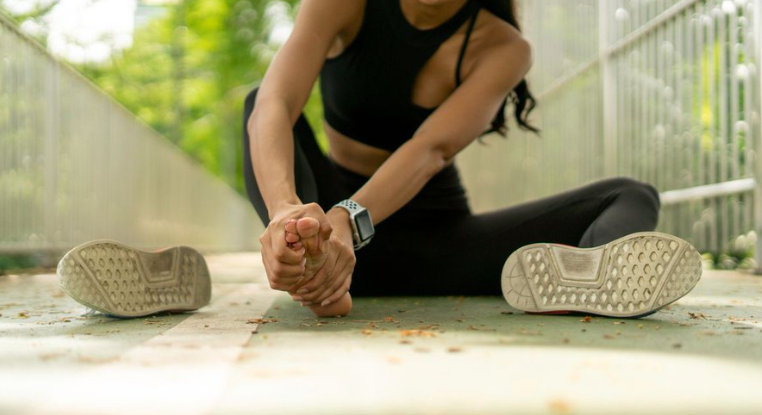
That was the widely held belief among nearly all the women who participated in a recent qualitative study on running footwear needs and preferences. The author of the study, Chris Napier, PT, PhD, Director of Simon Fraser University Run Lab, assembled a group of 21 recreational and competitive female runners ranging from 20 to 70 years old to collect feedback on their experiences with running shoes, in terms of fit, comfort, injury prevention, and performance.
The interviews confirmed what the researchers had suspected: Many mainstream running shoe brands are failing women.
Though the study was small, there are known issues with women’s footwear, which Napier asserts is rooted in the design and testing process. He explains that most major shoe manufacturers use a single foot-shaped form known as a “last” to design their entire line. In most cases, the last is based on male foot anatomy.
Shoes are scaled up and down to create a range of sizes, some of which are marketed to women. But the shoe itself, despite any stereotypically feminine colorways or aesthetic elements, is made for a man’s foot. It’s yet another example of “shrink it and pink it,” a pervasive yet misguided design process that fails to address the unique needs of female consumers. Notably, Lululemon, Altra, and Asics, do use separate lasts to design their women’s running shoes.
Shoe testing is male-centric, too. “Women’s shoes just don’t get the same amount of attention that men’s shoes get,” says Geoffrey Gray, DPT, founder of Heeluxe, a biomechanics lab that specializes in footwear innovation.
“In 2017, when we first started getting really passionate about improving how we analyze women’s footwear, we were testing men’s [running] shoes relative to women’s [running] shoes at a rate of four to one,” he says. The ratio has since improved slightly, and some brands now test as many women’s shoes as they do men’s, but there’s still an imbalance, Gray says.
Testing fewer shoes and using just one last are cost-saving measures that benefit shoe makers, at least in the short term. “If they have a separate last, they have to essentially double their capacity. It’s definitely an additional cost. Companies will just continue to weigh the cost/benefit of having just one last versus two,” Napier says.
Gray points out that women’s voices are often missing from these decision-making conversations. (A global survey conducted by SGI Europe found that just 23.9% of executive positions at sporting goods companies were filled by women.)
He shares a story about working with a brand on a women-specific basketball shoe. “There was a lot of excitement for the women on that team and the athletes we were working with. And then it got up to a middle-aged white guy VP, and he was like, ‘Why are we doing this? We sell plenty of women’s basketball shoes.’” The project was canceled, he says, because the people who understood the value of women-specific weren’t in a position to challenge the status quo.
Brands that want to introduce a broader range of products may encounter resistance at the manufacturing level as well. “Factories don’t like to change,” Gray says. “If they change, there’s a greater chance that things could go wrong, and that’s going to cost them a lot of money. So, a lot of times it isn’t just the footwear brands, it’s the factories that are making the footwear.”
There’s a reason why the male lasts don’t always work for women. In general, women’s feet are more triangular or “pie-shaped” than men’s feet. This means women, on average, have a wider forefoot (ball of the foot) and a narrower heel than men. Women also tend to have higher arches and lower ankle bones and are also more likely to develop bunions.
Additionally, women’s feet can change during pregnancy and postpartum, so they often require different types and sizes of shoes, as well as more cushioning, as they move through various stages of life.
From his study, Napier and his team learned that women found ways to adapt to subpar-fitting shoes. Some women sized up to accommodate their forefoot and used an alternative lacing technique to secure their heel. Others popped in inserts for better cushioning and arch support. Some even wore shoes that were a bit too small because they felt unstable in the next size up. The workarounds helped, but many never had the experience of slipping on a running shoe that truly fit.
While it may not be happening quickly enough, companies are starting to put more time and money into developing running shoes for women. Just less than 10 years ago, Gray says, is when he began having conversations with brands about how their shoes were missing the mark with women.
“It was the first time that we were aware of that these brands, both small and really large, were hearing this information from an independent source,” he says. “They would say, ‘We care about women. We want to win with women,’ but they didn’t have the data to know how much worse women’s shoes are relative to men,” Gray says.
Now that manufacturers know how women’s running shoe needs differ, some companies, like Altra, Asics, and Lululemon, are doing better and using women’s lasts. Hettas, which provided the grant for Napier’s study, Ryka, and Saysh only produce running shoes specifically designed and tested for female runners. Other companies are still using a single last for both men’s and women’s shoes.
When shoe shopping, Napier recommends asking retailers to try on shoes specifically designed for women. “That’s not to say that those will necessarily be the right shoes,” he says. “There’s individuality across each sex.” But it’s a good starting point. (And be sure to wear your running socks when trying on shoes, as sock style can affect fit.)
Gray urges every woman to measure her feet with a 3D foot scan. While there are a number of mobile apps that use your phone’s camera, he says that the in-store machines in specialty running stores are significantly more accurate. Plus, running shoe retailers are familiar with all the available products and trained to use your data to find the best shoe for you.
Also, your feet are always changing, so get them scanned at least once a year, and don’t be afraid to try a different shoe if the one you’ve been wearing is no longer working for you.

Dublin Marathon @dublinmarathon 23 hours ago
To make the most of your final week of training, the @sseairtricity #DublinMarathon official water partner @CelticPureLtd have teamed up with ambassador & ultra-endurance expert @_shanefinn to share their final top training tips  https://bit.ly/2RSGuWy
#ICANIWILL
health.clevelandclinic.org
What Is Passive Stretching?
Relax into this form of stretching while a prop or partner assists you
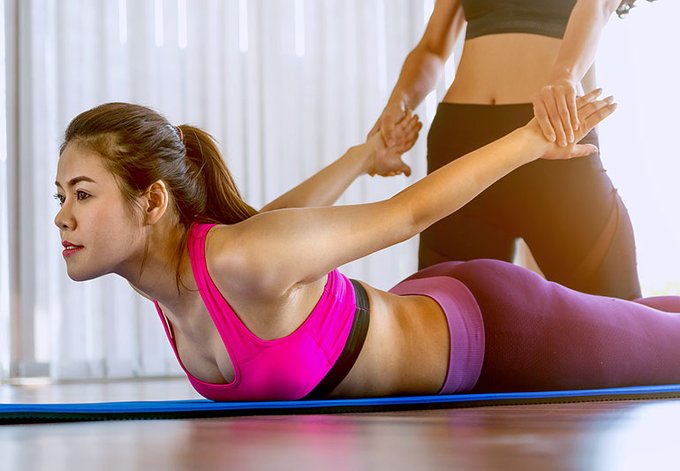
When you think of stretching, you might picture someone sitting on the floor, legs extended, reaching for their toes. But passive stretching takes a different approach. Instead of relying on your own flexibility, you use something (or someone) else to help.
Licensed massage therapist and registered nurse DeBorah Hill, RN, LMT, explains passive stretching and how it can benefit your health.
Most people are familiar with dynamic and static stretching. Static stretching focuses on holding a pose that stretches your muscle as far as you can. Dynamic stretching uses movements, like walking lunges or hip circles, to warm up your muscles before an activity.
Dynamic and static stretches are limited to how far you can physically move. Think of toe touches: Some people can touch their toes and beyond, while others can’t reach their knees.
Passive stretching uses other forces to stretch your muscles, rather than your own ability. “During passive stretching, your body is loose and relaxed,” says Hill. “You let an external force — like a partner, towel or fitness strap — do the work.”
For example, instead of touching your toes, you can perform a passive hamstring stretch. During this stretch, you lie on your back and use a rolled-up towel or strap to help you stretch the back of your thigh.
If you’re new to passive stretching, use care. You could accidentally stretch a muscle too much and cause injury.
“Listen to your body as you stretch,” advises Hill. “Passive stretching should not hurt, and many people overestimate how flexible they are. It’s helpful to talk with a licensed physical therapist or massage therapist before you start.”
Consider adding passive stretching to your routine to:
Unlike static or dynamic stretching, passive stretching requires your muscles to be relaxed for it to work. This release of physical tension can benefit your mental health.
“When you fully relax for a passive stretch, you tell your brain to shift out of fight-or-flight mode,” explains Hill. “Passive stretching can take you out of survival mode so you feel relaxed.”
One study found passive stretching to be better than dynamic stretching at increasing hamstring flexibility.
“Passive stretching can increase your range of motion when other stretches don’t work for you,” says Hill. “Your prop or partner can help you gently stretch beyond what you can normally do yourself.”
If you have mobility issues or chronic pain, other forms of stretching can be difficult. Passive stretching works for people of all ages and fitness levels. Can’t bend over or move your body a certain way? Passive stretches can work around these limitations.
Passive stretches can work many different muscles. Try these stretches to get started:
This stretch focuses on your chest and shoulders:
This passive stretch focuses on your quadriceps, or the muscles on the front of your thighs:
The backs of your legs, or hamstrings, get a stretch here — no toe-touching required:
Taking a few minutes a day to stretch has big benefits, from preventing injuries to reducing joint pain. And if other forms of stretching haven’t worked for you, passive stretching is worth a try.
“The beauty of passive stretching is that it works for so many people,” states Hill. “Whether you’re just starting out or you’re an elite athlete, passive stretching can help you feel great physically and mentally.”

and
Liked by maggienitsch and others
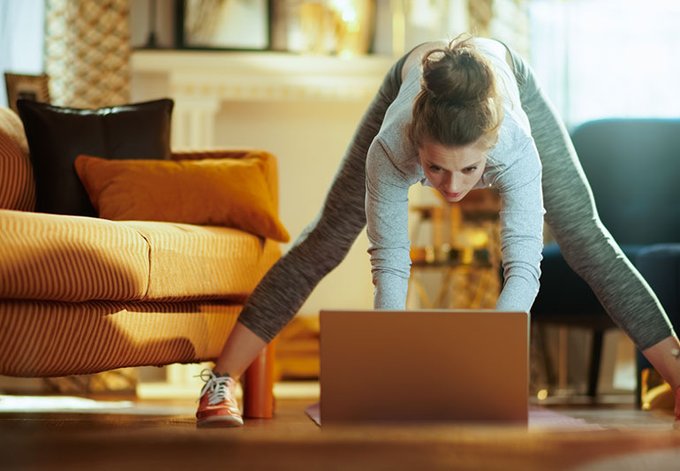
Whether you’re a fitness fanatic or casual gym goer, the thought of picking up a dumbbell covered in germs is enough to make anyone cringe. And with the spread of coronavirus (COVID-19) becoming more prominent every day, gyms and fitness centers across the country are closing their doors to help protect members.
If staying active is an important part of your life (as it should be!) you might be wondering how you’re supposed to go about this whole at-home workout thing. Thankfully, it’s easier than you think.
“A lot of what you’ll find with at-home workouts is about maintaining your current level of fitness,” explains exercise physiologist Katie Lawton. “And with workouts, consistency is key.”
Here Lawton shares some practical advice about how to stay active at home.


The Ireland Women’s squad returned to training at the weekend – take a look through our photo gallery