"Jesus lads, I'm ecstatic!" – Ciara Mageean is understandably delighted as she speaks to @DavidGillick after sealing a spot in the #WorldAthleticsChamps 1500m final pic.twitter.com/Zf3SrPZS0z
— RTÉ Sport (@RTEsport) October 3, 2019

Health & Wellbeing
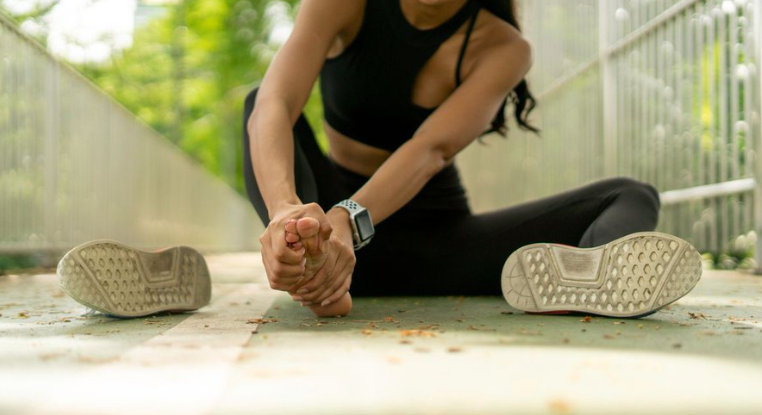
That was the widely held belief among nearly all the women who participated in a recent qualitative study on running footwear needs and preferences. The author of the study, Chris Napier, PT, PhD, Director of Simon Fraser University Run Lab, assembled a group of 21 recreational and competitive female runners ranging from 20 to 70 years old to collect feedback on their experiences with running shoes, in terms of fit, comfort, injury prevention, and performance.
The interviews confirmed what the researchers had suspected: Many mainstream running shoe brands are failing women.
Though the study was small, there are known issues with women’s footwear, which Napier asserts is rooted in the design and testing process. He explains that most major shoe manufacturers use a single foot-shaped form known as a “last” to design their entire line. In most cases, the last is based on male foot anatomy.
Shoes are scaled up and down to create a range of sizes, some of which are marketed to women. But the shoe itself, despite any stereotypically feminine colorways or aesthetic elements, is made for a man’s foot. It’s yet another example of “shrink it and pink it,” a pervasive yet misguided design process that fails to address the unique needs of female consumers. Notably, Lululemon, Altra, and Asics, do use separate lasts to design their women’s running shoes.
Shoe testing is male-centric, too. “Women’s shoes just don’t get the same amount of attention that men’s shoes get,” says Geoffrey Gray, DPT, founder of Heeluxe, a biomechanics lab that specializes in footwear innovation.
“In 2017, when we first started getting really passionate about improving how we analyze women’s footwear, we were testing men’s [running] shoes relative to women’s [running] shoes at a rate of four to one,” he says. The ratio has since improved slightly, and some brands now test as many women’s shoes as they do men’s, but there’s still an imbalance, Gray says.
Testing fewer shoes and using just one last are cost-saving measures that benefit shoe makers, at least in the short term. “If they have a separate last, they have to essentially double their capacity. It’s definitely an additional cost. Companies will just continue to weigh the cost/benefit of having just one last versus two,” Napier says.
Gray points out that women’s voices are often missing from these decision-making conversations. (A global survey conducted by SGI Europe found that just 23.9% of executive positions at sporting goods companies were filled by women.)
He shares a story about working with a brand on a women-specific basketball shoe. “There was a lot of excitement for the women on that team and the athletes we were working with. And then it got up to a middle-aged white guy VP, and he was like, ‘Why are we doing this? We sell plenty of women’s basketball shoes.’” The project was canceled, he says, because the people who understood the value of women-specific weren’t in a position to challenge the status quo.
Brands that want to introduce a broader range of products may encounter resistance at the manufacturing level as well. “Factories don’t like to change,” Gray says. “If they change, there’s a greater chance that things could go wrong, and that’s going to cost them a lot of money. So, a lot of times it isn’t just the footwear brands, it’s the factories that are making the footwear.”
There’s a reason why the male lasts don’t always work for women. In general, women’s feet are more triangular or “pie-shaped” than men’s feet. This means women, on average, have a wider forefoot (ball of the foot) and a narrower heel than men. Women also tend to have higher arches and lower ankle bones and are also more likely to develop bunions.
Additionally, women’s feet can change during pregnancy and postpartum, so they often require different types and sizes of shoes, as well as more cushioning, as they move through various stages of life.
From his study, Napier and his team learned that women found ways to adapt to subpar-fitting shoes. Some women sized up to accommodate their forefoot and used an alternative lacing technique to secure their heel. Others popped in inserts for better cushioning and arch support. Some even wore shoes that were a bit too small because they felt unstable in the next size up. The workarounds helped, but many never had the experience of slipping on a running shoe that truly fit.
While it may not be happening quickly enough, companies are starting to put more time and money into developing running shoes for women. Just less than 10 years ago, Gray says, is when he began having conversations with brands about how their shoes were missing the mark with women.
“It was the first time that we were aware of that these brands, both small and really large, were hearing this information from an independent source,” he says. “They would say, ‘We care about women. We want to win with women,’ but they didn’t have the data to know how much worse women’s shoes are relative to men,” Gray says.
Now that manufacturers know how women’s running shoe needs differ, some companies, like Altra, Asics, and Lululemon, are doing better and using women’s lasts. Hettas, which provided the grant for Napier’s study, Ryka, and Saysh only produce running shoes specifically designed and tested for female runners. Other companies are still using a single last for both men’s and women’s shoes.
When shoe shopping, Napier recommends asking retailers to try on shoes specifically designed for women. “That’s not to say that those will necessarily be the right shoes,” he says. “There’s individuality across each sex.” But it’s a good starting point. (And be sure to wear your running socks when trying on shoes, as sock style can affect fit.)
Gray urges every woman to measure her feet with a 3D foot scan. While there are a number of mobile apps that use your phone’s camera, he says that the in-store machines in specialty running stores are significantly more accurate. Plus, running shoe retailers are familiar with all the available products and trained to use your data to find the best shoe for you.
Also, your feet are always changing, so get them scanned at least once a year, and don’t be afraid to try a different shoe if the one you’ve been wearing is no longer working for you.
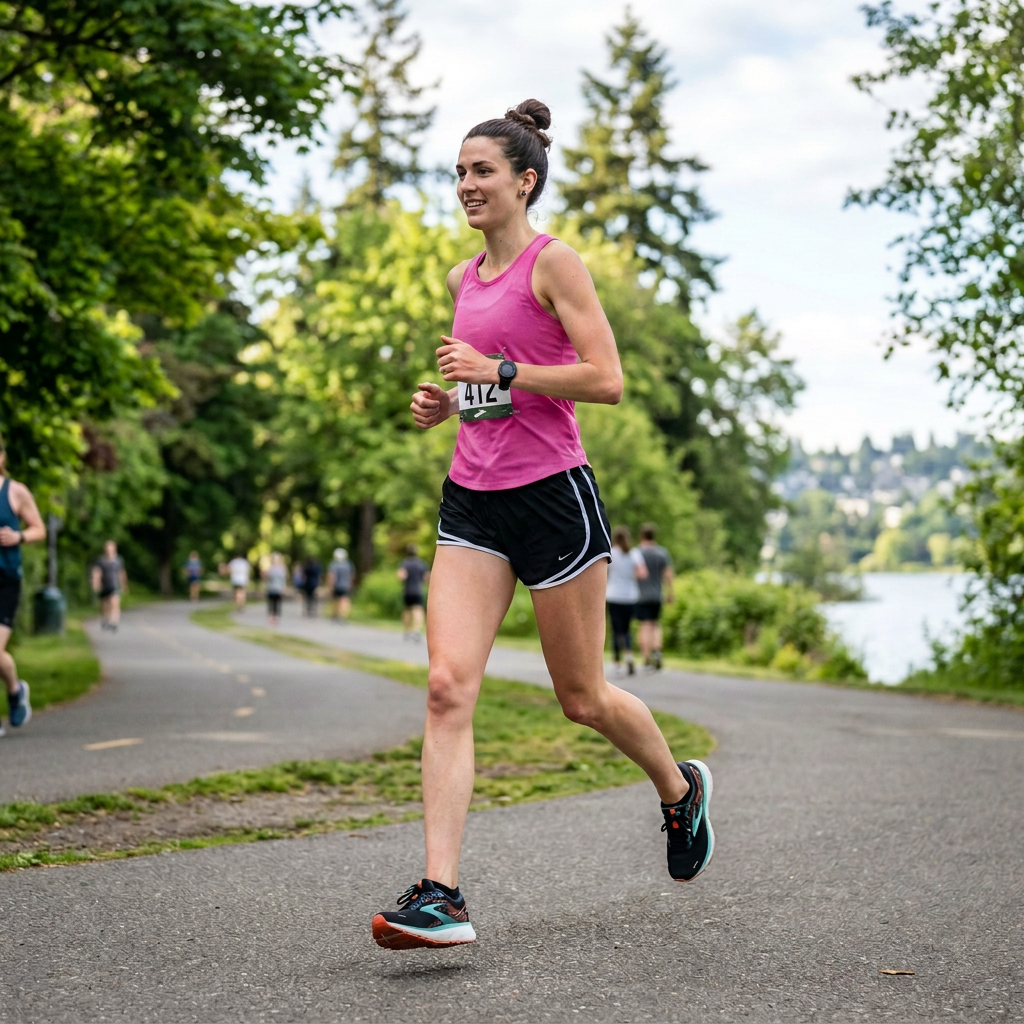

Dublin Marathon @dublinmarathon 23 hours ago
To make the most of your final week of training, the @sseairtricity #DublinMarathon official water partner @CelticPureLtd have teamed up with ambassador & ultra-endurance expert @_shanefinn to share their final top training tips  https://bit.ly/2RSGuWy
#ICANIWILL

and
Liked by maggienitsch and others
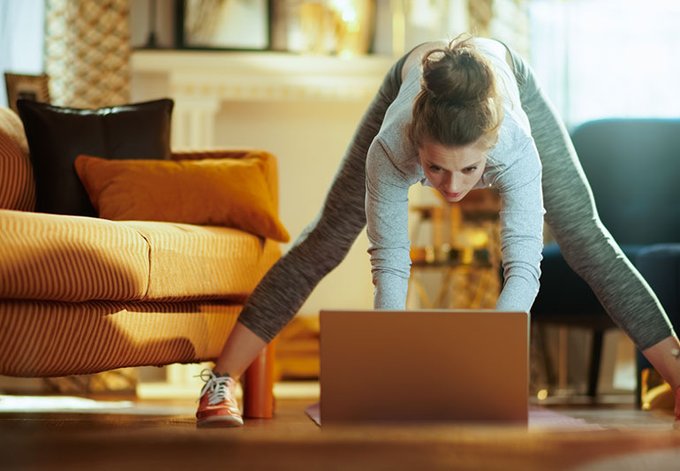
Whether you’re a fitness fanatic or casual gym goer, the thought of picking up a dumbbell covered in germs is enough to make anyone cringe. And with the spread of coronavirus (COVID-19) becoming more prominent every day, gyms and fitness centers across the country are closing their doors to help protect members.
If staying active is an important part of your life (as it should be!) you might be wondering how you’re supposed to go about this whole at-home workout thing. Thankfully, it’s easier than you think.
“A lot of what you’ll find with at-home workouts is about maintaining your current level of fitness,” explains exercise physiologist Katie Lawton. “And with workouts, consistency is key.”
Here Lawton shares some practical advice about how to stay active at home.
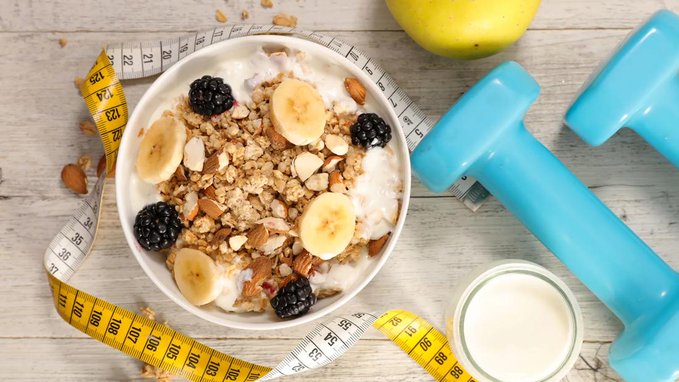
What Athletes Need To Know About Sports Nutrition
Having a well-rounded, healthy nutrition plan is just as important as staying consistent with your exercise routine
When you’re an athlete racking up miles and muscle, your body needs extra fuel to keep up with the amount of exercise you’re doing and help speed up recovery. That’s what makes sports nutrition so important — it offers you a path to making sure you’re getting all the nutrients you need, even as you sweat.
For the most part, athletes will eat higher quantities of food more often than non-athletes because food is equivalent to energy. But that isn’t always the case, and some meal plans may work better for you than for someone else.
“Everyone’s body is very different, so it’s really important that we specialize individualized nutrition plans,” says registered dietitian Carly Sedlacek, RD, LD.
Bringing your physical fitness goals to a dietitian can help provide you with a holistic, balanced and personalized approach to eating healthy beyond simply counting calories. If you’re trying to build muscle, for example, your goals for nutrition will likely be different from someone who’s trying to lose weight.
Overall, when sports nutrition is combined with consistent exercise, it can boost your performance and help you feel great, even on rest days. Regardless of your goals, the following areas of sports nutrition can help.
When you exercise, you lose a lot of water and electrolytes through sweating. Drinking enough water before a training session and throughout a workout can help replenish what’s lost.
At minimum, you should drink about 16 ounces of water two to three hours before exercise, and about 4 ounces every 15 to 20 minutes while exercising. It’s also important to make sure you’re drinking plenty of water throughout the entire day.
Sometimes, athletes prefer to use sports drinks after exercising because they’re packed with electrolytes to replace what was lost in sweat. “Electrolyte beverages should be used during activities lasting longer than 60 minutes,” says Sedlacek. “If you have a history of chronic disease or conditions, check with your doctor before including higher sodium beverages.”
Carbohydrates are your body’s main source of energy. While carbs are not the only food you should focus on, they should be something you consider as part of every meal, especially in the hours leading up to a workout or training session.
“Before exercising, you want to stick with foods that tend to digest easily, including some carbohydrate sources like fruits (bananas, apples or oranges), oatmeal or rice,” advises Sedlacek. “If you’re doing a longer workout routine that’s more than an hour long, you’ll want carbohydrates during that time to get that boost of quick-acting energy.”
Protein is the building block for your muscles. Without it, muscle recovery slows, along with your ability to build muscle mass. In general, you should try and get most of your protein from whole food sources like:
But when you’re short on time, you can turn to protein powders or protein shakes between meals, in addition to having some protein at every meal.
“Protein helps with muscle recovery,” shares Sedlacek. “Getting at least 25 to 35 grams of protein right after exercise is helpful because that’s when your body prefers to use it.”
In general, having a healthy, well-rounded diet that incorporates an abundance of fruits, vegetables and plant- or animal-based sources of protein is key. That means healthy fats (like olive oil, avocado and fatty fish) also play a role as a secondary source of energy. Not only do they fill you up faster, but they also help your body better process other micronutrients, like fat-soluble vitamins.
When it comes to supplements (like protein powders or pre-workout beverages), you want to use them sparingly. As you’re consuming more than the general population to keep up with your level of athleticism, supplements should be used to fill in a gap and not as a meal replacement.
“We want to try and stick to a food-first approach the best we can because the body is able to utilize those sources a little bit better than supplements,” explains Sedlacek.
When it comes to meals and snacks, timing is everything. You should try to aim for three spaced-out meals a day with snacks in between each meal. When it comes to exercise, you’ll want to have something small to eat (usually carbs or protein) at least an hour or two before exercising and immediately after a workout.
“It’s important to be consistent,” states Sedlacek. “If we’re going into an exercise and we don’t have enough energy to pull from, our body can end up pulling energy from our muscles. So, it’s important to have something small to eat before working out.”
Sports nutrition can require a lot of fine-tuning, especially when you’re just getting started. Working with a dietitian and a physical fitness trainer can help get you the support you need for your specific situation.
And if at any point you feel lightheaded, dizzy or even experience hunger pangs, it might be a result of not eating enough or having enough water to keep up with the physical demands of exercise. In those cases, trying to level out your blood sugars and electrolytes is important, as well as seeing a healthcare provider if issues continue.


