The sweetness of the onion and the coconut milk complements the saltiness of the rice, so ensure you season this dish well. You can use red onion if you want a sweeter flavor and add a couple of finely diced fresh green chilies along with the onion, if you’d like more heat. The rice gets a beautiful pink color from the red kidney beans that looks pretty served with a mixed green salad, such as lettuce and sliced avocado.
1/2 x 14 oz. can red kidney beans, drained and rinsed
a big handful of fresh cilantro, finely chopped (stems and all)
scant 1 cup coconut milk mixed with the same amount of cold water
Preparation
Heat 2 tablespoons of sunflower oil in a heavy-based saucepan and fry the onion and garlic on high heat for 3–4 minutes, then reduce the heat to medium and fry for a further 2 minutes, or until soft.
Add the rice and fry for 30 seconds, without stirring too much, then add the kidney beans, cilantro, and some salt and black pepper to taste.
Pour in the coconut milk and water mixture. Bring to a boil, then stir the rice once and cover. Reduce the heat to the lowest setting and simmer for 12 minutes without lifting the lid.
Remove from the heat and leave the pan, covered, for a further 5 minutes to allow the rice to finish cooking in the steam.
Remove the lid, fluff up the rice with a fork, and serve hot.
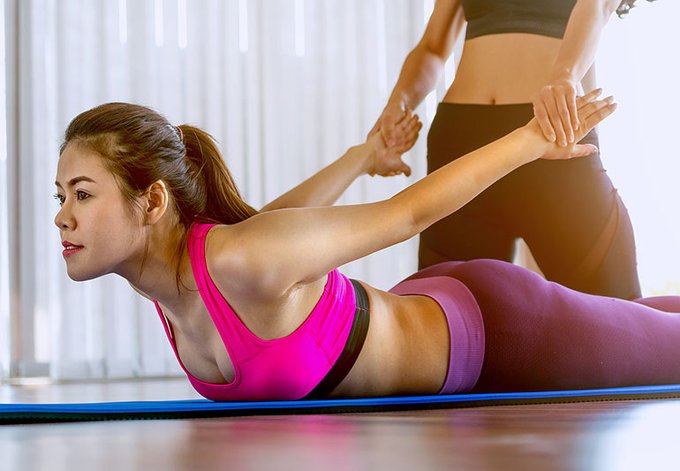
Relax into this form of stretching while a prop or partner assists you
When you think of stretching, you might picture someone sitting on the floor, legs extended, reaching for their toes. But passive stretching takes a different approach. Instead of relying on your own flexibility, you use something (or someone) else to help.
Licensed massage therapist and registered nurse DeBorah Hill, RN, LMT, explains passive stretching and how it can benefit your health.
What is passive stretching?
Most people are familiar with dynamic and static stretching. Static stretching focuses on holding a pose that stretches your muscle as far as you can. Dynamic stretching uses movements, like walking lunges or hip circles, to warm up your muscles before an activity.
Dynamic and static stretches are limited to how far you can physically move. Think of toe touches: Some people can touch their toes and beyond, while others can’t reach their knees.
Passive stretching uses other forces to stretch your muscles, rather than your own ability. “During passive stretching, your body is loose and relaxed,” says Hill. “You let an external force — like a partner, towel or fitness strap — do the work.”
For example, instead of touching your toes, you can perform a passive hamstring stretch. During this stretch, you lie on your back and use a rolled-up towel or strap to help you stretch the back of your thigh.
If you’re new to passive stretching, use care. You could accidentally stretch a muscle too much and cause injury.
“Listen to your body as you stretch,” advises Hill. “Passive stretching should not hurt, and many people overestimate how flexible they are. It’s helpful to talk with a licensed physical therapist or massage therapist before you start.”
Benefits of passive stretching
Consider adding passive stretching to your routine to:
Relieve stress
Unlike static or dynamic stretching, passive stretching requires your muscles to be relaxed for it to work. This release of physical tension can benefit your mental health.
“When you fully relax for a passive stretch, you tell your brain to shift out of fight-or-flight mode,” explains Hill. “Passive stretching can take you out of survival mode so you feel relaxed.”
Increase flexibility
One study found passive stretching to be better than dynamic stretching at increasing hamstring flexibility.
“Passive stretching can increase your range of motion when other stretches don’t work for you,” says Hill. “Your prop or partner can help you gently stretch beyond what you can normally do yourself.”
Overcome mobility limitations
If you have mobility issues or chronic pain, other forms of stretching can be difficult. Passive stretching works for people of all ages and fitness levels. Can’t bend over or move your body a certain way? Passive stretches can work around these limitations.
Examples of passive stretching
Passive stretches can work many different muscles. Try these stretches to get started:
1. Doorway stretch
This stretch focuses on your chest and shoulders:
Stand just behind a doorway.
Place one foot slightly in front of the other for stability.
Raise your arms to the side with your elbows bent at 90 degrees, palms facing forward like goal posts. Allow your elbows, forearms and palms to press against the doorframe.
Gently lean forward, keeping your arms on the doorframe.
Hold for 10 seconds.
Rest for five seconds and repeat.
2. Standing quad stretch
This passive stretch focuses on your quadriceps, or the muscles on the front of your thighs:
Stand next to a steady object, such as a table or wall, that can be used for balance.
Loop a rolled-up towel or fitness strap around your right ankle.
Hold the other end of the towel or strap with your right hand.
Place your left hand on the table or wall for balance.
Slowly bend your right knee and pull your right foot up toward your buttocks using the towel or strap.
Hold for up to 30 seconds.
Repeat on the opposite leg.
3. Towel hamstring stretch
The backs of your legs, or hamstrings, get a stretch here — no toe-touching required:
Lie on your back, with your legs straight and relaxed.
Slowly raise one leg up toward the ceiling without bending your knee, keeping your leg relaxed.
Hook the towel or strap behind your hamstring or calf or under the arch of your foot, depending on what’s comfortable for you.
Using your towel or strap, gently pull your leg towards you until you feel the stretch.
Hold for up to 30 seconds.
Switch legs.
A stretching routine is worth it
Taking a few minutes a day to stretch has big benefits, from preventing injuries to reducing joint pain. And if other forms of stretching haven’t worked for you, passive stretching is worth a try.
“The beauty of passive stretching is that it works for so many people,” states Hill. “Whether you’re just starting out or you’re an elite athlete, passive stretching can help you feel great physically and mentally.”
Do you want to prevent back pain? These exercises work to stretch and strengthen your back and supporting muscles. Get the edge you need to reduce your pain and return to your active lifestyle. #PainAwarenessMonth#FitTipFriday – https://mayocl.in/2XayVBJ





 : Maria Vasco

 Fitnessaware