
Women’s Running
@WomensRunning
·
Give us 15 minutes each day for the next 3 weeks and you will see the results. http://ow.ly/ixed50GgfjC
Health & Wellbeing

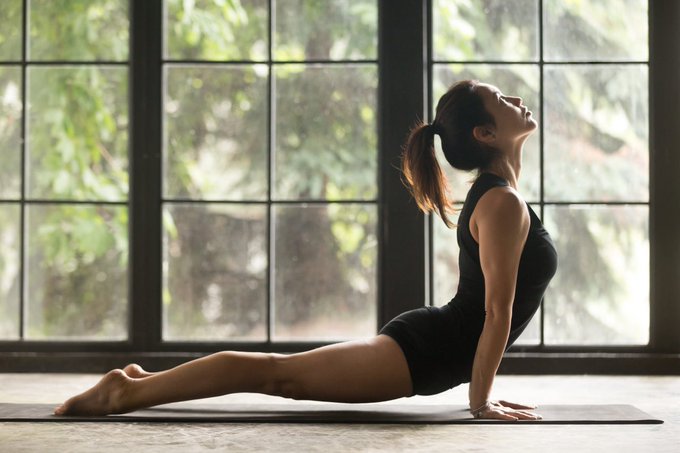
AUGUST 13, 2021
It’s been said—and memed—that “Movement without awareness is exercise. Movement with awareness is yoga.”
It’s easy to aspire to the latter. (Don’t we all?) It’s not always easy to achieve it, though. Especially when you’re taking yourself through your practice without a teacher cueing a sequence. Or when you’re desperately trying to cram 10 minutes of your practice in as your weekday meeting marathon looms.
There’s actually an ancient yogic antidote specifically designed for those mornings. It’s a series of yoga postures known as Surya Namaskar A, more commonly known as Sun Salutations. This set sequence of postures dates back more than 2,500 years to a time when ancient cultures revered the sun. Salutations are believed to have been regarded as a literal salute to sunrise and were perceived to ready the body for all that would happen during daylight. (Had they only known about Zoom…)
This sequence of postures is essentially a series of prescribed motions that begins and ends with Tadasana (Mountain Pose). The poses take you through all manner of stretches, forward folds, and backbends that build heat and happen in a rhythmic cadence that’s aligned with your breath. The start of an inhale initiates your transition from one pose to the next, followed by a lull in both the breath and body as you come into the pose, with the beginning of an exhale acting as a cue for your next transition. Breath, movement, and stillness fall into a rhythm. The trajectory of the sequence, like that of its namesake star, has a predictable arc and is cyclical, making it easy to become quietly absorbed in the looping repeated motions. A moving meditation.
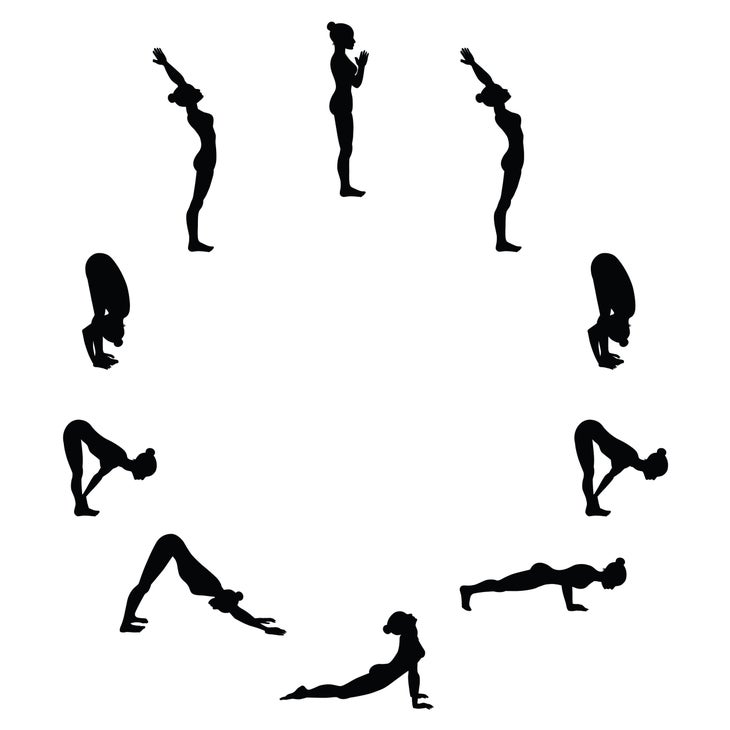
Photo: Baleika Tamara
You may already be vaguely or intimately familiar with Surya Namaskar A but haven’t committed the poses and their order to memory. That’s OK! We lay it all out for you here. Less thinking. More flowing.


·
 Lough Rinn Regatta Link Like to the live results of todays racing: https://docs.google.com/spreadsheets/d/1vBtKYxj7gyHdJ12-pj3ohIivVq7W6Qm0/edit?usp=sharing&ouid=110712419592707152691&rtpof=true&sd=true…


·
Seeing your boy made my night. This is what it’s all about! Would be a pleasure to sign it for you

·
Lough Rinn Regatta Link Like to the live results of todays racing: https://docs.google.com/spreadsheets/d/1vBtKYxj7gyHdJ12-pj3ohIivVq7W6Qm0/edit?usp=sharing&ouid=110712419592707152691&rtpof=true&sd=true…
Core exercises train the muscles in your pelvis, lower back, hips and abdomen to work in harmony. Learn more and find out why core exercises are an important part of a well-rounded fitness program.  https://mayocl.in/2oZ4fPd

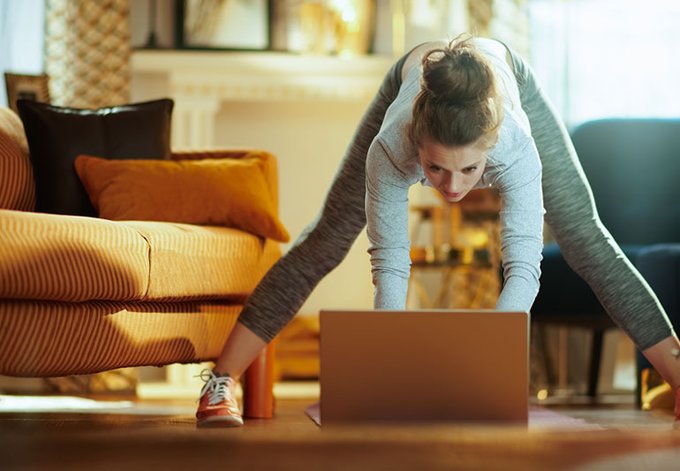
Whether you’re a fitness fanatic or casual gym goer, the thought of picking up a dumbbell covered in germs is enough to make anyone cringe. And with the spread of coronavirus (COVID-19) becoming more prominent every day, gyms and fitness centers across the country are closing their doors to help protect members.
If staying active is an important part of your life (as it should be!) you might be wondering how you’re supposed to go about this whole at-home workout thing. Thankfully, it’s easier than you think.
“A lot of what you’ll find with at-home workouts is about maintaining your current level of fitness,” explains exercise physiologist Katie Lawton. “And with workouts, consistency is key.”
Here Lawton shares some practical advice about how to stay active at home.


 Fitnessaware