Skip to content

Fitnessaware

Health & Wellbeing

Category: Health

Posted on August 6, 2021

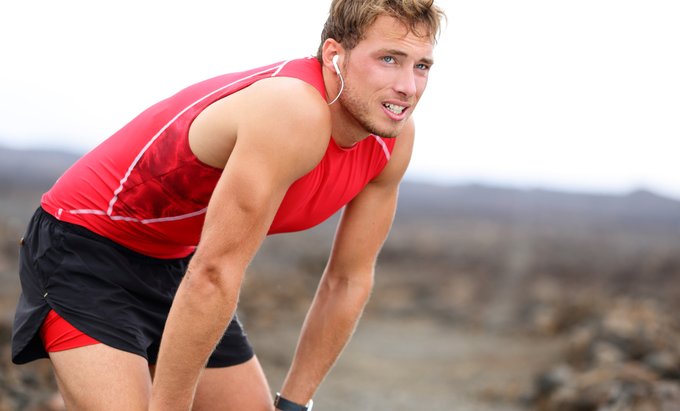
Running for better health..@mayoclinicsport


Mayo Clinic Sports Medicine

@mayoclinicsport

·
5h

Q: Is running a marathon good for my health? A: First-time marathon runners significantly improve their cardiovascular health during training. The key is to aim for at least 30 min of moderate-intensity activity 5 days a week. https://mayocl.in/37hrf1Y #MayoClinicQandA #tcmarathon

DEAR MAYO CLINIC: A few neighbors formed a running group to train for a marathon in 2021. I’m thinking about joining them as I know that running can be good exercise, but I’ve never run before. Is running a marathon actually good for my health? Should I do certain things to avoid injuries?

ANSWER: Being active and engaging in regular aerobic exercise is important for overall heart health and wellness. Typically, 30 minutes of moderate intensity activity five days a week is recommended for most healthy adults. Running is a simple, low-cost exercise, and you should be commended for starting a new exercise regimen.

As a first-time runner, I’d recommend that you talk with your health care provider about any concerns, especially if you have any health conditions, such as high blood pressure, heart issues or a history of prior musculoskeletal injuries. Ask your health care provider about any symptoms that you might want to watch for when you run.

Before starting out, I would suggest you invest in a good pair of running shoes and make sure that you warm up and stretch prior to any run. Focus on cross training with exercises that strengthen your hips and core.

If your neighbors are seasoned runners, you may want to consider joining a training program to help you build stamina and increase your mileage over time.

As a novice runner, a marathon may sound overwhelming, but recent research shows that it really could be the key to better health. A study out of the United Kingdom showed first-time marathon runners significantly improved their cardiovascular health during training for a 26.2-mile race.

Specifically, this study showed participants had improvements in overall cardiovascular health but particularly related to the stiffness of the aortic vessel. This is important because as people age, the body’s vessels become stiffer. This can be detrimental to your health since with stiff vessels your body has to work harder to pump blood.

In addition to runners having a substantial decrease in the stiffness of the aortic vessel, which moves blood throughout our body, the study found marathon training improved blood pressure.

The study looked at marathon runners six months prior to training and three week after they completed the London Marathon. On average, the subjects ran about 6 to 13 miles in training per week.

If running a marathon seems too daunting, consider a half marathon or a 5K. The cardiovascular benefits of running remain, no matter the distance. One of the most interesting findings of the UK study was that the slowest runners had the greatest improvements in cardiovascular health.

If running is not enjoyable or you have other issues — let’s say your knees or back make it challenging to run — you can still benefit from lacing up your sneakers. Walking regularly at a brisk pace can result in improvements in overall cardiovascular health and vessel stiffness.

Whatever activity you chose, the key is that you want to aim for at least 30 minutes of moderate intensity activity five days a week. Walking or running with the neighbors is a great way to combine exercise and socialization. And if you’re wondering about the definition of moderate intensity, you should be able to carry on a conversation, but you should not be able to carry a tune. —Dr. Sara Filmalter, Family and Sports Medicine, Mayo Clinic, Jacksonville, Florida

Posted on August 5, 2021

Is salad on the menu for lunch? Make it your best one ever with these five tips:@Yoga_Journal

5 Steps to Seriously Superior Salads
Apply these tried-and-true cooking tricks to salad-making, and you’ll be making the best veggie-packed dishes ever.
July 31, 2021 Ivy Manning


Your go-to bowl of greens may be a good salad, but is it the best salad? Some of the best cooking tricks can be applied to salad-making. Here are five game changers that will help take your salads to a new level.
1. Season it
We season everything else, so why skip your salad? A pinch of coarse sea salt and a few grinds of pepper enhance the flavors in salads, too. But don’t stop there! Spices can amp up the natural sweetness of vegetables both raw and cooked. Try this homemade toasted spice blend on salads to turn a ho-hum salads into the best salad with grilled shrimp, sprinkle nutritional yeast on slaws for a savory boost, or herby-tart za’atar blend on a cucumber tomato salad with feta.
2. Underdress
Err on the side of underdressing your salads. You need less dressing than you think, and you can always add more, but you can’t remove dressing from a soggy salad. As a general rule, add ½ tablespoon of dressing, gently toss, taste, and add more until the ingredients are very lightly coated. Another option for chronic over-dressers, pour out small amounts  of dressing (about 1 tablespoon per person) into a small ramekin and dip your fork into it before each bite of undressed salad.
3. Hands on
Toss your salads with your hands in a large bowl, this helps coat all the ingredients with seasonings and dressing and it’s gentler on tender greens. If you’d rather not get your hands dirty, use kitchen tongs to even toss things together.
4. Balance textures
Try to choose a balance of elements – fluffy leaves, creamy elements like avocado or cheese, crunchy items like nuts or seeds, something substantial like roasted squash, meat, seafood and juicy/crisp elements like apple, tomato, or celery.  And remember, we eat with our eyes, so arrange elements artfully for a more satisfying meal. Click here for a handy chart on how to build a well composed, best salad recipes ever.
5. Herbs are salad leaves, too.
Herbs are a mainstay of salad dressing, but they are also delicious by themselves tucked into leafy salads. Fresh, tender herbs like basil, cilantro, dill, basil, parsley, and mint blend right in with lettuce plus they add little pops of fresh flavor that are unexpected and make salads more interesting. Make sure to remove any tough or stringy stems…concentrating on the juicy leaves instead.
Posted on August 4, 2021

Q: Is running a marathon good for my health? A: First-time marathon runners significantly improve their cardiovascular health during training.


Mayo Clinic Sports Medicine

@mayoclinicsport

·
5h

Q: Is running a marathon good for my health? A: First-time marathon runners significantly improve their cardiovascular health during training. The key is to aim for at least 30 min of moderate-intensity activity 5 days a week. https://mayocl.in/37hrf1Y #MayoClinicQandA #tcmarathon
Posted on August 3, 2021

How Alcohol Might Impact Your Recovery. @WomensRunning


Women’s Running

@WomensRunning

·
10h

There’s a good chance that post-run beer is affecting your ability to recover from even an average run.

How Alcohol Might Impact Your Recovery – Women’s Running
While the literature on alcohol and athletic performance is somewhat mixed, it’s worth tracking how you respond to even small amounts due to the risk of impaired recovery.
womensrunning.com

How Alcohol Might Impact Your Recovery

July 22, 2021 David Roche

While the literature on alcohol and athletic performance is somewhat mixed, it’s worth tracking how you respond to even small amounts due to the risk of impaired recovery.

A few months ago on our podcast, my co-host (what other cultures call a “wife”), Megan, mentioned how she started using a WHOOP heart-rate-tracking strap because of the Journal feature. The Journal lets users log life events, tracking how the body responds over time. Megan was interested in tracking one category of activities in particular. But I’ll let you listen to the podcast to find out because this article is rated PG (may contain graphic podcast promotion).

WHOOP heard the episode and eventually signed on as a formal sponsor (promo code “SWAP” for 15% off! Selling out never felt so life-affirming!). Many of our athletes got WHOOP straps, letting us track recovery patterns over time. Some training logs became unofficial Journals, with athletes reporting added data each day. And something jumped out pretty quickly. Those unexplained drops in recovery that would occasionally pop up?

Often, it was the day after an athlete drank alcohol.

We weren’t just seeing spurious patterns. An article by WHOOP states: “of all the behaviors available to record in the WHOOP Journal, drinking alcohol is the one with the single greatest negative impact on next-day recovery.” They even recorded a podcast on elite performers sharing stories of alcohol’s impact on their bodies.

Back in 2019, I wrote an article on the uncertain, individual-specific science of alcohol and athletic performance. One of the big uncertainties was related to how alcohol consumption may affect longer-term athletic trajectories based on changes to recovery and adaptation. That article reviewed some possible impacts to sleep, the immune system, endocrine system, and metabolic processes, with no satisfying conclusion. These heart-rate-tracking apps could theoretically integrate many of the uncertain variables into a global recovery analysis. What might that heart-rate analysis add to the discussion?  Let’s dig into some of the science.

RELATED: A Nutritionist Shares What a Month of No Alcohol Did to His Body

Heart Rate Variability (HRV)

WHOOP, Oura Ring, and other tracking tools often look at similar metrics. While wrist-based straps are less accurate than chest straps at measuring heart rate during intense running, they are reliable at rest. Resting heart rate provides insight into recovery status because it increases in periods of higher stress. That’s the horse-and-buggy, old-school data. HRV is the new hotness.

HRV measures the gap between heartbeats. As stated by a 2017 article in the Frontiers in Public Health journal, “a healthy heart is not a metronome.” The autonomic nervous system controls involuntary behaviors, like heartbeats or our unquenchable attraction to Timothée Chalamet. The parasympathetic branch of the autonomic nervous system responds to information from internal organs (“rest and digest”). The sympathetic branch responds to stress (“fight or flight”). When the nervous system is overloaded, HRV goes down as the heart essentially goes on autopilot, less receptive to nervous system signals.

A 2018 review article in the journal Psychiatry Investigations found that HRV correlates with stress, validating its use as one data point to inform stress management practices. There are tons of cool studies of how it can be used in practice (though the jury is still out on its universal effectiveness for athletes). For example, a 2018 study in the European Journal of Applied Physiology monitored the HRV of 24 elite skiers in a high-altitude training camp. In the experimental group, if HRV dropped too much (30%+) or too long (multiple days) relative to an individual baseline, athletes reduced training; if it increased or stayed the same, they would increase training. Training using shifts in HRV as a general guideline led to fitness increases, along with improved HRV.

While HRV is just one data point to inform training, recovery, and adaptation, it provides helpful clues into what stress we are handling, and what stress we aren’t. Hard training days can reduce HRV for some athletes. For example, I have a moderately low baseline of 70 (I don’t think I’ve remembered to breathe while writing the last 2 paragraphs, so it makes sense). The first time I did a long bike with Megan this season, it dropped to 51, around the 30% threshold in the 2018 study. Normal life stress also reduces HRV. My lowest reading yet was 41, the day after a short recovery jog, but when I heard tough news for a loved one. Care Bears wish they could care as hard as I do. Care swag.

And alcohol works similarly for my body. For me, it’s approximately a hard workout, even in relatively small quantities. Megan responded similarly. So did some athletes on the team. Is it signal, or is it noise? Confounding variables that make alcohol a passenger on the stress train (i.e. maybe people drink in more stressful situations), or is alcohol a stress conductor?

Posted on July 30, 2021

Tokyo 2020 commemorative gift (Olympic victory bouquet)

The Tokyo Organising Committee of the Olympic and Paralympic Games will present a commemorative gift to medallists at Tokyo 2020 later this year.
The gifts used will be ‘victory bouquets’, and will feature bright colours to encapsulate the medallists’ glorious moment of victory with people around the world.
However, despite being a common sight throughout the history of the Olympic Games, Tokyo 2020 will be the first time since London 2012 that a host city will use victory bouquets – and they hold great significance too.
The flowers used for the bouquets for Tokyo 2020 are grown mainly in areas affected by the Great East Japan Earthquake in 2011, and it’s hoped the Olympic and Paralympic Games – the biggest sporting event on the planet – will present a perfect opportunity to promote their charm to a global audience.
Posted on July 29, 2021

Ireland Olympic Gold Medalists: Fintan McCarthy and Paul O’Donovan.@RowingIreland

Our first ever Irish Olympic Gold Medalists in Rowing! Fintan McCarthy and Paul O’Donovan have made history tonight for Ireland
Posted on July 29, 2021

Olympic Gold Medalists: Fintan McCarthy and Paul O’Donovan.@RowingIreland

Our first ever Irish Olympic Gold Medalists in Rowing! Fintan McCarthy and Paul O’Donovan have made history tonight for Ireland
Posted on July 27, 2021

Physios join the nation’s best athletes at the Tokyo Olympics @physiosinsport

ISCP liked


British Journal of Sports Medicine (BJSM)

@BJSM_BMJ
·
10h

Good luck to all medical teams at #Tokyo2020, some of those highlighted here by @thecsp
@physiosinsport

Posted on July 23, 2021

During hot-weather exercise, watch for signs and symptoms of heat-related illnesses, @MayoClinic


Mayo Clinic

@MayoClinic
·
Jul 21

During hot-weather exercise, watch for signs and symptoms of heat-related illnesses, including heat cramps, heat collapse, heat exhaustion and heatstroke. If you ignore these symptoms, your condition can worsen and result in a medical emergency. https://mayocl.in/3jqFtVL
Posted on July 22, 2021July 22, 2021

Repeat after us: Without adequate recovery—easy days, sleep, downtime—training adaptations go down the tubes. @WomensRunning


Women’s Running

@WomensRunning

·
31m

Repeat after us: Without adequate recovery—easy days, sleep, downtime—training adaptations go down the tubes.

https://www.womensrunning.com/training/recovery

Posts pagination

Previous page Page 1 … Page 18 Page 19 Page 20 … Page 79 Next page

Tags

  • core stability
  • core strength
  • diet
  • exercise
  • fitness
  • Fitnessaware
  • health
  • physical activity
  • physio
  • physiotherapy
  • Pilates
  • running
  • Therapy
  • womens health
  • yoga

Archives

  • February 2026
  • January 2026
  • December 2025
  • November 2025
  • October 2025
  • September 2025
  • August 2025
  • July 2025
  • June 2025
  • May 2025
  • April 2025
  • March 2025
  • February 2025
  • January 2025
  • December 2024
  • November 2024
  • October 2024
  • September 2024
  • August 2024
  • July 2024
  • June 2024
  • May 2024
  • April 2024
  • March 2024
  • February 2024
  • January 2024
  • December 2023
  • November 2023
  • October 2023
  • September 2023
  • August 2023
  • July 2023
  • June 2023
  • May 2023
  • April 2023
  • March 2023
  • February 2023
  • January 2023
  • December 2022
  • November 2022
  • October 2022
  • September 2022
  • August 2022
  • July 2022
  • June 2022
  • May 2022
  • April 2022
  • March 2022
  • February 2022
  • January 2022
  • December 2021
  • November 2021
  • October 2021
  • September 2021
  • August 2021
  • July 2021
  • June 2021
  • May 2021
  • April 2021
  • March 2021
  • February 2021
  • January 2021
  • December 2020
  • November 2020
  • October 2020
  • September 2020
  • August 2020
  • July 2020
  • June 2020
  • May 2020
  • April 2020
  • March 2020
  • February 2020
  • January 2020
  • December 2019
  • November 2019
  • October 2019
  • September 2019
  • August 2019
  • July 2019
  • June 2019
  • May 2019
  • April 2019
  • March 2019
  • February 2019
  • January 2019
  • December 2018
  • November 2018
  • October 2018
  • September 2018
  • August 2018
  • July 2018
  • June 2018
  • May 2018
  • April 2018
  • March 2018
  • January 2018
  • June 2016
  • May 2016
  • April 2016
  • March 2016
  • February 2016
  • December 2015
Create a free website or blog at WordPress.com.
Privacy & Cookies: This site uses cookies. By continuing to use this website, you agree to their use.
To find out more, including how to control cookies, see here: Cookie Policy
  • Subscribe Subscribed
    • Fitnessaware
    • Join 1,595 other subscribers
    • Already have a WordPress.com account? Log in now.
    • Fitnessaware
    • Subscribe Subscribed
    • Sign up
    • Log in
    • Report this content
    • View site in Reader
    • Manage subscriptions
    • Collapse this bar
 

Loading Comments...