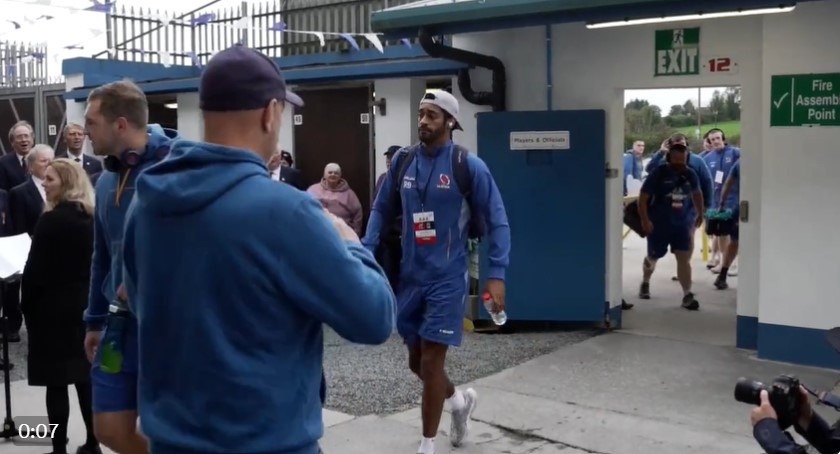
Dan with the Dad vibes 🤳
— Ulster Rugby (@UlsterRugby) October 9, 2023
Loving the welcome at Cavan 🤣 pic.twitter.com/QPedEu808f
Health & Wellbeing
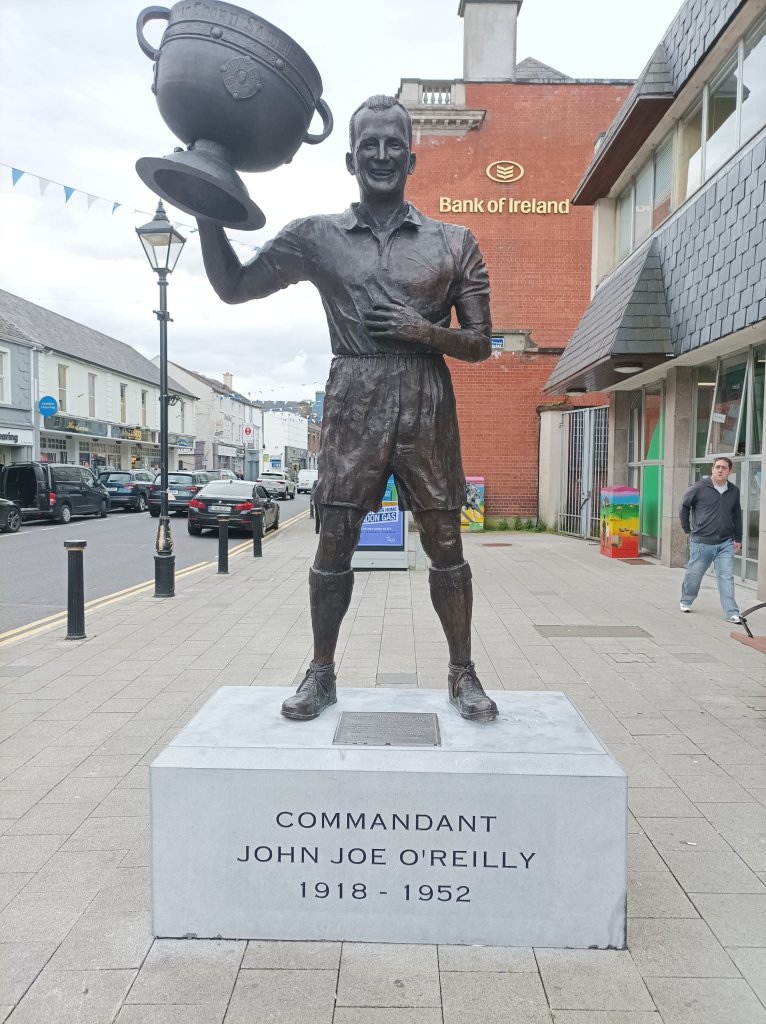
Market Square, Cavan Town
By Jamie Ó Tuama
He led Cavan to victory on that memorable day,
In the final against Kerry in New York far away.
The next year in Croke Park when our boys beat Mayo,
Once again they were led by the gallant John Joe.
Synonymous with Cavan’s famous 1947 All-Ireland football final victory against Kerry in the Polo Grounds, and a vital cog in Cavan’s breakthrough success in the ‘30s and ‘40s, John Joe O’Reilly’s legend will live for ever.
Not only was he one of the players of his generation but he is considered to be one the greatest players of all time. His achievements on the field of play were duly recognised when he was chosen at number 6 on both the GAA’s Team of the Millennium and Team of the Century. John Joe O’Reilly was one of the true greats of Gaelic football and will always be spoken about in the same breath as other legends of the game such as Seán Purcell, Mick O’Connell and Paddy Doherty to name just a few.
The Cornafean man captained Cavan to two All-Irelands in a row in 1947 and 1948 as well as helping his club to two senior Cavan titles in 1936 and 1937. He later moved to the Curragh Camp GAA club during his time in the army. Among his other achievements were 11 Ulster Senior Football Championships, 4 Railway Cups and a National Football League in the 1847-48 season.
To learn more about John Joe O’Reilly, GAA.ie caught up with George Cartwright, author of ‘The Gallant John Joe – Cavan’s Millennium Man’, and fellow Cornafean man.
“John Joe was the only man to captain a team to All-Ireland success and raise the Sam Maguire Cup outside of Ireland but there were a lot more highlights to John Joe O’Reilly’s short life in which he managed to achieve so much,” says Cartwright.
“The Polo Grounds memory would be the standout moment of his life and for all Cavan people because it was the only All-Ireland ever played outside of Ireland, but John Joe came into the Cavan team at a young age. He won three MacRory Cups medal with St Patrick’s College, Cavan, which was hugely significant in the 1930s.
“It was the first time that St. Pats won it and they won three in a row. He captained the team in its last year which was his Leaving Cert year. He also captained the Ulster provincial colleges team which played the other provinces in a very prestigious competition.
“He played in his first All-Ireland final in 1937. He made an appearance in the Ulster final and next thing he was playing in an All-Ireland Final and he was very young at the time. He was just 19. He played in the drawn replayed game against Kerry. Cavan lost that day.
“He won a lot of Ulster Championship medal, 11 in total which was a lot. Cavan of course were the kingpins of Ulster football in the 30s and 40s. He also played in 8 All-Ireland finals which included two replays. He was lucky to get two All-Ireland victories out of it.”
John Joe also had a very successful club playing career in which he won significant honours with both his native club, Cornafean, and his adopted club, Curragh Camp GAA club, who he later represented while on duty with the army in the Curragh.
“He won two county senior championships with Cornafean,” says Cartwright. “He also captained the only ‘army team’, as they were known at the time, to a Kildare Senior Football Championship. That was in 1948.
“He captained Ulster to three Railway Cup successes, and he won 4 Ulster Railway Cup medals in total. He captained them to the most important one, maybe, in 1943 which was Ulster’s first Railway Cup. Most teams he played on, he captained.
“He won a hurling championship medal in Kildare as well around 1940. He was also a well-known athlete. He had potential as an athlete and great potential as a basketball player.”
John Joe was not only successful on the field of play, however. He also achieved so much during his time with the army. There is no doubt in George’s mind that he would have continued to progress through the ranks in the army but for the fate that lay in store for him.
“Of course, the other huge part of his life was his career in the army. He entered the cadet school in the curragh in 1937 and he went through the different stages of promotion very quickly. He was commissioned having successfully completed a cadetship in 1939 and that was around the time of the war. World War 2 was breaking out. He had a hugely significant role in the military college and later in the training depot in the army.
Market Square, Cavan Town
By Jamie Ó Tuama
He led Cavan to victory on that memorable day,
In the final against Kerry in New York far away.
The next year in Croke Park when our boys beat Mayo,
Once again they were led by the gallant John Joe.
Synonymous with Cavan’s famous 1947 All-Ireland football final victory against Kerry in the Polo Grounds, and a vital cog in Cavan’s breakthrough success in the ‘30s and ‘40s, John Joe O’Reilly’s legend will live for ever.
Not only was he one of the players of his generation but he is considered to be one the greatest players of all time. His achievements on the field of play were duly recognised when he was chosen at number 6 on both the GAA’s Team of the Millennium and Team of the Century. John Joe O’Reilly was one of the true greats of Gaelic football and will always be spoken about in the same breath as other legends of the game such as Seán Purcell, Mick O’Connell and Paddy Doherty to name just a few.
The Cornafean man captained Cavan to two All-Irelands in a row in 1947 and 1948 as well as helping his club to two senior Cavan titles in 1936 and 1937. He later moved to the Curragh Camp GAA club during his time in the army. Among his other achievements were 11 Ulster Senior Football Championships, 4 Railway Cups and a National Football League in the 1847-48 season.
To learn more about John Joe O’Reilly, GAA.ie caught up with George Cartwright, author of ‘The Gallant John Joe – Cavan’s Millennium Man’, and fellow Cornafean man.
“John Joe was the only man to captain a team to All-Ireland success and raise the Sam Maguire Cup outside of Ireland but there were a lot more highlights to John Joe O’Reilly’s short life in which he managed to achieve so much,” says Cartwright.
“The Polo Grounds memory would be the standout moment of his life and for all Cavan people because it was the only All-Ireland ever played outside of Ireland, but John Joe came into the Cavan team at a young age. He won three MacRory Cups medal with St Patrick’s College, Cavan, which was hugely significant in the 1930s.
“It was the first time that St. Pats won it and they won three in a row. He captained the team in its last year which was his Leaving Cert year. He also captained the Ulster provincial colleges team which played the other provinces in a very prestigious competition.
“He played in his first All-Ireland final in 1937. He made an appearance in the Ulster final and next thing he was playing in an All-Ireland Final and he was very young at the time. He was just 19. He played in the drawn replayed game against Kerry. Cavan lost that day.
“He won a lot of Ulster Championship medal, 11 in total which was a lot. Cavan of course were the kingpins of Ulster football in the 30s and 40s. He also played in 8 All-Ireland finals which included two replays. He was lucky to get two All-Ireland victories out of it.”
John Joe also had a very successful club playing career in which he won significant honours with both his native club, Cornafean, and his adopted club, Curragh Camp GAA club, who he later represented while on duty with the army in the Curragh.
“He won two county senior championships with Cornafean,” says Cartwright. “He also captained the only ‘army team’, as they were known at the time, to a Kildare Senior Football Championship. That was in 1948.
“He captained Ulster to three Railway Cup successes, and he won 4 Ulster Railway Cup medals in total. He captained them to the most important one, maybe, in 1943 which was Ulster’s first Railway Cup. Most teams he played on, he captained.
“He won a hurling championship medal in Kildare as well around 1940. He was also a well-known athlete. He had potential as an athlete and great potential as a basketball player.”
John Joe was not only successful on the field of play, however. He also achieved so much during his time with the army. There is no doubt in George’s mind that he would have continued to progress through the ranks in the army but for the fate that lay in store for him.
“Of course, the other huge part of his life was his career in the army. He entered the cadet school in the curragh in 1937 and he went through the different stages of promotion very quickly. He was commissioned having successfully completed a cadetship in 1939 and that was around the time of the war. World War 2 was breaking out. He had a hugely significant role in the military college and later in the training depot in the army.


 Fitnessaware