
Fitness Motivation @FitspirationaI 6 minutes ago
Avocado egg toast 

Health & Wellbeing
Fitness Motivation @FitspirationaI 6 minutes ago
Avocado egg toast
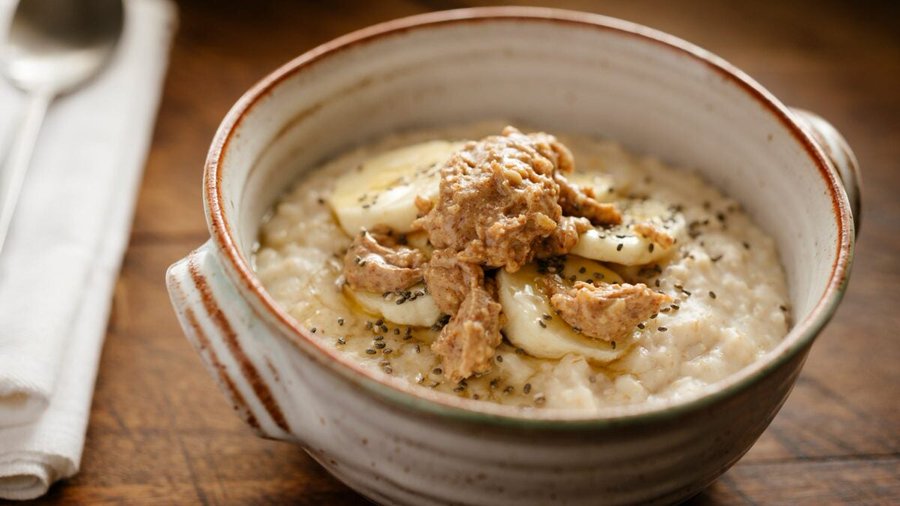


Sure, it’s old fashioned. But it’s also nutritional rocket fuel, and athletes are making it taste great. Here’s how.
February 28, 2023 Wes Judd
In a world of green juice and chia seed pudding, this age-old dish is the original, and perhaps most powerful, superfood, especially for athletes competing at the highest levels.
“I’ve asked a lot of elite endurance athletes about their breakfast foods, particularly before races, and oatmeal comes up again and again and again,” says Matt Fitzgerald, endurance coach, nutritionist, and author of The Endurance Diet.
You’re most likely to see oatmeal served with a ton of fixin’s, but even a bowl of plain oats holds its own as a nutritional panacea. Oatmeal is a whole grain (unless you buy oat bran—just part of the seed—as opposed to rolled oats) filled with key vitamins and minerals, a low-glycemic carb that provides lasting energy for your workout and helps fuel recovery without causing a sugar crash, and high in fiber to aid your digestive and metabolic systems.
But a bowl of oats is also a big blank canvas, ready to be combined with a truckload of other high-quality, nutritious ingredients that make it even better training food. “That’s one of oatmeal’s great virtues. You can take it in so many directions,” says Fitzgerald.
Even energy bar companies use it. Picky Bars have Picky Oats, a lineup of better-for-the-athlete instant oatmeal chock-full of real ingredients to support performance, rather than added sugars or fake health foods. “I literally believe that besides energy bars, oatmeal is the next most pervasive food for athletes,” says Jesse Thomas, former professional triathlete and Picky Bars CEO.
It’s easy to make. All you have to do is boil a ratio of 1/2 cup rolled oats to one cup liquid—either water or a milk of your choice—and top it with whatever you need that day. (For steel-cut oats, change the ratio to 1/4 cup oats to one cup liquid.) Here’s how six athletes do it.
RELATED: Healthy Delicious Baked Oatmeal
Sure, it’s old fashioned. But it’s also nutritional rocket fuel, and athletes are making it taste great. Here’s how.
February 28, 2023 Wes Judd
In a world of green juice and chia seed pudding, this age-old dish is the original, and perhaps most powerful, superfood, especially for athletes competing at the highest levels.
“I’ve asked a lot of elite endurance athletes about their breakfast foods, particularly before races, and oatmeal comes up again and again and again,” says Matt Fitzgerald, endurance coach, nutritionist, and author of The Endurance Diet.
You’re most likely to see oatmeal served with a ton of fixin’s, but even a bowl of plain oats holds its own as a nutritional panacea. Oatmeal is a whole grain (unless you buy oat bran—just part of the seed—as opposed to rolled oats) filled with key vitamins and minerals, a low-glycemic carb that provides lasting energy for your workout and helps fuel recovery without causing a sugar crash, and high in fiber to aid your digestive and metabolic systems.
But a bowl of oats is also a big blank canvas, ready to be combined with a truckload of other high-quality, nutritious ingredients that make it even better training food. “That’s one of oatmeal’s great virtues. You can take it in so many directions,” says Fitzgerald.
Even energy bar companies use it. Picky Bars have Picky Oats, a lineup of better-for-the-athlete instant oatmeal chock-full of real ingredients to support performance, rather than added sugars or fake health foods. “I literally believe that besides energy bars, oatmeal is the next most pervasive food for athletes,” says Jesse Thomas, former professional triathlete and Picky Bars CEO.
It’s easy to make. All you have to do is boil a ratio of 1/2 cup rolled oats to one cup liquid—either water or a milk of your choice—and top it with whatever you need that day. (For steel-cut oats, change the ratio to 1/4 cup oats to one cup liquid.) Here’s how six athletes do it.
RELATED: Healthy Delicious Baked Oatmeal

Adapted from Boosting Your Energy, Medical Editor: Anthony L. Komaroff, MD, Simcox-Clifford-Higby Professor of Medicine, Harvard Medical School; Senior Physician, Brigham & Women’s Hospital, Boston.
The benefits of exercise are truly profound. Exercise helps you feel better, think more clearly, and look your best. It also helps to control appetite, boost mood, improve sleep, and reduce your risk of heart disease, stroke, diabetes, dementia, depression, and many cancers.
Add to that long list of benefits that exercising regularly remains one of the most powerful ways to boost your energy. In fact, nothing medicine has ever invented or discovered rivals regular exercise when it comes to protecting your health and sustaining your energy.
Think of your energy level as a rechargeable battery. Being active is like plugging in the battery and recharging it, while sitting idle causes the energy to drain away.
Fatigue is a symptom, not a disease, and it’s experienced differently by different people. Fatigue from stress or lack of sleep usually subsides after a good night’s rest, while other fatigue is more persistent and may be debilitating even after restful sleep. Harvard’s Special Health Report Boosting Your Energy provides advice and information from world-renowned medical experts that can help you discover the cause of your fatigue and find the right treatment or lifestyle changes.
When you’re inactive, you are losing muscle cells. The cells that remain have fewer mitochondria, which lowers their ability to produce energy. It’s remarkable how little time it takes to see the effects of this.
People who have a limb immobilized because of an injury or illness begin losing muscle cells within just six hours. With weaker muscles, everything you ask your muscles to do requires more effort, leaving less energy for other activities.
It’s particularly important to keep exercising as you age because muscle mass tends to decline over the years. Sarcopenia, the gradual decrease in muscle tissue, starts earlier than you may realize — around age 30.
The average 30-year-old can expect to lose about 25% or more of his or her muscle mass and strength by age 70, and another 25% by age 90. The result is not only a decrease in energy, but also an increase in risk for a host of other diseases.
Lack of exercise also causes changes in your heart and lungs. These organs become less efficient at oxygenating your blood and pumping that blood (along with nutrients) to the different parts of your body.
What can improve your mood, boost your ability to fend off infection, and lower your risk for heart disease, diabetes, high blood pressure, and colon cancer? The answer is regular exercise. It may seem too good to be true, but it’s not. Hundreds of studies demonstrate that exercise helps you feel better and live longer. Starting to Exercise answers many important questions about physical activity. It will also help guide you through starting and maintaining an exercise program that suits your abilities and lifestyle.
That in turn affects your energy level, most noticeably during periods of physical exertion. Compared with an active person, a sedentary person experiences more fatigue when carrying out a physically demanding task and has both a higher heart rate and lower oxygen consumption.
Inactivity also has psychological effects. The less active you are, the less active you want to be. People who don’t exercise have a greater perception of fatigue than people who do.
Regular physical activity not only increases your day-to-day vitality, but also helps prevent the kinds of illnesses that drain your energy over time. Strong evidence from thousands of studies shows that regular exercise delivers wide-ranging benefits, including
Regular exercise doesn’t just build strength and fitness; it keeps your internal “battery” charged by preserving muscle, boosting heart and lung function, and keeping diseases at bay. Even small, consistent steps — like walking, stretching, or light strength training — can make a big difference in your daily energy and long-term health.

Fitness Motivation @FitspirationaI 6 minutes ago
Avocado egg toast

 Fitnessaware