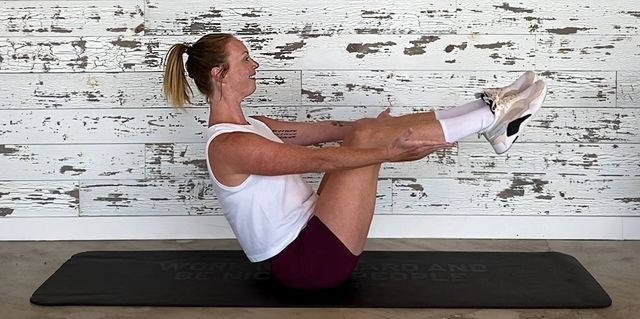
Whether you’re trying to build a six-pack or just trying to tone your body, ab workouts are a terrific way to get in shape and strengthen your core. Plus, ab exercises require no extra equipment and can be done from just about anywhere.
But there are many variations of ab workouts, so it can be hard to know which ones to try. To get a better idea of where to start, we talked to exercise physiologist Katie Lawton about six great ab workouts to add to your workout routine.
A few things to keep in mind
While these exercises all focus on your abdomen muscles, they also strengthen your entire core. Your abs are simply a component of the core muscle group, which includes the oblique muscles along your side, your gluteal muscles, certain muscles along your spine, your diaphragm, muscles of your pelvic floor and hip flexors.
Your core provides stability for your entire body and impacts your movements. Core strength even affects your posture and back pain. The bottom line: A healthy, strong core is important for your overall health.
Before getting down to the floor and getting your workouts in, though, Lawton has a few tips to remember.
- Engage the core: “A lot of people start doing these exercises and don’t realize they’re not engaging their core as much as they should be. Sometimes they’re using their hips more than their abdomen, so they’re not getting that full workout,” she says.
- Tuck your pelvis: She also says you should be sure to tuck your pelvis in a little as you perform these exercises to help engage those core muscles. “Make sure that pelvis is tucked and you’re not arching your back.”
- Smooth, controlled movements: Making controlled movements is also key to getting the most out of your workout. “If you’re moving faster, it’s going to feel a lot easier,” Lawton says. “If you’re doing slower, controlled movements, it feels a lot harder but that’s much better for strengthening those muscles.”
- Know when you’re fatigued: Finally, she says, “Know when you’re getting fatigued, especially if you’re new to these exercises. When your abdomen gets tired, that’s when you’re going to start using other muscles, like your hip flexors, more and your core muscles less.”
Getting those abs in shape
Keeping these tips in mind, you can get started on all of these exercises. Be sure to wear comfortable workout clothing, but make sure your gear isn’t so loose it interferes with your movement.
And since these workouts all involve being on the floor, make sure you’ve got a yoga or workout mat that provides some padding and can keep you comfortable while you go through your reps.
Crunches
Crunches are probably the most well-known of the major ab workouts, a variation on the classic sit-up. They’re also very simple to do, though you need to take care you don’t exacerbate any back and neck injuries.
“They’re a great workout that targets your abs and strengthens your core,” says Lawton. “But if you have any disc issues, complications or neck problems, you might want to skip crunches because of the stress that can be put on those parts of the body.”



 Ezra Clemons

 Fitnessaware