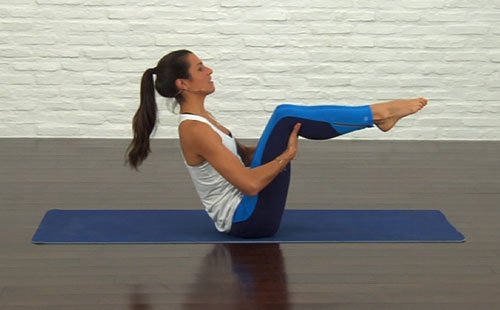
In this 20-minute session for beginners, we will work with breath and other foundational elements to set you up for a sustainable and beneficial practice you enjoy! This is the perfect practice to send to a friend who wants to get into yoga. This is also designed as the perfect all-around practice for someone of any yoga background, with a meditative pace and strong focus on form and function to increase flexibility, build strength, and regulate the nervous system. Repeat this practice and commit to consistency to feel your mental, emotional, and physical health transform. You will move through breath work, poses for the spine, hips, shoulders, and core, as well as poses for the hamstrings, wrists, ankles, knees, and low back. Yoga is for everyone! The hardest part is showing up. Thank you for allowing me to guide you through practice. Let me know how it goes for you in the comment section below!
– – – – – – – – –
❤️ WELCOME to the Yoga With Adriene YouTube channel! Our mission is to connect as many people as possible through high-quality free yoga videos. We welcome all levels, all bodies, all genders, all souls! SUBSCRIBE to the channel and join our global movement! ❤️ https://www.youtube.com/user/yogawith…
Whether you’re taking on the #IrishLifeDublinMarathon or focusing on the Dublin Race Series, it’s important to get your landing technique right when running ✅
In a world of green juice and chia seed pudding, this age-old dish is the original, and perhaps most powerful, superfood, especially for athletes competing at the highest levels.
“I’ve asked a lot of elite endurance athletes about their breakfast foods, particularly before races, and oatmeal comes up again and again and again,” says Matt Fitzgerald, endurance coach, nutritionist, and author of The Endurance Diet.
You’re most likely to see oatmeal served with a ton of fixin’s, but even a bowl of plain oats holds its own as a nutritional panacea. Oatmeal is a whole grain (unless you buy oat bran—just part of the seed—as opposed to rolled oats) filled with key vitamins and minerals, a low-glycemic carb that provides lasting energy for your workout and helps fuel recovery without causing a sugar crash, and high in fiber to aid your digestive and metabolic systems.
But a bowl of oats is also a big blank canvas, ready to be combined with a truckload of other high-quality, nutritious ingredients that make it even better training food. “That’s one of oatmeal’s great virtues. You can take it in so many directions,” says Fitzgerald.
Even energy bar companies use it. Picky Bars have Picky Oats, a lineup of better-for-the-athlete instant oatmeal chock-full of real ingredients to support performance, rather than added sugars or fake health foods. “I literally believe that besides energy bars, oatmeal is the next most pervasive food for athletes,” says Jesse Thomas, former professional triathlete and Picky Bars CEO.
It’s easy to make. All you have to do is boil a ratio of 1/2 cup rolled oats to one cup liquid—either water or a milk of your choice—and top it with whatever you need that day. (For steel-cut oats, change the ratio to 1/4 cup oats to one cup liquid.) Here’s how six athletes do it.
Skinny jeans are creeping back into the fashion cycle—but before you panic, Kendall Jenner’s latest look proves they can be sleek, modern, and nothing like the skintight pairs of yore.
Meanwhile, if your end-of-summer plans involve travel, a naturopath shares five simple, anti-inflammatory habits to help you feel your best while on vacation.
2 reasons why a strong core is so important to overall health: • Good posture: a strong core leads to less slouching, deeper breathing and comfort standing. • Balance and stability: the ability to move, walk, run, turn, bend, and so on comes from the core. : Ashley Lorenzo
Having a well-rounded, healthy nutrition plan is just as important as staying consistent with your exercise routine
When you’re an athlete racking up miles and muscle, your body needs extra fuel to keep up with the amount of exercise you’re doing and help speed up recovery. That’s what makes sports nutrition so important — it offers you a path to making sure you’re getting all the nutrients you need, even as you sweat.
Sports and nutrition
For the most part, athletes will eat higher quantities of food more often than non-athletes because food is equivalent to energy. But that isn’t always the case, and some meal plans may work better for you than for someone else.
“Everyone’s body is very different, so it’s really important that we specialize individualized nutrition plans,” says registered dietitian Carly Sedlacek, RD, LD.
Bringing your physical fitness goals to a dietitian can help provide you with a holistic, balanced and personalized approach to eating healthy beyond simply counting calories. If you’re trying to build muscle, for example, your goals for nutrition will likely be different from someone who’s trying to lose weight.
Overall, when sports nutrition is combined with consistent exercise, it can boost your performance and help you feel great, even on rest days. Regardless of your goals, the following areas of sports nutrition can help.
Hydration
When you exercise, you lose a lot of water and electrolytes through sweating. Drinking enough water before a training session and throughout a workout can help replenish what’s lost.
At minimum, you should drink about 16 ounces of water two to three hours before exercise, and about 4 ounces every 15 to 20 minutes while exercising. It’s also important to make sure you’re drinking plenty of water throughout the entire day.
Sometimes, athletes prefer to use sports drinks after exercising because they’re packed with electrolytes to replace what was lost in sweat. “Electrolyte beverages should be used during activities lasting longer than 60 minutes,” says Sedlacek. “If you have a history of chronic disease or conditions, check with your doctor before including higher sodium beverages.”
Carbohydrates
Carbohydrates are your body’s main source of energy. While carbs are not the only food you should focus on, they should be something you consider as part of every meal, especially in the hours leading up to a workout or training session.
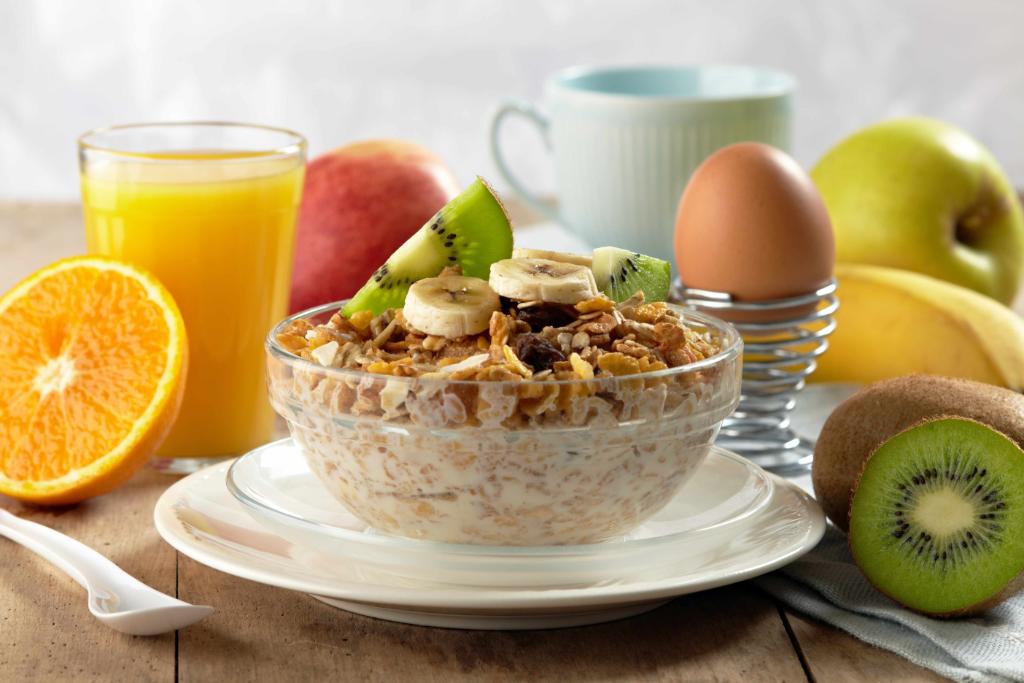
“Before exercising, you want to stick with foods that tend to digest easily, including some carbohydrate sources like fruits (bananas, apples or oranges), oatmeal or rice,” advises Sedlacek. “If you’re doing a longer workout routine that’s more than an hour long, you’ll want carbohydrates during that time to get that boost of quick-acting energy.”
Protein
Protein is the building block for your muscles. Without it, muscle recovery slows, along with your ability to build muscle mass. In general, you should try and get most of your protein from whole food sources like:
Salmon and other fish
Eggs and egg whites
Greek yogurt
Beans and legumes
Chicken
Tofu
Low-fat cheeses
But when you’re short on time, you can turn to protein powders or protein shakes between meals, in addition to having some protein at every meal.
“Protein helps with muscle recovery,” shares Sedlacek. “Getting at least 25 to 35 grams of protein right after exercise is helpful because that’s when your body prefers to use it.”
Fats
In general, having a healthy, well-rounded diet that incorporates an abundance of fruits, vegetables and plant- or animal-based sources of protein is key. That means healthy fats (like olive oil, avocado and fatty fish) also play a role as a secondary source of energy. Not only do they fill you up faster, but they also help your body better process other micronutrients, like fat-soluble vitamins.
Supplements
When it comes to supplements (like protein powders or pre-workout beverages), you want to use them sparingly. As you’re consuming more than the general population to keep up with your level of athleticism, supplements should be used to fill in a gap and not as a meal replacement.
“We want to try and stick to a food-first approach the best we can because the body is able to utilize those sources a little bit better than supplements,” explains Sedlacek.
Timing
When it comes to meals and snacks, timing is everything. You should try to aim for three spaced-out meals a day with snacks in between each meal. When it comes to exercise, you’ll want to have something small to eat (usually carbs or protein) at least an hour or two before exercising and immediately after a workout.
“It’s important to be consistent,” states Sedlacek. “If we’re going into an exercise and we don’t have enough energy to pull from, our body can end up pulling energy from our muscles. So, it’s important to have something small to eat before working out.”
Next steps
Sports nutrition can require a lot of fine-tuning, especially when you’re just getting started. Working with a dietitian and a physical fitness trainer can help get you the support you need for your specific situation.
And if at any point you feel lightheaded, dizzy or even experience hunger pangs, it might be a result of not eating enough or having enough water to keep up with the physical demands of exercise. In those cases, trying to level out your blood sugars and electrolytes is important, as well as seeing a healthcare provider if issues continue.