Skip to content

Fitnessaware

Health & Wellbeing

Tag: Fitnessaware

Posted on December 1, 2023

How To Stay on Track and Avoid Injury While Cycling

We’ve all been there, caught between the desire to slow down and the need to push through the pain of an intense workout no matter the cost.

But if you’re a newbie to spin classes and indoor cycling, you may be confronted with a few positions that lead to discomfort or numbness that radiates through your lower extremities. If you’re not set up correctly from the starting line and don’t know how to reposition yourself, this numb feeling is the least of your worries for potential injury and an unsatisfactory experience.

Exercise physiologist and certified personal trainer Karen Feakes, CPT, explains how to find the right fit for your bike and helpful ways you can avoid injury and recover safely when cycling.

Why is cycling good for you?

The benefits of cycling vary, but it’s a go-to practice for many people interested in building their endurance and improving strength and flexibility. Healthcare providers recommend aerobic exercises for 30 minutes at a time, five to seven days a week, making cycling a perfect low-impact choice to add to your fitness regimen. But just because it’s billed as a “low-impact exercise” doesn’t mean it’s never challenging.

A quick search for indoor cycling will likely give you a range of classes that run from performance-based classes to all-out get-fit courses.

“Indoor cycling classes offer different formats for various levels of fitness,” says Feakes. “Beginner classes could be as short as 30 minutes and promote basic principles of cycling. Anyone can pop into those classes to get a great workout, get their heart rate up, work on their endurance and build some of their leg strength. Advanced classes are structured to be performance-based to meet the needs of cyclists and triathletes and they can be up to 90 to 120 minutes long.”

If you’re new to cycling, or if you’ve dealt with knee, hip or leg injuries in the past, you might want to start off with a general cycling class before stepping it up to more performance-based courses. And even if you’re familiar with the routine but are just getting back into it after spending time away from cycling, starting slow is key to getting back on track. In those instances, you’ll want to consider doing 15-minute intervals and working your way up to an hour-long class over the course of five to six weeks.

“Cycling can become quite high impact, particularly at the hip and knee joint,” notes Feakes. “You want your experience to be enjoyable and realistic. In most cases, the adaptation process for getting used to cycling is around six weeks for most people, especially if you come in a little deconditioned.”

Common cycling injuries and remedies

A majority of cycling injuries happen because of poor setup.

“Finding the correct positioning for you is really critical in terms of injury prevention,” states Feakes.

Here are some common injuries that can happen with indoor cycling, as well as ways you should position yourself for success:

Knee injuries

Perhaps one of the most common cycling injuries, knee injuries can occur when you over-extend or over-flex your knee in any direction while pedaling. You can also experience a knee injury if you have too much or too little resistance and cause your femur (thigh bone) and your patella (kneecap) to grind against each other.

“You’ll get a sensation of either sharp pain or dull pain in your kneecap,” explains Feakes. “If your positioning is incorrect, most people will feel uncomfortable within 15 minutes and feel that pressure in their knee. And if someone already has existing knee complaints, this will only make those problems worse.”

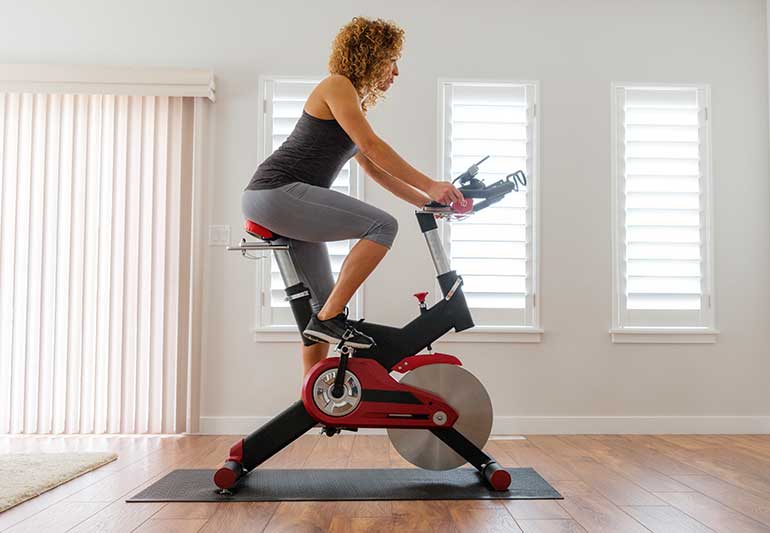
One way to avoid knee injuries from happening is to adjust the height of your seat and the position or tilt of your seat. You can think of one complete pedal stroke like one complete revolution around a clock.

When you push to the bottom of your pedal stroke (in the 6 o’clock position), your knee should have a slight bend to it so your knee has 15 to 30 degrees of flexion. When your right leg is in the 3 o’clock position, your kneecap should be directly aligned with the ball of your foot and the center of your bike pedal.

“As you’re pedaling and you build up that cadence, your knee will track correctly while it’s in motion without being overly extended in any direction,” says Feakes.

And if you experience knee pain or swelling around your kneecap after your ride, you’ll want to rest, ice it right away, apply some compression and elevate your kneecap.

The day after you experience knee pain post-cycling, you’ll also want to get some range of motion back by flexing your hamstrings, quads and calf muscles below your knee to make sure your muscles don’t become too tight. Flexibility and mobility exercises can improve the function of your joints and muscles and speed recovery. It’s even helpful to do these at the conclusion of each class.

Front foot pain

If you experience any foot pain while pedaling, it’s likely because you’re not wearing the proper footwear.

“A running shoe often has a lot of cushion but it doesn’t necessarily have a lot of stiffness,” says Feakes. “Sometimes, people can experience foot pain if they have too much motion in their foot as they’re pedaling.”

Gear up with stiff-soled shoes or cycling shoes with clipless (or clip-in) cleats that latch onto the pedal if you plan on participating in regular classes or cycle more regularly. Doing so will keep your feet glued to the pedal with much-needed support.

Chafing and saddle sores

If you’re going to put in the work, you want to make sure you’re dressed for the occasion to avoid chafing and saddle sores. One sure way to do this is to wear cycling shorts without undergarments.

“If you’re shifting around in the seat and you’re also getting sweaty, you can end up with chafed skin from the seams of your undergarments,” explains Feakes. “Depending on the length of the class, you could also be rubbed raw.”

Feakes recommends showering immediately after each cycling session to minimize bacterial growth and applying anti-chafing cream before and after cycling to prevent chafing and soothe a sore area.

If you develop saddle sores, you’ll want to apply lubrication like Vaseline® or Aquaphor® daily and avoid cycling until they clear up after a week or two.

Numb butts

The numbing sensation you feel while cycling can often be fixed by making sure you position your seat correctly with the initial setup. But confronting pressure points in your behind and dealing with some numbness in your butt and lower back is common for most beginners.

“We don’t have a lot of fat in that region, so when you’re sitting in that seat, you’re sitting right on those sit bones,” explains Feakes. “Just like anything, we have to get accustomed to a load being placed in that area.”

If you need some added cushion, a padded seat cover can help provide some relief. But perhaps the best way to avoid that numb sensation and get used to the seated position is to slowly build up your cycling regimen over the course of six weeks, starting with short 15-minute intervals and working your way up.

“You want to build up your duration over several sessions to break in that tissue,” Feakes advises. “It’s an adaptive process, and you really have to get used to the ergonomics of the seat and having pressure in the seat as you ride.”

Lower back pain

When you’re sitting in a forward, flexed position, you may find the muscles in your lower back become fatigued and/or start to spasm as you begin to cycle, especially if you’re new to cycling.

“For beginners, I’ll often keep the handlebar height up a little higher, and then, we’ll work on the position of their hands and how much flexion they have coming forward until it feels more comfortable,” says Feakes.

If your lower back pain persists, you may want to stop your ride and stand up for some stretching exercises to help extend some of those lower back muscles.

The finishing line on cycling

Cycling is an excellent form of exercise. With the right preparation and recovery tools, it can be a beneficial part of your everyday fitness. Working on your hip and lower back mobility, as well as incorporating other well-rounded strength training activities, can also help prevent injuries while cycling and make the experience more enjoyable.

And if you’re not sure where to start, there’s more than one path to get you in the cycling mood. Yoga, for example, is one solid starter to stretching those hips and getting ready for the ride.

“I encourage beginners to integrate indoor cycling into their fitness regime one to two days each week for general fitness improvements, weight management and to build strength and endurance,” says Feakes.

Another bonus? “In addition to the health benefits, indoor cycling classes provide a social outlet and can be a great opportunity to build friendships and find support.”

Posted on November 30, 2023

.@neyu_ma – Make the most of every moment! 💚

Posted on November 30, 2023

Leona Maguire has played in 20 tournaments and won $1.2 million on the @LPGA tour this year. #hardworkpays

leonamaguire's profile picture

leonamaguireVerified

Great to spend some time with the @bmwireland family at the launch of the new BMW i7. Thanks for having me! 💃🏻🏎️

Posted on November 28, 2023

Sore knee, huh? Have you tried icing it?

sore knee tw 18816


  • GetPT1st™ ‏@GetPT1st 27m27 minutes ago

    Sore knee, huh? Have you tried icing it? Haha! Something to make you smile today from the #GetPT1st team.


Posted on November 27, 2023

Passive stretching: 3 examples and benefits: @ClevelandClinic #stressrelief

health.clevelandclinic.org

What Is Passive Stretching?

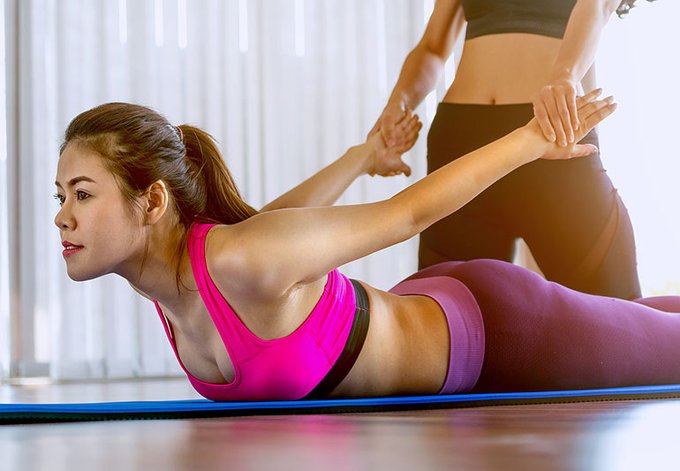
Relax into this form of stretching while a prop or partner assists you

When you think of stretching, you might picture someone sitting on the floor, legs extended, reaching for their toes. But passive stretching takes a different approach. Instead of relying on your own flexibility, you use something (or someone) else to help.

Licensed massage therapist and registered nurse DeBorah Hill, RN, LMT, explains passive stretching and how it can benefit your health.

What is passive stretching?

Most people are familiar with dynamic and static stretching. Static stretching focuses on holding a pose that stretches your muscle as far as you can. Dynamic stretching uses movements, like walking lunges or hip circles, to warm up your muscles before an activity.

Dynamic and static stretches are limited to how far you can physically move. Think of toe touches: Some people can touch their toes and beyond, while others can’t reach their knees.

Passive stretching uses other forces to stretch your muscles, rather than your own ability. “During passive stretching, your body is loose and relaxed,” says Hill. “You let an external force — like a partner, towel or fitness strap — do the work.”

For example, instead of touching your toes, you can perform a passive hamstring stretch. During this stretch, you lie on your back and use a rolled-up towel or strap to help you stretch the back of your thigh. 

If you’re new to passive stretching, use care. You could accidentally stretch a muscle too much and cause injury.

“Listen to your body as you stretch,” advises Hill. “Passive stretching should not hurt, and many people overestimate how flexible they are. It’s helpful to talk with a licensed physical therapist or massage therapist before you start.”

Benefits of passive stretching

Consider adding passive stretching to your routine to:

Relieve stress

Unlike static or dynamic stretching, passive stretching requires your muscles to be relaxed for it to work. This release of physical tension can benefit your mental health.

“When you fully relax for a passive stretch, you tell your brain to shift out of fight-or-flight mode,” explains Hill. “Passive stretching can take you out of survival mode so you feel relaxed.”

Increase flexibility

One study found passive stretching to be better than dynamic stretching at increasing hamstring flexibility.

“Passive stretching can increase your range of motion when other stretches don’t work for you,” says Hill. “Your prop or partner can help you gently stretch beyond what you can normally do yourself.”

Overcome mobility limitations

If you have mobility issues or chronic pain, other forms of stretching can be difficult. Passive stretching works for people of all ages and fitness levels. Can’t bend over or move your body a certain way? Passive stretches can work around these limitations.

Examples of passive stretching

Passive stretches can work many different muscles. Try these stretches to get started:

1. Doorway stretch

This stretch focuses on your chest and shoulders:

  1. Stand just behind a doorway.
  2. Place one foot slightly in front of the other for stability.
  3. Raise your arms to the side with your elbows bent at 90 degrees, palms facing forward like goal posts. Allow your elbows, forearms and palms to press against the doorframe.
  4. Gently lean forward, keeping your arms on the doorframe.
  5. Hold for 10 seconds.
  6. Rest for five seconds and repeat.

2. Standing quad stretch

This passive stretch focuses on your quadriceps, or the muscles on the front of your thighs:

  1. Stand next to a steady object, such as a table or wall, that can be used for balance.
  2. Loop a rolled-up towel or fitness strap around your right ankle.
  3. Hold the other end of the towel or strap with your right hand.
  4. Place your left hand on the table or wall for balance.
  5. Slowly bend your right knee and pull your right foot up toward your buttocks using the towel or strap.
  6. Hold for up to 30 seconds.
  7. Repeat on the opposite leg.

3. Towel hamstring stretch

The backs of your legs, or hamstrings, get a stretch here — no toe-touching required:

  1. Lie on your back, with your legs straight and relaxed.
  2. Slowly raise one leg up toward the ceiling without bending your knee, keeping your leg relaxed.
  3. Hook the towel or strap behind your hamstring or calf or under the arch of your foot, depending on what’s comfortable for you.
  4. Using your towel or strap, gently pull your leg towards you until you feel the stretch.
  5. Hold for up to 30 seconds.
  6. Switch legs.

A stretching routine is worth it

Taking a few minutes a day to stretch has big benefits, from preventing injuries to reducing joint pain. And if other forms of stretching haven’t worked for you, passive stretching is worth a try.

“The beauty of passive stretching is that it works for so many people,” states Hill. “Whether you’re just starting out or you’re an elite athlete, passive stretching can help you feel great physically and mentally.”

Posted on November 23, 2023

Simple, super fit, polka dot from Carolyn Donnelly @dunnesstores

dunnesstores

•

Follow

Liked by anetcoffey and others

  • dunnesstores's profile picturedunnesstores
  • A simple shirt with a super fit is a great wardrobe essential and this new style from Carolyn Donnelly the Edit in a polka dot is perfect to wear effortlessly with your favourite pants.

    @carolyndonnellytheedit
  • 54m
Posted on November 22, 2023

Simple, super fit, polka dot from Carolyn Donnelly @dunnesstores

dunnesstores

•

Follow

Liked by anetcoffey and others

  • dunnesstores's profile picturedunnesstores
  • A simple shirt with a super fit is a great wardrobe essential and this new style from Carolyn Donnelly the Edit in a polka dot is perfect to wear effortlessly with your favourite pants.

    @carolyndonnellytheedit
  • 54m
Posted on November 20, 2023

.@leona_maguire wins €49,000 with a steady -9 at the Superstar CME Group Tour in Florida #comeoncavan

Leona Maguire reposted

Square profile picture

KPMG Golf

@KPMGGolf

·

Nov 15

.

@leona_maguire

tees off in the

@CMEGroupLPGA

tomorrow. Leona is 17th in the Race to CME Globe Ranking. Let’s go #TeamKPMG!

Posted on November 19, 2023

5 Yoga Poses to Safely Stretch Tight Groin Muscles | Yoga Journal #fitnessaware


Yoga Journal

@Yoga_Journal
·
15h

There is nothing wrong with stretching your groin muscles—even if they’re tight. But you should stretch safely. Here’s how.

5 Yoga Poses to Safely Stretch Tight Groin Muscles | Yoga Journal
If your tight muscles make it so you can barely come into Butterfly, these groin stretches will help you find relief.
yogajournal.com

Posted on November 18, 2023

.@leona_maguire playing for decent money at last. Prize fund is $7million at the CME Group Tour in Florida #comeoncavan

Leona Maguire reposted

Square profile picture

KPMG Golf

@KPMGGolf

·

Nov 15

.

@leona_maguire

tees off in the

@CMEGroupLPGA

tomorrow. Leona is 17th in the Race to CME Globe Ranking. Let’s go #TeamKPMG!

Posts pagination

Previous page Page 1 … Page 52 Page 53 Page 54 … Page 285 Next page

Tags

  • core stability
  • core strength
  • diet
  • exercise
  • fitness
  • Fitnessaware
  • health
  • physical activity
  • physio
  • physiotherapy
  • Pilates
  • running
  • Therapy
  • womens health
  • yoga

Archives

  • March 2026
  • February 2026
  • January 2026
  • December 2025
  • November 2025
  • October 2025
  • September 2025
  • August 2025
  • July 2025
  • June 2025
  • May 2025
  • April 2025
  • March 2025
  • February 2025
  • January 2025
  • December 2024
  • November 2024
  • October 2024
  • September 2024
  • August 2024
  • July 2024
  • June 2024
  • May 2024
  • April 2024
  • March 2024
  • February 2024
  • January 2024
  • December 2023
  • November 2023
  • October 2023
  • September 2023
  • August 2023
  • July 2023
  • June 2023
  • May 2023
  • April 2023
  • March 2023
  • February 2023
  • January 2023
  • December 2022
  • November 2022
  • October 2022
  • September 2022
  • August 2022
  • July 2022
  • June 2022
  • May 2022
  • April 2022
  • March 2022
  • February 2022
  • January 2022
  • December 2021
  • November 2021
  • October 2021
  • September 2021
  • August 2021
  • July 2021
  • June 2021
  • May 2021
  • April 2021
  • March 2021
  • February 2021
  • January 2021
  • December 2020
  • November 2020
  • October 2020
  • September 2020
  • August 2020
  • July 2020
  • June 2020
  • May 2020
  • April 2020
  • March 2020
  • February 2020
  • January 2020
  • December 2019
  • November 2019
  • October 2019
  • September 2019
  • August 2019
  • July 2019
  • June 2019
  • May 2019
  • April 2019
  • March 2019
  • February 2019
  • January 2019
  • December 2018
  • November 2018
  • October 2018
  • September 2018
  • August 2018
  • July 2018
  • June 2018
  • May 2018
  • April 2018
  • March 2018
  • January 2018
  • June 2016
  • May 2016
  • April 2016
  • March 2016
  • February 2016
  • December 2015
Blog at WordPress.com.
Privacy & Cookies: This site uses cookies. By continuing to use this website, you agree to their use.
To find out more, including how to control cookies, see here: Cookie Policy
  • Subscribe Subscribed
    • Fitnessaware
    • Join 1,595 other subscribers
    • Already have a WordPress.com account? Log in now.
    • Fitnessaware
    • Subscribe Subscribed
    • Sign up
    • Log in
    • Report this content
    • View site in Reader
    • Manage subscriptions
    • Collapse this bar
 

Loading Comments...