Yoga Rebel @yogarebellondon 2 hours ago
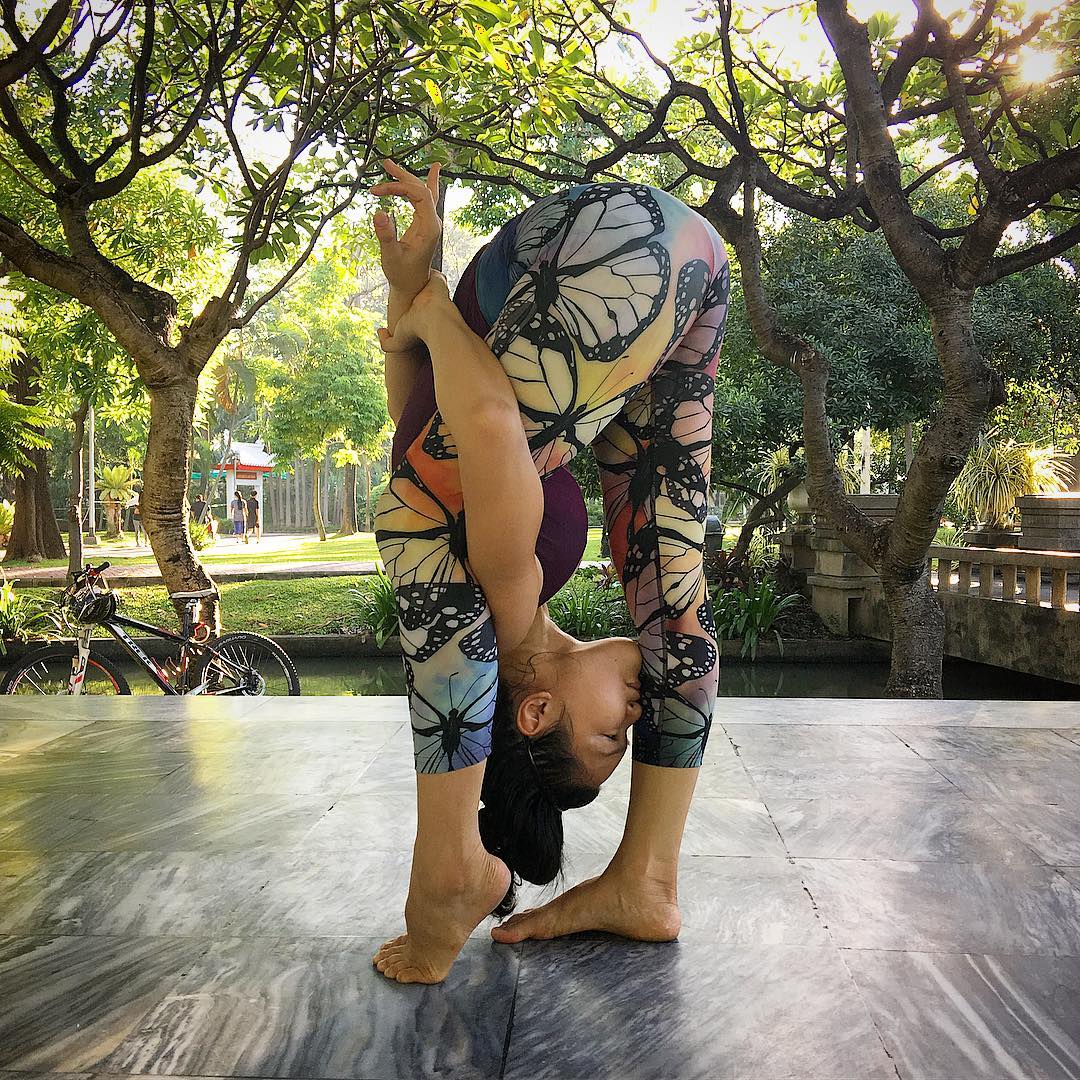
Funky Forward Fold! We  different twists on classic yoga poses! PC: @maytanee1520

Health & Wellbeing
Yoga Rebel @yogarebellondon 2 hours ago
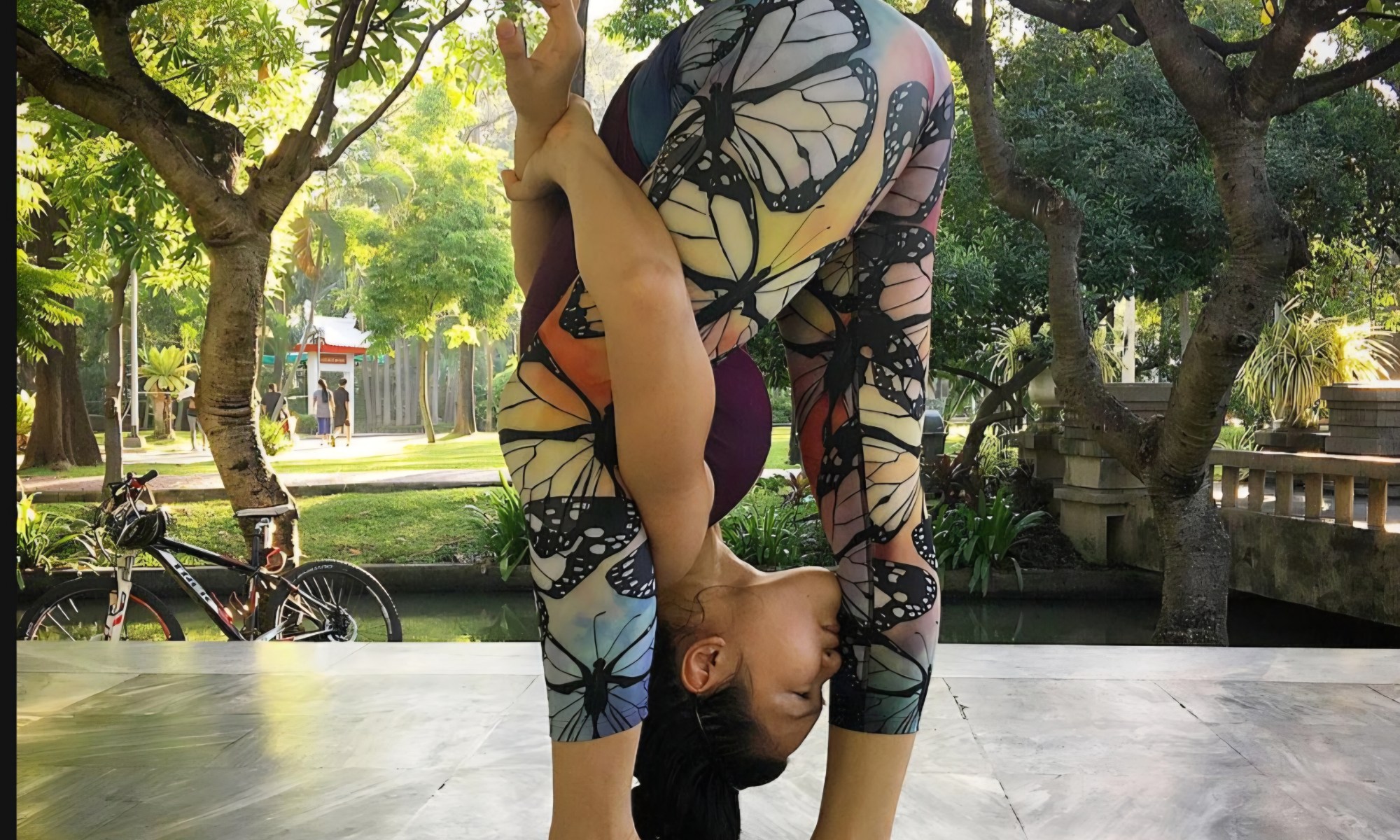
Funky Forward Fold! We different twists on classic yoga poses! PC: @maytanee1520
health.clevelandclinic.org
What Is Passive Stretching?
Relax into this form of stretching while a prop or partner assists you
When you think of stretching, you might picture someone sitting on the floor, legs extended, reaching for their toes. But passive stretching takes a different approach. Instead of relying on your own flexibility, you use something (or someone) else to help.
Licensed massage therapist and registered nurse DeBorah Hill, RN, LMT, explains passive stretching and how it can benefit your health.
Most people are familiar with dynamic and static stretching. Static stretching focuses on holding a pose that stretches your muscle as far as you can. Dynamic stretching uses movements, like walking lunges or hip circles, to warm up your muscles before an activity.
Dynamic and static stretches are limited to how far you can physically move. Think of toe touches: Some people can touch their toes and beyond, while others can’t reach their knees.
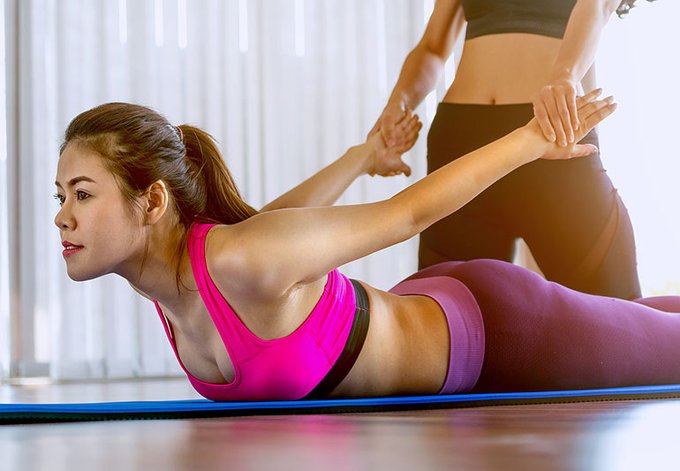
Passive stretching uses other forces to stretch your muscles, rather than your own ability. “During passive stretching, your body is loose and relaxed,” says Hill. “You let an external force — like a partner, towel or fitness strap — do the work.”
For example, instead of touching your toes, you can perform a passive hamstring stretch. During this stretch, you lie on your back and use a rolled-up towel or strap to help you stretch the back of your thigh.
If you’re new to passive stretching, use care. You could accidentally stretch a muscle too much and cause injury.
“Listen to your body as you stretch,” advises Hill. “Passive stretching should not hurt, and many people overestimate how flexible they are. It’s helpful to talk with a licensed physical therapist or massage therapist before you start.”
Consider adding passive stretching to your routine to:
Unlike static or dynamic stretching, passive stretching requires your muscles to be relaxed for it to work. This release of physical tension can benefit your mental health.
“When you fully relax for a passive stretch, you tell your brain to shift out of fight-or-flight mode,” explains Hill. “Passive stretching can take you out of survival mode so you feel relaxed.”
One study found passive stretching to be better than dynamic stretching at increasing hamstring flexibility.
“Passive stretching can increase your range of motion when other stretches don’t work for you,” says Hill. “Your prop or partner can help you gently stretch beyond what you can normally do yourself.”
If you have mobility issues or chronic pain, other forms of stretching can be difficult. Passive stretching works for people of all ages and fitness levels. Can’t bend over or move your body a certain way? Passive stretches can work around these limitations.
Passive stretches can work many different muscles. Try these stretches to get started:
This stretch focuses on your chest and shoulders:
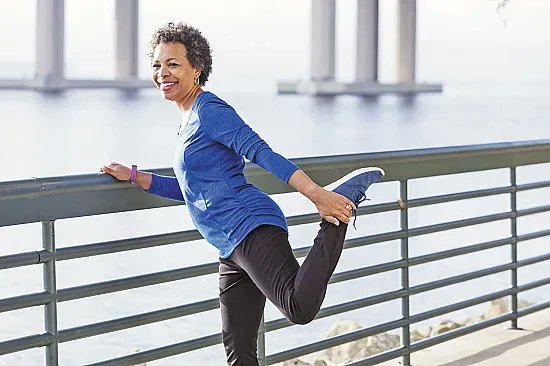
This passive stretch focuses on your quadriceps, or the muscles on the front of your thighs:
The backs of your legs, or hamstrings, get a stretch here — no toe-touching required:
Taking a few minutes a day to stretch has big benefits, from preventing injuries to reducing joint pain. And if other forms of stretching haven’t worked for you, passive stretching is worth a try.
“The beauty of passive stretching is that it works for so many people,” states Hill. “Whether you’re just starting out or you’re an elite athlete, passive stretching can help you feel great physically and mentally.”
health.clevelandclinic.org
What Is Passive Stretching?
Relax into this form of stretching while a prop or partner assists you
When you think of stretching, you might picture someone sitting on the floor, legs extended, reaching for their toes. But passive stretching takes a different approach. Instead of relying on your own flexibility, you use something (or someone) else to help.
Licensed massage therapist and registered nurse DeBorah Hill, RN, LMT, explains passive stretching and how it can benefit your health.
Most people are familiar with dynamic and static stretching. Static stretching focuses on holding a pose that stretches your muscle as far as you can. Dynamic stretching uses movements, like walking lunges or hip circles, to warm up your muscles before an activity.
Dynamic and static stretches are limited to how far you can physically move. Think of toe touches: Some people can touch their toes and beyond, while others can’t reach their knees.
Passive stretching uses other forces to stretch your muscles, rather than your own ability. “During passive stretching, your body is loose and relaxed,” says Hill. “You let an external force — like a partner, towel or fitness strap — do the work.”
For example, instead of touching your toes, you can perform a passive hamstring stretch. During this stretch, you lie on your back and use a rolled-up towel or strap to help you stretch the back of your thigh.
If you’re new to passive stretching, use care. You could accidentally stretch a muscle too much and cause injury.
“Listen to your body as you stretch,” advises Hill. “Passive stretching should not hurt, and many people overestimate how flexible they are. It’s helpful to talk with a licensed physical therapist or massage therapist before you start.”
Consider adding passive stretching to your routine to:
Unlike static or dynamic stretching, passive stretching requires your muscles to be relaxed for it to work. This release of physical tension can benefit your mental health.
“When you fully relax for a passive stretch, you tell your brain to shift out of fight-or-flight mode,” explains Hill. “Passive stretching can take you out of survival mode so you feel relaxed.”
One study found passive stretching to be better than dynamic stretching at increasing hamstring flexibility.
“Passive stretching can increase your range of motion when other stretches don’t work for you,” says Hill. “Your prop or partner can help you gently stretch beyond what you can normally do yourself.”
If you have mobility issues or chronic pain, other forms of stretching can be difficult. Passive stretching works for people of all ages and fitness levels. Can’t bend over or move your body a certain way? Passive stretches can work around these limitations.
Passive stretches can work many different muscles. Try these stretches to get started:
This stretch focuses on your chest and shoulders:
This passive stretch focuses on your quadriceps, or the muscles on the front of your thighs:
The backs of your legs, or hamstrings, get a stretch here — no toe-touching required:
Taking a few minutes a day to stretch has big benefits, from preventing injuries to reducing joint pain. And if other forms of stretching haven’t worked for you, passive stretching is worth a try.
“The beauty of passive stretching is that it works for so many people,” states Hill. “Whether you’re just starting out or you’re an elite athlete, passive stretching can help you feel great physically and mentally.”
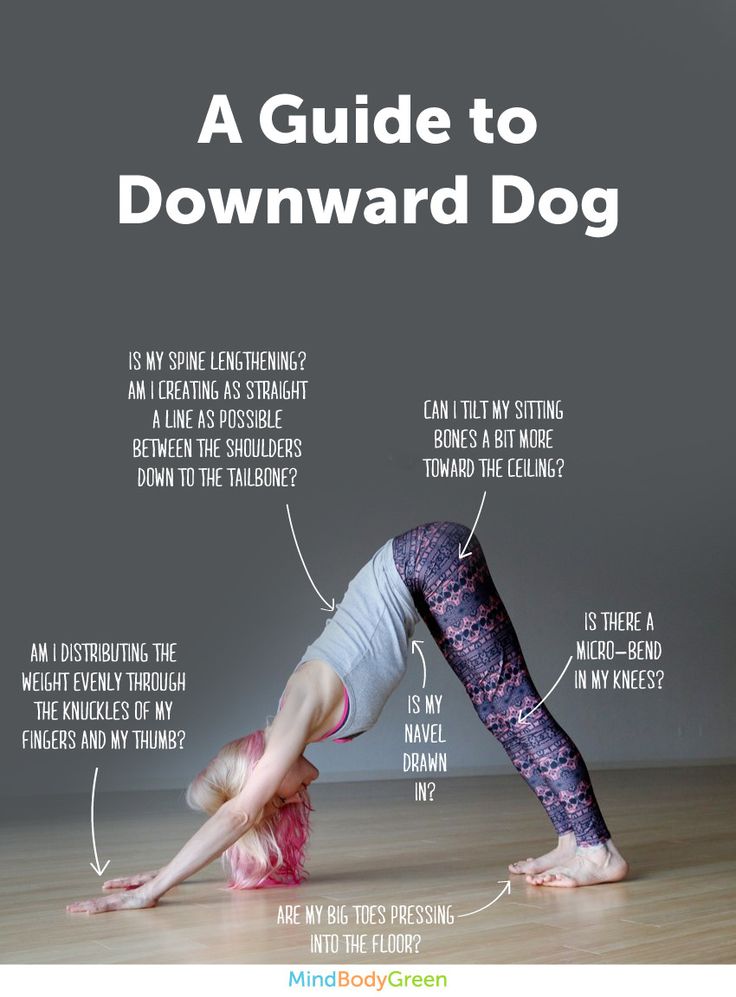
The benefits of downward dog pose include helping to release tension in the shoulders, align the spinal column, and strengthen the legs and arms. The downward dog pose lengthens and stretches the hamstrings and Achilles tendons as well as increasing ankle flexibility.
health.clevelandclinic.org
What Is Passive Stretching?
Relax into this form of stretching while a prop or partner assists you
When you think of stretching, you might picture someone sitting on the floor, legs extended, reaching for their toes. But passive stretching takes a different approach. Instead of relying on your own flexibility, you use something (or someone) else to help.
Licensed massage therapist and registered nurse DeBorah Hill, RN, LMT, explains passive stretching and how it can benefit your health.
Most people are familiar with dynamic and static stretching. Static stretching focuses on holding a pose that stretches your muscle as far as you can. Dynamic stretching uses movements, like walking lunges or hip circles, to warm up your muscles before an activity.
Dynamic and static stretches are limited to how far you can physically move. Think of toe touches: Some people can touch their toes and beyond, while others can’t reach their knees.
Passive stretching uses other forces to stretch your muscles, rather than your own ability. “During passive stretching, your body is loose and relaxed,” says Hill. “You let an external force — like a partner, towel or fitness strap — do the work.”
For example, instead of touching your toes, you can perform a passive hamstring stretch. During this stretch, you lie on your back and use a rolled-up towel or strap to help you stretch the back of your thigh.
If you’re new to passive stretching, use care. You could accidentally stretch a muscle too much and cause injury.
“Listen to your body as you stretch,” advises Hill. “Passive stretching should not hurt, and many people overestimate how flexible they are. It’s helpful to talk with a licensed physical therapist or massage therapist before you start.”
Consider adding passive stretching to your routine to:
Unlike static or dynamic stretching, passive stretching requires your muscles to be relaxed for it to work. This release of physical tension can benefit your mental health.
“When you fully relax for a passive stretch, you tell your brain to shift out of fight-or-flight mode,” explains Hill. “Passive stretching can take you out of survival mode so you feel relaxed.”
One study found passive stretching to be better than dynamic stretching at increasing hamstring flexibility.
“Passive stretching can increase your range of motion when other stretches don’t work for you,” says Hill. “Your prop or partner can help you gently stretch beyond what you can normally do yourself.”
If you have mobility issues or chronic pain, other forms of stretching can be difficult. Passive stretching works for people of all ages and fitness levels. Can’t bend over or move your body a certain way? Passive stretches can work around these limitations.
Passive stretches can work many different muscles. Try these stretches to get started:
This stretch focuses on your chest and shoulders:
This passive stretch focuses on your quadriceps, or the muscles on the front of your thighs:
The backs of your legs, or hamstrings, get a stretch here — no toe-touching required:
Taking a few minutes a day to stretch has big benefits, from preventing injuries to reducing joint pain. And if other forms of stretching haven’t worked for you, passive stretching is worth a try.
“The beauty of passive stretching is that it works for so many people,” states Hill. “Whether you’re just starting out or you’re an elite athlete, passive stretching can help you feel great physically and mentally.”

Stretching each day is an integral part of improving your overall health. Even if you’re not an athlete, stretching provides important benefits for both your mind and body.
Believe it or not, there is a right and wrong way to stretch.
Knowing the differences and understanding the proper technique will help you stay more energized throughout the day and can also improve the flexibility of your joints.


It’s never too late to improve your golf swing. Our Mayo Clinic experts have the stretches to take your game to the next level:
Golf stretches can help get you ready for a day on the golf course. These golf stretches may help promote a fluid, full golf swing, which can improve your performance.
Before you start your golf stretches, you may want to warm up with 5 to 10 minutes of light activity, such as walking around the practice tee. If you have time, finish the full series of golf stretches found here. Hold each stretch for about 30 seconds.
Doing a single stretch one time is helpful. Do one set of golf stretches every day and another set before and after each round of golf.
Remember: Keep stretching gentle. Don’t bounce. If you feel pain, you’ve stretched too far.
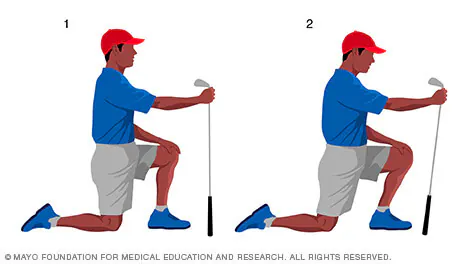
Start off your golf stretches by first stretching the quadriceps. Quadriceps are the muscles in the front of the thighs. Start with this stretch:
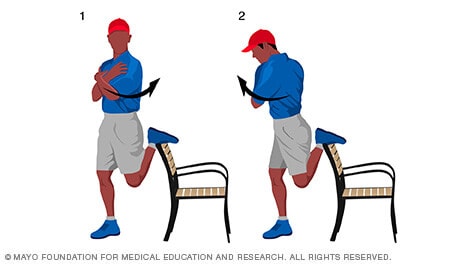
Next, stretch the back muscles:
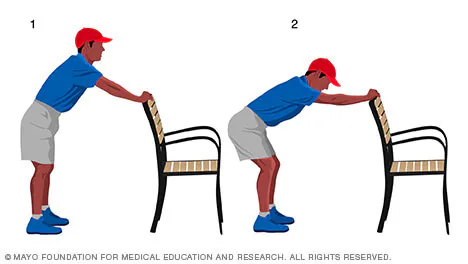
Now move on to the hamstrings. Hamstrings are the muscles in the back of the thighs. To do this stretch:
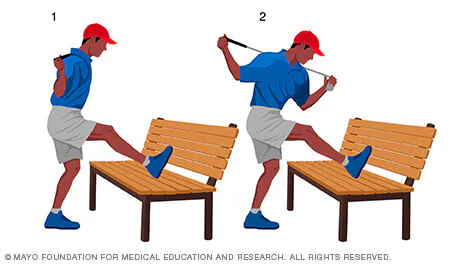
You can stretch your hips many ways. Try this seated stretch first:
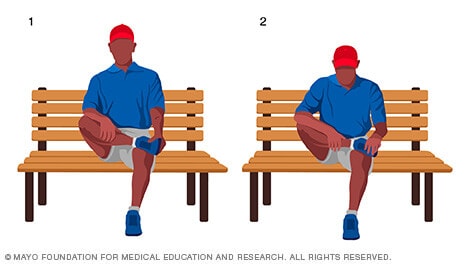
Try this hip and back stretch:
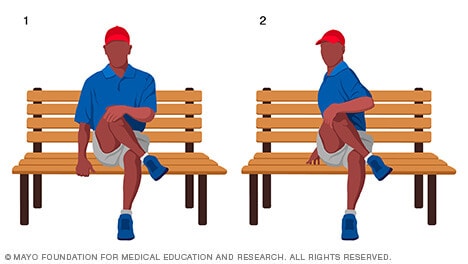
Here’s a final hip stretch:
Now stretch your wrists upward:
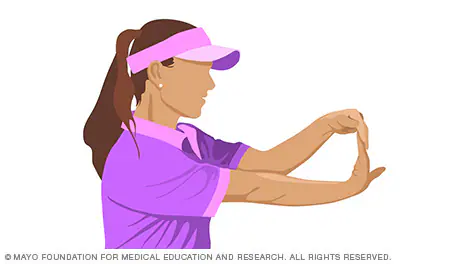
Stretch your wrists downward too:
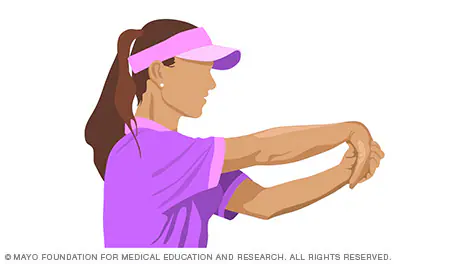
Next stretch your shoulders:
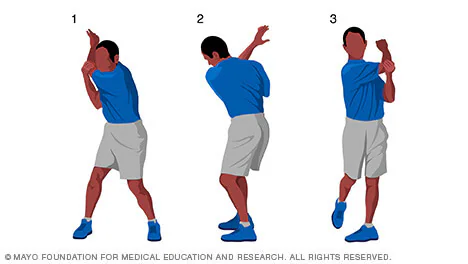
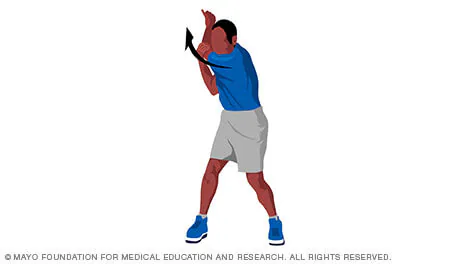
Finally, stretch the core muscles:
Originally published on Mayo Clinic
It’s never too late to improve your golf swing. Our Mayo Clinic experts have the stretches to take your game to the next level:
Golf stretches can help get you ready for a day on the golf course. These golf stretches may help promote a fluid, full golf swing, which can improve your performance.
Before you start your golf stretches, you may want to warm up with 5 to 10 minutes of light activity, such as walking around the practice tee. If you have time, finish the full series of golf stretches found here. Hold each stretch for about 30 seconds.
Doing a single stretch one time is helpful. Do one set of golf stretches every day and another set before and after each round of golf.
Remember: Keep stretching gentle. Don’t bounce. If you feel pain, you’ve stretched too far.
Start off your golf stretches by first stretching the quadriceps. Quadriceps are the muscles in the front of the thighs. Start with this stretch:
Next, stretch the back muscles:
Now move on to the hamstrings. Hamstrings are the muscles in the back of the thighs. To do this stretch:
You can stretch your hips many ways. Try this seated stretch first:
Try this hip and back stretch:
Here’s a final hip stretch:
Now stretch your wrists upward:
Stretch your wrists downward too:
Next stretch your shoulders:
Finally, stretch the core muscles:
Originally published on Mayo Clinic
health.clevelandclinic.org
What Is Passive Stretching?
Relax into this form of stretching while a prop or partner assists you
When you think of stretching, you might picture someone sitting on the floor, legs extended, reaching for their toes. But passive stretching takes a different approach. Instead of relying on your own flexibility, you use something (or someone) else to help.
Licensed massage therapist and registered nurse DeBorah Hill, RN, LMT, explains passive stretching and how it can benefit your health.
Most people are familiar with dynamic and static stretching. Static stretching focuses on holding a pose that stretches your muscle as far as you can. Dynamic stretching uses movements, like walking lunges or hip circles, to warm up your muscles before an activity.
Dynamic and static stretches are limited to how far you can physically move. Think of toe touches: Some people can touch their toes and beyond, while others can’t reach their knees.
Passive stretching uses other forces to stretch your muscles, rather than your own ability. “During passive stretching, your body is loose and relaxed,” says Hill. “You let an external force — like a partner, towel or fitness strap — do the work.”
For example, instead of touching your toes, you can perform a passive hamstring stretch. During this stretch, you lie on your back and use a rolled-up towel or strap to help you stretch the back of your thigh.
If you’re new to passive stretching, use care. You could accidentally stretch a muscle too much and cause injury.
“Listen to your body as you stretch,” advises Hill. “Passive stretching should not hurt, and many people overestimate how flexible they are. It’s helpful to talk with a licensed physical therapist or massage therapist before you start.”
Consider adding passive stretching to your routine to:
Unlike static or dynamic stretching, passive stretching requires your muscles to be relaxed for it to work. This release of physical tension can benefit your mental health.
“When you fully relax for a passive stretch, you tell your brain to shift out of fight-or-flight mode,” explains Hill. “Passive stretching can take you out of survival mode so you feel relaxed.”
One study found passive stretching to be better than dynamic stretching at increasing hamstring flexibility.
“Passive stretching can increase your range of motion when other stretches don’t work for you,” says Hill. “Your prop or partner can help you gently stretch beyond what you can normally do yourself.”
If you have mobility issues or chronic pain, other forms of stretching can be difficult. Passive stretching works for people of all ages and fitness levels. Can’t bend over or move your body a certain way? Passive stretches can work around these limitations.
Passive stretches can work many different muscles. Try these stretches to get started:
This stretch focuses on your chest and shoulders:
This passive stretch focuses on your quadriceps, or the muscles on the front of your thighs:
The backs of your legs, or hamstrings, get a stretch here — no toe-touching required:
Taking a few minutes a day to stretch has big benefits, from preventing injuries to reducing joint pain. And if other forms of stretching haven’t worked for you, passive stretching is worth a try.
“The beauty of passive stretching is that it works for so many people,” states Hill. “Whether you’re just starting out or you’re an elite athlete, passive stretching can help you feel great physically and mentally.”
 Fitnessaware