 GetPT1st™
Health & Wellbeing
health.clevelandclinic.org
What Is Passive Stretching?
Relax into this form of stretching while a prop or partner assists you
When you think of stretching, you might picture someone sitting on the floor, legs extended, reaching for their toes. But passive stretching takes a different approach. Instead of relying on your own flexibility, you use something (or someone) else to help.
Licensed massage therapist and registered nurse DeBorah Hill, RN, LMT, explains passive stretching and how it can benefit your health.
Most people are familiar with dynamic and static stretching. Static stretching focuses on holding a pose that stretches your muscle as far as you can. Dynamic stretching uses movements, like walking lunges or hip circles, to warm up your muscles before an activity.
Dynamic and static stretches are limited to how far you can physically move. Think of toe touches: Some people can touch their toes and beyond, while others can’t reach their knees.
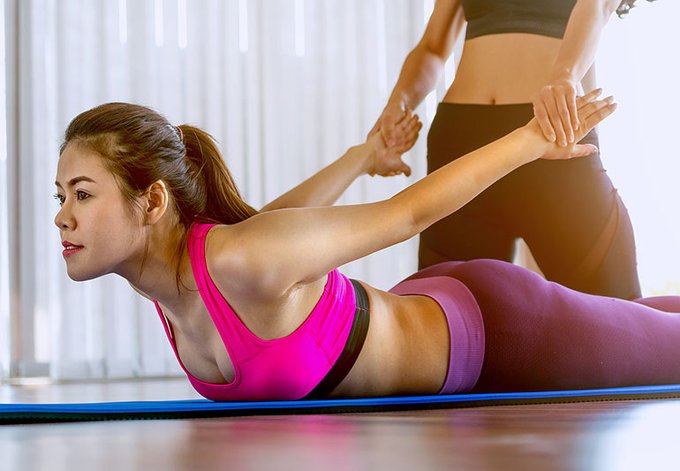
Passive stretching uses other forces to stretch your muscles, rather than your own ability. “During passive stretching, your body is loose and relaxed,” says Hill. “You let an external force — like a partner, towel or fitness strap — do the work.”
For example, instead of touching your toes, you can perform a passive hamstring stretch. During this stretch, you lie on your back and use a rolled-up towel or strap to help you stretch the back of your thigh.
If you’re new to passive stretching, use care. You could accidentally stretch a muscle too much and cause injury.
“Listen to your body as you stretch,” advises Hill. “Passive stretching should not hurt, and many people overestimate how flexible they are. It’s helpful to talk with a licensed physical therapist or massage therapist before you start.”
Consider adding passive stretching to your routine to:
Unlike static or dynamic stretching, passive stretching requires your muscles to be relaxed for it to work. This release of physical tension can benefit your mental health.
“When you fully relax for a passive stretch, you tell your brain to shift out of fight-or-flight mode,” explains Hill. “Passive stretching can take you out of survival mode so you feel relaxed.”
One study found passive stretching to be better than dynamic stretching at increasing hamstring flexibility.
“Passive stretching can increase your range of motion when other stretches don’t work for you,” says Hill. “Your prop or partner can help you gently stretch beyond what you can normally do yourself.”
If you have mobility issues or chronic pain, other forms of stretching can be difficult. Passive stretching works for people of all ages and fitness levels. Can’t bend over or move your body a certain way? Passive stretches can work around these limitations.
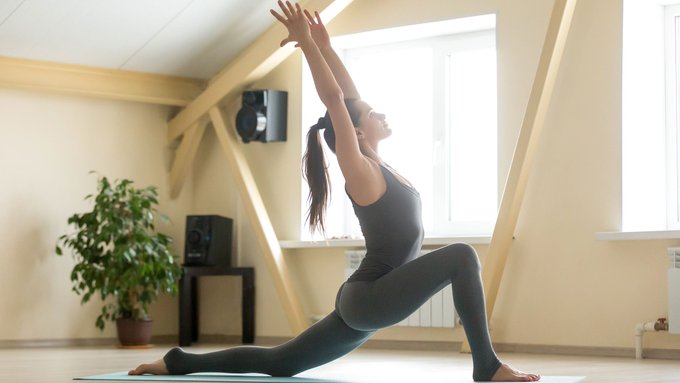
Passive stretches can work many different muscles. Try these stretches to get started:
This stretch focuses on your chest and shoulders:
This passive stretch focuses on your quadriceps, or the muscles on the front of your thighs:
The backs of your legs, or hamstrings, get a stretch here — no toe-touching required:
Taking a few minutes a day to stretch has big benefits, from preventing injuries to reducing joint pain. And if other forms of stretching haven’t worked for you, passive stretching is worth a try.
“The beauty of passive stretching is that it works for so many people,” states Hill. “Whether you’re just starting out or you’re an elite athlete, passive stretching can help you feel great physically and mentally.”
health.clevelandclinic.org
What Is Passive Stretching?
Relax into this form of stretching while a prop or partner assists you
When you think of stretching, you might picture someone sitting on the floor, legs extended, reaching for their toes. But passive stretching takes a different approach. Instead of relying on your own flexibility, you use something (or someone) else to help.
Licensed massage therapist and registered nurse DeBorah Hill, RN, LMT, explains passive stretching and how it can benefit your health.
Most people are familiar with dynamic and static stretching. Static stretching focuses on holding a pose that stretches your muscle as far as you can. Dynamic stretching uses movements, like walking lunges or hip circles, to warm up your muscles before an activity.
Dynamic and static stretches are limited to how far you can physically move. Think of toe touches: Some people can touch their toes and beyond, while others can’t reach their knees.
Passive stretching uses other forces to stretch your muscles, rather than your own ability. “During passive stretching, your body is loose and relaxed,” says Hill. “You let an external force — like a partner, towel or fitness strap — do the work.”
For example, instead of touching your toes, you can perform a passive hamstring stretch. During this stretch, you lie on your back and use a rolled-up towel or strap to help you stretch the back of your thigh.
If you’re new to passive stretching, use care. You could accidentally stretch a muscle too much and cause injury.
“Listen to your body as you stretch,” advises Hill. “Passive stretching should not hurt, and many people overestimate how flexible they are. It’s helpful to talk with a licensed physical therapist or massage therapist before you start.”
Consider adding passive stretching to your routine to:
Unlike static or dynamic stretching, passive stretching requires your muscles to be relaxed for it to work. This release of physical tension can benefit your mental health.
“When you fully relax for a passive stretch, you tell your brain to shift out of fight-or-flight mode,” explains Hill. “Passive stretching can take you out of survival mode so you feel relaxed.”
One study found passive stretching to be better than dynamic stretching at increasing hamstring flexibility.
“Passive stretching can increase your range of motion when other stretches don’t work for you,” says Hill. “Your prop or partner can help you gently stretch beyond what you can normally do yourself.”
If you have mobility issues or chronic pain, other forms of stretching can be difficult. Passive stretching works for people of all ages and fitness levels. Can’t bend over or move your body a certain way? Passive stretches can work around these limitations.
Passive stretches can work many different muscles. Try these stretches to get started:
This stretch focuses on your chest and shoulders:
This passive stretch focuses on your quadriceps, or the muscles on the front of your thighs:
The backs of your legs, or hamstrings, get a stretch here — no toe-touching required:
Taking a few minutes a day to stretch has big benefits, from preventing injuries to reducing joint pain. And if other forms of stretching haven’t worked for you, passive stretching is worth a try.
“The beauty of passive stretching is that it works for so many people,” states Hill. “Whether you’re just starting out or you’re an elite athlete, passive stretching can help you feel great physically and mentally.”
AUGUST 13, 2021
It’s been said—and memed—that “Movement without awareness is exercise. Movement with awareness is yoga.”
It’s easy to aspire to the latter. (Don’t we all?) It’s not always easy to achieve it, though. Especially when you’re taking yourself through your practice without a teacher cueing a sequence. Or when you’re desperately trying to cram 10 minutes of your practice in as your weekday meeting marathon looms.
There’s actually an ancient yogic antidote specifically designed for those mornings. It’s a series of yoga postures known as Surya Namaskar A, more commonly known as Sun Salutations. This set sequence of postures dates back more than 2,500 years to a time when ancient cultures revered the sun. Salutations are believed to have been regarded as a literal salute to sunrise and were perceived to ready the body for all that would happen during daylight. (Had they only known about Zoom…)
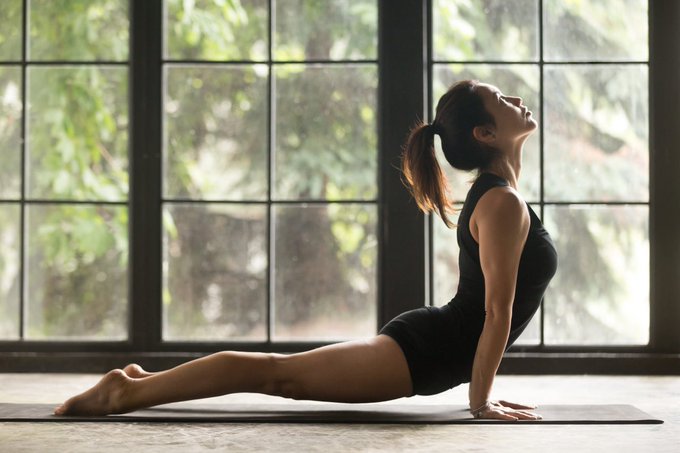
This sequence of postures is essentially a series of prescribed motions that begins and ends with Tadasana (Mountain Pose). The poses take you through all manner of stretches, forward folds, and backbends that build heat and happen in a rhythmic cadence that’s aligned with your breath. The start of an inhale initiates your transition from one pose to the next, followed by a lull in both the breath and body as you come into the pose, with the beginning of an exhale acting as a cue for your next transition. Breath, movement, and stillness fall into a rhythm. The trajectory of the sequence, like that of its namesake star, has a predictable arc and is cyclical, making it easy to become quietly absorbed in the looping repeated motions. A moving meditation.
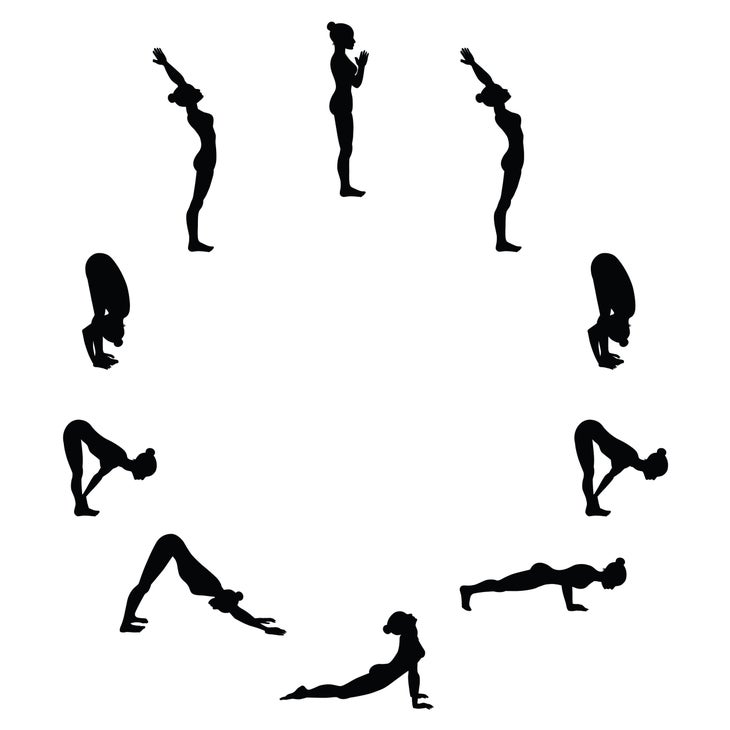
Photo: Baleika Tamara
You may already be vaguely or intimately familiar with Surya Namaskar A but haven’t committed the poses and their order to memory. That’s OK! We lay it all out for you here. Less thinking. More flowing.


