Red Bean, Onion and Coconut Rice.@Yoga_Journal

red bean & cocnut rice

Red Bean and Coconut Rice

This colorful rice plate is a great stand-alone dish or the perfect base layer for another protein.

The sweetness of the onion and the coconut milk complements the saltiness of the rice, so ensure you season this dish well. You can use red onion if you want a sweeter flavor and add a couple of finely diced fresh green chilies along with the onion, if you’d like more heat. The rice gets a beautiful pink color from the red kidney beans that looks pretty served with a mixed green salad, such as lettuce and sliced avocado.

See also Tias and Surya Little’s Elemental Bowl Has Everything You Need for Optimal Vitality

  • Duration
  • 4Servings

Ingredients

  • 1 large onion, finely sliced
  • 4 garlic cloves, finely chopped
  • 1 1/4 cups basmati rice, washed and drained
  • 1/2 x 14 oz. can red kidney beans, drained and rinsed
  • a big handful of fresh cilantro, finely chopped (stems and all)
  • scant 1 cup coconut milk mixed with the same amount of cold water

Preparation

Heat 2 tablespoons of sunflower oil in a heavy-based saucepan and fry the onion and garlic on high heat for 3–4 minutes, then reduce the heat to medium and fry for a further 2 minutes, or until soft.

Add the rice and fry for 30 seconds, without stirring too much, then add the kidney beans, cilantro, and some salt and black pepper to taste.

Pour in the coconut milk and water mixture. Bring to a boil, then stir the rice once and cover. Reduce the heat to the lowest setting and simmer for 12 minutes without lifting the lid.

Remove from the heat and leave the pan, covered, for a further 5 minutes to allow the rice to finish cooking in the steam.

Remove the lid, fluff up the rice with a fork, and serve hot.

Cover-India7

Excerpted from Indian in 7: Delicious Indian Recipes in 7 Ingredients or Fewer by Monisha Bharadwaj, Kyle Books 2019. Reprinted with permission.

What to Eat Before a Run of Any Distance – Lizzie Kasparek RD @runnersworld

runners world food for your run

Runner’s World
@runnersworld

Your body usually needs something to kick-start your workout. Here’s a breakdown of what you need depending on the type of run.

Choosing what to eat before a run plagues nearly every one of us until you figure out what works best for you. And because people tolerate foods differently, there is no one-size-fits-all when it comes to prerun fueling. Some runners swear by eating nothing before short or easier runs, while others have to put something in their system. That said, there are some general guidelines to follow as you prepare a prerun snack or meal.

What to Eat Before a Long Run

Long runs are most commonly defined as being 60 minutes or more, and once you get into half or full marathon training, a good chunk of your runs will be at least 60 minutes.

What you eat before a long run is a good dress rehearsal for your prerace breakfast, says Lizzie Kasparek, R.D., sports dietitian for the Sanford Sports Science Institute.

Long runs require more energy than shorter runs, which means your prerun snack or meal will be larger and take a little more time to digest. That’s why Kasparek recommends eating two to four hours before a long run (and eventually, your race).

“Whether you give yourself a few hours or just an hour to digest, focus on consuming mostly carbs,” she says. Your body’s preferred fuel source is simple carbs—banana, oatmeal, white bagel, a honey packet—because it can be quickly turned into energy.

Yes, we know that may mean an early wake-up for morning runners, but you’ll be grateful when you have the energy to push past the first hour. Plus, you can always wake up, eat a little something, and go back to sleep until run time.

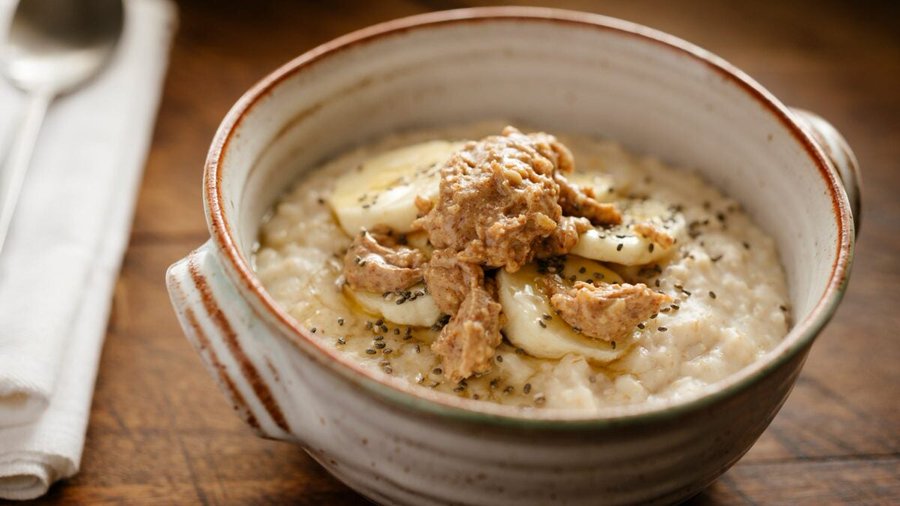
Try: A small bowl of oatmeal topped with a few slices of banana
For sensitive stomachs: Half a white bagel with peanut butter or serving of white rice

What to Eat Before a Sprint/Interval Workout

Often, speed work doesn’t last for more than 60 minutes, but the workout is much more intense than slower, longer miles. And because of this, your body needs prerun carbs, says Kasparek, who points out that some people also like a little bit of protein with this snack.

Honey Stinger Energy Gel, 6 Pack
amazon.com

$11.75

“You need to provide your body with quick carbs that give your body energy it can use right away,” she says.

Try: Plain greek yogurt with blueberries or banana with peanut butter or handful of dry cereal or Honey Stinger gel
For sensitive stomachs: Half a banana

What to Eat Before an Easy Run

Most easy runs don’t require a prerun snack—even those that are pushing 60 minutes, says Kasparek.

“If you’re going out for a quick 30- or 40-minute easy run, and you haven’t eaten in a couple of hours or it’s in the morning after an overnight fast, you’re probably not going to die if you don’t eat before that run,” she says.

The best thing to do is schedule those easy runs around your normal snacks and meals. For example, after a morning run, use your breakfast as your recovery meal, which will include carbs plus 15 to 25 grams of protein, says Kasparek.

If you’re running in the afternoon, instead of having your usual 3 p.m. snack and a 4 p.m. prerun snack, skip the prerun snack, or bump your 3 p.m. snack to an hour before your run. Then Kasparek suggests making your postrun meal your dinner.

That said, if you know that you can’t run well or safely without something in your system, have something small like half a banana or a tablespoon of peanut butter. And remember, easy means easy, so running at a relaxed pace that you can maintain and talk to a friend effortlessly if needed.

Try: Eggs with toast or a protein shake or oatmeal made with milk after a morning run, or salmon with rice or a veggie stir-fry after an afternoon or evening run

What to Eat Before a Race

If you’ve been training properly, you have practiced your prerace meal before your long runs, says Susan Paul, exercise physiologist and program director for the Orlando Track Shack Foundation. “Race morning is not the time to try anything new,” she says.

For shorter distances, like a 5K or 10K, your breakfast should be similar to what you’d eat before a track (interval) workout, because the intensity is higher, while the duration is shorter.

For longer distances, like a half or full marathon, your breakfast—and the timing of when you have it—should be similar to what you practiced eating before your long runs.

As Paul and Kasparek point out, give yourself plenty of time to digest before you head to the start line. And because you might have hours between the time you have breakfast and toe the line, bring an extra snack, says Kasparek.

Clif Bar Energy Bar, 12 Count
amazon.com

$10.59

“You don’t want to be hungry on the start line,” she says.

Try: Bagel with peanut butter + gel or Clif bar 30 minutes prior to the start

RELATED: Build a killer midsection in the kitchen for powerful, effortless miles on the road with Eat for Abs!
Knead, stretch, awaken your qi: here’s the right way to tackle recovery depends on where in the world you are.@WomensRunning

Toward the end of a long run your calf is in a knot the size of a grapefruit. Is this an over-excited neuron taking out its anxiety on a muscle? Or is your qi depleted? You may need a new recovery technique.

Western hemisphere physios of yore saw the body as an organization of bones, muscles, fascia, and nerves, so bodywork that originated there, like Swedish massage, attempts to heal and realign those parts.

Eastern folk saw the body as a vessel of energy and breath. Bodywork that grew out of that philosophy, like acupressure, sought to open blocked energy pathways and restore balance.

Here’s a quick look at three types of bodywork from around the world—three philosophies—that can be used as prevention during training, or for recovery from an injury or race.

Recovery Modalities From Around The World

Shiatsu
Origin: Japan

Shiatsu is based on theories of acupuncture and Chinese medicine that were imported to Japan around 5 AD. According to Cari Johnson Pelava, director of Centerpoint Massage & Shiatsu Therapy School & Clinic, in Minneapolis, a system of energy, “qi,” runs through the body on pathways, and along those pathways lie points where one can access that energy to make a difference in the body. Symptoms like pain or fatigue are said to be caused by an imbalance of energy. By applying pressure, kneading, and stretching, a shiatsu therapist can restore the body’s energy balance.

“We’ve worked with triathletes pre-event and post,” Johnson Pelava says. “Pre-event we’ll focus on tonifying energy so that it’s most accessible to the athlete on event day. We’ll do stretching, hip rotations, and other range of motion work to open energetic pathways. Post-event, we’ll work deeper to pull that energy that’s been depleted back.”

Thai Yoga
Origin: Thailand

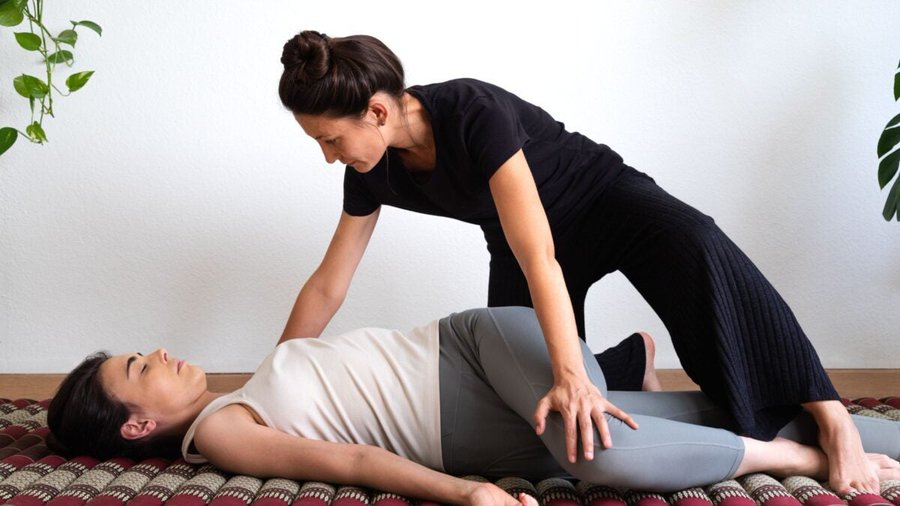
Thai yoga bodywork has an eastern flavor informed by yoga, Ayurveda, and Buddhism. It combines rhythmic massage, assisted yoga poses, acupressure along energy meridians, healing energy work, and meditation.

Tanya Boigenzahn, director of Devanadi School of Yoga and Wellness in Minneapolis, says Thai yoga bodywork can help athletes with flexibility, alignment, and breath control, as well as their mental game—mood, concentration, confidence.

Thai yoga is accomplished in a one-on-one session with clothes on. The therapist moves a passive client through positions, stretching tight areas, and encouraging range of motion and mindful breathwork.

Boigenzahn says Thai yoga helps optimize training pre-event, and eases recovery afterward. “Athletes can expect to have a quicker bounce back time, as well as less discomfort after a tough event.”

Rolfing
Origin: USA

Ida Rolf thought that pain, inefficient movement, and imbalance was were the result of the body being improperly organized around its axis. In New York during the 1940s, Rolf began reorganizing clients’ bodies by manipulating fascia—the connective tissue separating muscles and other organs— which developed into the therapeutic approach called Rolfing Structural Integration. “It’s a combination of participatory bodywork and active experimentation with body movement education,” says Kevin McCarthy, an advanced rolfer with In|Form Rolfing in Minneapolis. “We teach clients how to be aware of and work with their body for better function.”

Rolfing is a holistic approach that seeks to find the source of the dysfunction rather than merely treat the symptom. “Participatory” is a key word, McCarthy says.

“Unlike most forms of massage where you’re lying passively on a table, we’re asking, ‘Can you stand up using the outside of your leg? Do you notice the difference in how that feels?’” he says. “We’re using the body to repattern the brain.”

Because it involves education, rolfing is not a one-and-done—a rolfing treatment is actually usually a series of 10 sessions.

Is salad on the menu for lunch? Make it your best one ever with these five tips: @Yoga_Journal

5 Steps to Seriously Superior Salads
Apply these tried-and-true cooking tricks to salad-making, and you’ll be making the best veggie-packed dishes ever.
July 31, 2021 Ivy Manning


Your go-to bowl of greens may be a good salad, but is it the best salad? Some of the best cooking tricks can be applied to salad-making. Here are five game changers that will help take your salads to a new level.
1. Season it
We season everything else, so why skip your salad? A pinch of coarse sea salt and a few grinds of pepper enhance the flavors in salads, too. But don’t stop there! Spices can amp up the natural sweetness of vegetables both raw and cooked. Try this homemade toasted spice blend on salads to turn a ho-hum salads into the best salad with grilled shrimp, sprinkle nutritional yeast on slaws for a savory boost, or herby-tart za’atar blend on a cucumber tomato salad with feta.
2. Underdress
Err on the side of underdressing your salads. You need less dressing than you think, and you can always add more, but you can’t remove dressing from a soggy salad. As a general rule, add ½ tablespoon of dressing, gently toss, taste, and add more until the ingredients are very lightly coated. Another option for chronic over-dressers, pour out small amounts  of dressing (about 1 tablespoon per person) into a small ramekin and dip your fork into it before each bite of undressed salad.
3. Hands on
Toss your salads with your hands in a large bowl, this helps coat all the ingredients with seasonings and dressing and it’s gentler on tender greens. If you’d rather not get your hands dirty, use kitchen tongs to even toss things together.
4. Balance textures
Try to choose a balance of elements – fluffy leaves, creamy elements like avocado or cheese, crunchy items like nuts or seeds, something substantial like roasted squash, meat, seafood and juicy/crisp elements like apple, tomato, or celery.  And remember, we eat with our eyes, so arrange elements artfully for a more satisfying meal. Click here for a handy chart on how to build a well composed, best salad recipes ever.
5. Herbs are salad leaves, too.
Herbs are a mainstay of salad dressing, but they are also delicious by themselves tucked into leafy salads. Fresh, tender herbs like basil, cilantro, dill, basil, parsley, and mint blend right in with lettuce plus they add little pops of fresh flavor that are unexpected and make salads more interesting. Make sure to remove any tough or stringy stems…concentrating on the juicy leaves instead.

Knead, stretch, awaken your qi: here’s the right way to tackle recovery depends on where in the world you are.@WomensRunning

Toward the end of a long run your calf is in a knot the size of a grapefruit. Is this an over-excited neuron taking out its anxiety on a muscle? Or is your qi depleted? You may need a new recovery technique.

Western hemisphere physios of yore saw the body as an organization of bones, muscles, fascia, and nerves, so bodywork that originated there, like Swedish massage, attempts to heal and realign those parts.

Eastern folk saw the body as a vessel of energy and breath. Bodywork that grew out of that philosophy, like acupressure, sought to open blocked energy pathways and restore balance.

Here’s a quick look at three types of bodywork from around the world—three philosophies—that can be used as prevention during training, or for recovery from an injury or race.

Recovery Modalities From Around The World

Shiatsu
Origin: Japan

Shiatsu is based on theories of acupuncture and Chinese medicine that were imported to Japan around 5 AD. According to Cari Johnson Pelava, director of Centerpoint Massage & Shiatsu Therapy School & Clinic, in Minneapolis, a system of energy, “qi,” runs through the body on pathways, and along those pathways lie points where one can access that energy to make a difference in the body. Symptoms like pain or fatigue are said to be caused by an imbalance of energy. By applying pressure, kneading, and stretching, a shiatsu therapist can restore the body’s energy balance.

“We’ve worked with triathletes pre-event and post,” Johnson Pelava says. “Pre-event we’ll focus on tonifying energy so that it’s most accessible to the athlete on event day. We’ll do stretching, hip rotations, and other range of motion work to open energetic pathways. Post-event, we’ll work deeper to pull that energy that’s been depleted back.”

Thai Yoga
Origin: Thailand

Thai yoga bodywork has an eastern flavor informed by yoga, Ayurveda, and Buddhism. It combines rhythmic massage, assisted yoga poses, acupressure along energy meridians, healing energy work, and meditation.

Tanya Boigenzahn, director of Devanadi School of Yoga and Wellness in Minneapolis, says Thai yoga bodywork can help athletes with flexibility, alignment, and breath control, as well as their mental game—mood, concentration, confidence.

Thai yoga is accomplished in a one-on-one session with clothes on. The therapist moves a passive client through positions, stretching tight areas, and encouraging range of motion and mindful breathwork.

Boigenzahn says Thai yoga helps optimize training pre-event, and eases recovery afterward. “Athletes can expect to have a quicker bounce back time, as well as less discomfort after a tough event.”

Rolfing
Origin: USA

Ida Rolf thought that pain, inefficient movement, and imbalance was were the result of the body being improperly organized around its axis. In New York during the 1940s, Rolf began reorganizing clients’ bodies by manipulating fascia—the connective tissue separating muscles and other organs— which developed into the therapeutic approach called Rolfing Structural Integration. “It’s a combination of participatory bodywork and active experimentation with body movement education,” says Kevin McCarthy, an advanced rolfer with In|Form Rolfing in Minneapolis. “We teach clients how to be aware of and work with their body for better function.”

Rolfing is a holistic approach that seeks to find the source of the dysfunction rather than merely treat the symptom. “Participatory” is a key word, McCarthy says.

“Unlike most forms of massage where you’re lying passively on a table, we’re asking, ‘Can you stand up using the outside of your leg? Do you notice the difference in how that feels?’” he says. “We’re using the body to repattern the brain.”

Because it involves education, rolfing is not a one-and-done—a rolfing treatment is actually usually a series of 10 sessions.

This Anything-Goes Green Goddess Salad is a Nutrition Goldmine @WomensRunning #fitnessaware

This Anything-Goes Green Goddess Salad is a Nutrition Goldmine

womensrunning.com

This Anything-Goes Green Goddess Salad is a Nutrition Goldmine

This green goddess salad recipe hits all the flavor and texture sweet spots and proves that green is indeed the color of health.

Makes 4 Servings

Ingredients

Salad

  • 1 Tbsp. sugar
  • 1 tsp. salt
  • 2/3 cup cider vinegar or white vinegar
  • 1 large green bell pepper, sliced
  • 1 cup green lentils
  • 1 cup freekeh
  • 1 (8 ounce) container of store-bought hummus
  • 4 cups arugula
  • 1 cucumber, chopped
  • 1 avocado, diced
  • 1/4 cup roasted shelled sunflower seeds

RELATED: I Tried This Hack for Better Sleep–And It Actually Worked

Dressing

  • 1 cup chopped zucchini
  • 1/4 cup extra virgin olive oil
  • 2 Tbsp. water
  • Juice of 1 lemon
  • 1/2 cup chopped parsley
  • 2 scallions (green onions), chopped
  • 1 jalapeño, seeded and chopped
  • 1 garlic clove, chopped
  • 2 Tbsp. tahini
  • 1 tsp. honey
  • 1/2 tsp. salt

Directions

  1. Place green pepper slices in a large wide-mouth jar or bowl. Place sugar and salt in a separate bowl and add 2/3 cup boiled water; stir until sugar and salt are dissolved. Stir in cider vinegar. Let cool for a few minutes and then add vinegar mixture to peppers. Cover and chill for at least 4 hours or up to several days.
  2. Cook lentils in a large saucepan of simmering, salted water until they are tender but still retain their shape, about 25 minutes. Drain, rinse under cold running water, and drain well again.
  3. Bring 2 1/2 cups water to a boil in a saucepan. Add freekeh and a couple pinches of salt. Reduce heat to medium/low and simmer covered until grains are tender, about 25 minutes. Drain any excess water.
  4. To make the dressing, blend together olive oil, water, zucchini, lemon juice, parsley, scallions, jalapeño, garlic, tahini, honey, and salt until smooth.
  5. To serve, spread hummus on serving plates and scatter on lentils, arugula, freekeh, cucumber, avocado, and sunflower seeds. Drizzle on dressing and garnish with microgreens if using.

Knead, stretch, awaken your qi: here’s the right way to tackle recovery depends on where in the world you are.@WomensRunning #physiotherapy

Toward the end of a long run your calf is in a knot the size of a grapefruit. Is this an over-excited neuron taking out its anxiety on a muscle? Or is your qi depleted? You may need a new recovery technique.

Western hemisphere physios of yore saw the body as an organization of bones, muscles, fascia, and nerves, so bodywork that originated there, like Swedish massage, attempts to heal and realign those parts.

Eastern folk saw the body as a vessel of energy and breath. Bodywork that grew out of that philosophy, like acupressure, sought to open blocked energy pathways and restore balance.

Here’s a quick look at three types of bodywork from around the world—three philosophies—that can be used as prevention during training, or for recovery from an injury or race.

Recovery Modalities From Around The World

Shiatsu
Origin: Japan

Shiatsu is based on theories of acupuncture and Chinese medicine that were imported to Japan around 5 AD. According to Cari Johnson Pelava, director of Centerpoint Massage & Shiatsu Therapy School & Clinic, in Minneapolis, a system of energy, “qi,” runs through the body on pathways, and along those pathways lie points where one can access that energy to make a difference in the body. Symptoms like pain or fatigue are said to be caused by an imbalance of energy. By applying pressure, kneading, and stretching, a shiatsu therapist can restore the body’s energy balance.

“We’ve worked with triathletes pre-event and post,” Johnson Pelava says. “Pre-event we’ll focus on tonifying energy so that it’s most accessible to the athlete on event day. We’ll do stretching, hip rotations, and other range of motion work to open energetic pathways. Post-event, we’ll work deeper to pull that energy that’s been depleted back.”

Thai Yoga
Origin: Thailand

Thai yoga bodywork has an eastern flavor informed by yoga, Ayurveda, and Buddhism. It combines rhythmic massage, assisted yoga poses, acupressure along energy meridians, healing energy work, and meditation.

Tanya Boigenzahn, director of Devanadi School of Yoga and Wellness in Minneapolis, says Thai yoga bodywork can help athletes with flexibility, alignment, and breath control, as well as their mental game—mood, concentration, confidence.

Thai yoga is accomplished in a one-on-one session with clothes on. The therapist moves a passive client through positions, stretching tight areas, and encouraging range of motion and mindful breathwork.

Boigenzahn says Thai yoga helps optimize training pre-event, and eases recovery afterward. “Athletes can expect to have a quicker bounce back time, as well as less discomfort after a tough event.”

Rolfing
Origin: USA

Ida Rolf thought that pain, inefficient movement, and imbalance was were the result of the body being improperly organized around its axis. In New York during the 1940s, Rolf began reorganizing clients’ bodies by manipulating fascia—the connective tissue separating muscles and other organs— which developed into the therapeutic approach called Rolfing Structural Integration. “It’s a combination of participatory bodywork and active experimentation with body movement education,” says Kevin McCarthy, an advanced rolfer with In|Form Rolfing in Minneapolis. “We teach clients how to be aware of and work with their body for better function.”

Rolfing is a holistic approach that seeks to find the source of the dysfunction rather than merely treat the symptom. “Participatory” is a key word, McCarthy says.

“Unlike most forms of massage where you’re lying passively on a table, we’re asking, ‘Can you stand up using the outside of your leg? Do you notice the difference in how that feels?’” he says. “We’re using the body to repattern the brain.”

Because it involves education, rolfing is not a one-and-done—a rolfing treatment is actually usually a series of 10 sessions.

Knead, stretch, awaken your qi: here’s the right way to tackle recovery depends on where in the world you are.@WomensRunning #physiotherapy

Toward the end of a long run your calf is in a knot the size of a grapefruit. Is this an over-excited neuron taking out its anxiety on a muscle? Or is your qi depleted? You may need a new recovery technique.

Western hemisphere physios of yore saw the body as an organization of bones, muscles, fascia, and nerves, so bodywork that originated there, like Swedish massage, attempts to heal and realign those parts.

Eastern folk saw the body as a vessel of energy and breath. Bodywork that grew out of that philosophy, like acupressure, sought to open blocked energy pathways and restore balance.

Here’s a quick look at three types of bodywork from around the world—three philosophies—that can be used as prevention during training, or for recovery from an injury or race.

Recovery Modalities From Around The World

Shiatsu
Origin: Japan

Shiatsu is based on theories of acupuncture and Chinese medicine that were imported to Japan around 5 AD. According to Cari Johnson Pelava, director of Centerpoint Massage & Shiatsu Therapy School & Clinic, in Minneapolis, a system of energy, “qi,” runs through the body on pathways, and along those pathways lie points where one can access that energy to make a difference in the body. Symptoms like pain or fatigue are said to be caused by an imbalance of energy. By applying pressure, kneading, and stretching, a shiatsu therapist can restore the body’s energy balance.

“We’ve worked with triathletes pre-event and post,” Johnson Pelava says. “Pre-event we’ll focus on tonifying energy so that it’s most accessible to the athlete on event day. We’ll do stretching, hip rotations, and other range of motion work to open energetic pathways. Post-event, we’ll work deeper to pull that energy that’s been depleted back.”

Thai Yoga
Origin: Thailand

Thai yoga bodywork has an eastern flavor informed by yoga, Ayurveda, and Buddhism. It combines rhythmic massage, assisted yoga poses, acupressure along energy meridians, healing energy work, and meditation.

Tanya Boigenzahn, director of Devanadi School of Yoga and Wellness in Minneapolis, says Thai yoga bodywork can help athletes with flexibility, alignment, and breath control, as well as their mental game—mood, concentration, confidence.

Thai yoga is accomplished in a one-on-one session with clothes on. The therapist moves a passive client through positions, stretching tight areas, and encouraging range of motion and mindful breathwork.

Boigenzahn says Thai yoga helps optimize training pre-event, and eases recovery afterward. “Athletes can expect to have a quicker bounce back time, as well as less discomfort after a tough event.”

Rolfing
Origin: USA

Ida Rolf thought that pain, inefficient movement, and imbalance was were the result of the body being improperly organized around its axis. In New York during the 1940s, Rolf began reorganizing clients’ bodies by manipulating fascia—the connective tissue separating muscles and other organs— which developed into the therapeutic approach called Rolfing Structural Integration. “It’s a combination of participatory bodywork and active experimentation with body movement education,” says Kevin McCarthy, an advanced rolfer with In|Form Rolfing in Minneapolis. “We teach clients how to be aware of and work with their body for better function.”

Rolfing is a holistic approach that seeks to find the source of the dysfunction rather than merely treat the symptom. “Participatory” is a key word, McCarthy says.

“Unlike most forms of massage where you’re lying passively on a table, we’re asking, ‘Can you stand up using the outside of your leg? Do you notice the difference in how that feels?’” he says. “We’re using the body to repattern the brain.”

Because it involves education, rolfing is not a one-and-done—a rolfing treatment is actually usually a series of 10 sessions.

Knead, stretch, awaken your qi: here’s the right way to tackle recovery..@WomensRunning

Toward the end of a long run your calf is in a knot the size of a grapefruit. Is this an over-excited neuron taking out its anxiety on a muscle? Or is your qi depleted? You may need a new recovery technique.

Western hemisphere physios of yore saw the body as an organization of bones, muscles, fascia, and nerves, so bodywork that originated there, like Swedish massage, attempts to heal and realign those parts.

Eastern folk saw the body as a vessel of energy and breath. Bodywork that grew out of that philosophy, like acupressure, sought to open blocked energy pathways and restore balance.

Here’s a quick look at three types of bodywork from around the world—three philosophies—that can be used as prevention during training, or for recovery from an injury or race.

Recovery Modalities From Around The World

Shiatsu
Origin: Japan

Shiatsu is based on theories of acupuncture and Chinese medicine that were imported to Japan around 5 AD. According to Cari Johnson Pelava, director of Centerpoint Massage & Shiatsu Therapy School & Clinic, in Minneapolis, a system of energy, “qi,” runs through the body on pathways, and along those pathways lie points where one can access that energy to make a difference in the body. Symptoms like pain or fatigue are said to be caused by an imbalance of energy. By applying pressure, kneading, and stretching, a shiatsu therapist can restore the body’s energy balance.

“We’ve worked with triathletes pre-event and post,” Johnson Pelava says. “Pre-event we’ll focus on tonifying energy so that it’s most accessible to the athlete on event day. We’ll do stretching, hip rotations, and other range of motion work to open energetic pathways. Post-event, we’ll work deeper to pull that energy that’s been depleted back.”

Thai Yoga
Origin: Thailand

Thai yoga bodywork has an eastern flavor informed by yoga, Ayurveda, and Buddhism. It combines rhythmic massage, assisted yoga poses, acupressure along energy meridians, healing energy work, and meditation.

Tanya Boigenzahn, director of Devanadi School of Yoga and Wellness in Minneapolis, says Thai yoga bodywork can help athletes with flexibility, alignment, and breath control, as well as their mental game—mood, concentration, confidence.

Thai yoga is accomplished in a one-on-one session with clothes on. The therapist moves a passive client through positions, stretching tight areas, and encouraging range of motion and mindful breathwork.

Boigenzahn says Thai yoga helps optimize training pre-event, and eases recovery afterward. “Athletes can expect to have a quicker bounce back time, as well as less discomfort after a tough event.”

Rolfing
Origin: USA

Ida Rolf thought that pain, inefficient movement, and imbalance was were the result of the body being improperly organized around its axis. In New York during the 1940s, Rolf began reorganizing clients’ bodies by manipulating fascia—the connective tissue separating muscles and other organs— which developed into the therapeutic approach called Rolfing Structural Integration. “It’s a combination of participatory bodywork and active experimentation with body movement education,” says Kevin McCarthy, an advanced rolfer with In|Form Rolfing in Minneapolis. “We teach clients how to be aware of and work with their body for better function.”

Rolfing is a holistic approach that seeks to find the source of the dysfunction rather than merely treat the symptom. “Participatory” is a key word, McCarthy says.

“Unlike most forms of massage where you’re lying passively on a table, we’re asking, ‘Can you stand up using the outside of your leg? Do you notice the difference in how that feels?’” he says. “We’re using the body to repattern the brain.”

Because it involves education, rolfing is not a one-and-done—a rolfing treatment is actually usually a series of 10 sessions.

Is salad on the menu? Make it your best one ever with these five tips:@Yoga_Journal #fitnessaware

5 Steps to Seriously Superior Salads
Apply these tried-and-true cooking tricks to salad-making, and you’ll be making the best veggie-packed dishes ever.
July 31, 2021 Ivy Manning


Your go-to bowl of greens may be a good salad, but is it the best salad? Some of the best cooking tricks can be applied to salad-making. Here are five game changers that will help take your salads to a new level.
1. Season it
We season everything else, so why skip your salad? A pinch of coarse sea salt and a few grinds of pepper enhance the flavors in salads, too. But don’t stop there! Spices can amp up the natural sweetness of vegetables both raw and cooked. Try this homemade toasted spice blend on salads to turn a ho-hum salads into the best salad with grilled shrimp, sprinkle nutritional yeast on slaws for a savory boost, or herby-tart za’atar blend on a cucumber tomato salad with feta.
2. Underdress
Err on the side of underdressing your salads. You need less dressing than you think, and you can always add more, but you can’t remove dressing from a soggy salad. As a general rule, add ½ tablespoon of dressing, gently toss, taste, and add more until the ingredients are very lightly coated. Another option for chronic over-dressers, pour out small amounts  of dressing (about 1 tablespoon per person) into a small ramekin and dip your fork into it before each bite of undressed salad.
3. Hands on
Toss your salads with your hands in a large bowl, this helps coat all the ingredients with seasonings and dressing and it’s gentler on tender greens. If you’d rather not get your hands dirty, use kitchen tongs to even toss things together.
4. Balance textures
Try to choose a balance of elements – fluffy leaves, creamy elements like avocado or cheese, crunchy items like nuts or seeds, something substantial like roasted squash, meat, seafood and juicy/crisp elements like apple, tomato, or celery.  And remember, we eat with our eyes, so arrange elements artfully for a more satisfying meal. Click here for a handy chart on how to build a well composed, best salad recipes ever.
5. Herbs are salad leaves, too.
Herbs are a mainstay of salad dressing, but they are also delicious by themselves tucked into leafy salads. Fresh, tender herbs like basil, cilantro, dill, basil, parsley, and mint blend right in with lettuce plus they add little pops of fresh flavor that are unexpected and make salads more interesting. Make sure to remove any tough or stringy stems…concentrating on the juicy leaves instead.