What to Eat Before a Run of Any Distance – Lizzie Kasparek RD @runnersworld

runners world food for your run

Runner’s World
@runnersworld

Your body usually needs something to kick-start your workout. Here’s a breakdown of what you need depending on the type of run.

Choosing what to eat before a run plagues nearly every one of us until you figure out what works best for you. And because people tolerate foods differently, there is no one-size-fits-all when it comes to prerun fueling. Some runners swear by eating nothing before short or easier runs, while others have to put something in their system. That said, there are some general guidelines to follow as you prepare a prerun snack or meal.

What to Eat Before a Long Run

Long runs are most commonly defined as being 60 minutes or more, and once you get into half or full marathon training, a good chunk of your runs will be at least 60 minutes.

What you eat before a long run is a good dress rehearsal for your prerace breakfast, says Lizzie Kasparek, R.D., sports dietitian for the Sanford Sports Science Institute.

Long runs require more energy than shorter runs, which means your prerun snack or meal will be larger and take a little more time to digest. That’s why Kasparek recommends eating two to four hours before a long run (and eventually, your race).

“Whether you give yourself a few hours or just an hour to digest, focus on consuming mostly carbs,” she says. Your body’s preferred fuel source is simple carbs—banana, oatmeal, white bagel, a honey packet—because it can be quickly turned into energy.

Yes, we know that may mean an early wake-up for morning runners, but you’ll be grateful when you have the energy to push past the first hour. Plus, you can always wake up, eat a little something, and go back to sleep until run time.

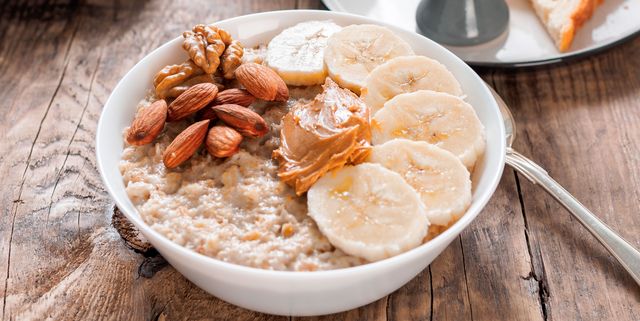
Try: A small bowl of oatmeal topped with a few slices of banana
For sensitive stomachs: Half a white bagel with peanut butter or serving of white rice

What to Eat Before a Sprint/Interval Workout

Often, speed work doesn’t last for more than 60 minutes, but the workout is much more intense than slower, longer miles. And because of this, your body needs prerun carbs, says Kasparek, who points out that some people also like a little bit of protein with this snack.

Honey Stinger Energy Gel, 6 Pack
amazon.com

$11.75

“You need to provide your body with quick carbs that give your body energy it can use right away,” she says.

Try: Plain greek yogurt with blueberries or banana with peanut butter or handful of dry cereal or Honey Stinger gel
For sensitive stomachs: Half a banana

What to Eat Before an Easy Run

Most easy runs don’t require a prerun snack—even those that are pushing 60 minutes, says Kasparek.

“If you’re going out for a quick 30- or 40-minute easy run, and you haven’t eaten in a couple of hours or it’s in the morning after an overnight fast, you’re probably not going to die if you don’t eat before that run,” she says.

The best thing to do is schedule those easy runs around your normal snacks and meals. For example, after a morning run, use your breakfast as your recovery meal, which will include carbs plus 15 to 25 grams of protein, says Kasparek.

If you’re running in the afternoon, instead of having your usual 3 p.m. snack and a 4 p.m. prerun snack, skip the prerun snack, or bump your 3 p.m. snack to an hour before your run. Then Kasparek suggests making your postrun meal your dinner.

That said, if you know that you can’t run well or safely without something in your system, have something small like half a banana or a tablespoon of peanut butter. And remember, easy means easy, so running at a relaxed pace that you can maintain and talk to a friend effortlessly if needed.

Try: Eggs with toast or a protein shake or oatmeal made with milk after a morning run, or salmon with rice or a veggie stir-fry after an afternoon or evening run

What to Eat Before a Race

If you’ve been training properly, you have practiced your prerace meal before your long runs, says Susan Paul, exercise physiologist and program director for the Orlando Track Shack Foundation. “Race morning is not the time to try anything new,” she says.

For shorter distances, like a 5K or 10K, your breakfast should be similar to what you’d eat before a track (interval) workout, because the intensity is higher, while the duration is shorter.

For longer distances, like a half or full marathon, your breakfast—and the timing of when you have it—should be similar to what you practiced eating before your long runs.

As Paul and Kasparek point out, give yourself plenty of time to digest before you head to the start line. And because you might have hours between the time you have breakfast and toe the line, bring an extra snack, says Kasparek.

Clif Bar Energy Bar, 12 Count
amazon.com

$10.59

“You don’t want to be hungry on the start line,” she says.

Try: Bagel with peanut butter + gel or Clif bar 30 minutes prior to the start

RELATED: Build a killer midsection in the kitchen for powerful, effortless miles on the road with Eat for Abs!
Oatmeal Is Still the World’s Best Recovery Food @WomensRunning

Women’s Running

@WomensRunning

Sure, it’s old fashioned. But it’s also nutritional rocket fuel, and athletes are making it taste great. Here’s how.

February 28, 2023 Wes Judd

In a world of green juice and chia seed pudding, this age-old dish is the original, and perhaps most powerful, superfood, especially for athletes competing at the highest levels.

“I’ve asked a lot of elite endurance athletes about their breakfast foods, particularly before races, and oatmeal comes up again and again and again,” says Matt Fitzgerald, endurance coach, nutritionist, and author of The Endurance Diet.

You’re most likely to see oatmeal served with a ton of fixin’s, but even a bowl of plain oats holds its own as a nutritional panacea. Oatmeal is a whole grain (unless you buy oat bran—just part of the seed—as opposed to rolled oats) filled with key vitamins and minerals, a low-glycemic carb that provides lasting energy for your workout and helps fuel recovery without causing a sugar crash, and high in fiber to aid your digestive and metabolic systems.

But a bowl of oats is also a big blank canvas, ready to be combined with a truckload of other high-quality, nutritious ingredients that make it even better training food. “That’s one of oatmeal’s great virtues. You can take it in so many directions,” says Fitzgerald.

Even energy bar companies use it. Picky Bars have Picky Oats, a lineup of better-for-the-athlete instant oatmeal chock-full of real ingredients to support performance, rather than added sugars or fake health foods. “I literally believe that besides energy bars, oatmeal is the next most pervasive food for athletes,” says Jesse Thomas, former professional triathlete and Picky Bars CEO.

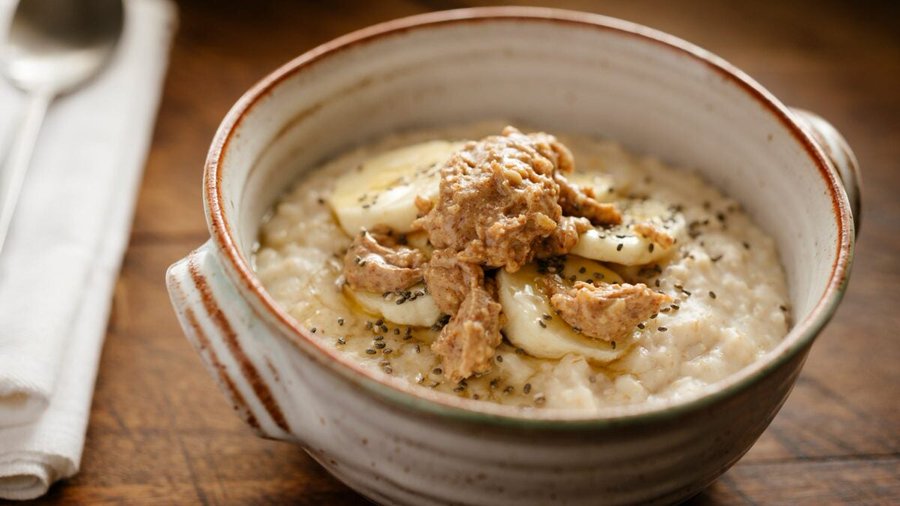
It’s easy to make. All you have to do is boil a ratio of 1/2 cup rolled oats to one cup liquid—either water or a milk of your choice—and top it with whatever you need that day. (For steel-cut oats, change the ratio to 1/4 cup oats to one cup liquid.) Here’s how six athletes do it.

RELATED: Healthy Delicious Baked Oatmeal

Oatmeal Is Still the World’s Best Performance Breakfast @WomensRunning

Women’s Running

@WomensRunning

Sure, it’s old fashioned. But it’s also nutritional rocket fuel, and athletes are making it taste great. Here’s how.

February 28, 2023 Wes Judd

In a world of green juice and chia seed pudding, this age-old dish is the original, and perhaps most powerful, superfood, especially for athletes competing at the highest levels.

“I’ve asked a lot of elite endurance athletes about their breakfast foods, particularly before races, and oatmeal comes up again and again and again,” says Matt Fitzgerald, endurance coach, nutritionist, and author of The Endurance Diet.

You’re most likely to see oatmeal served with a ton of fixin’s, but even a bowl of plain oats holds its own as a nutritional panacea. Oatmeal is a whole grain (unless you buy oat bran—just part of the seed—as opposed to rolled oats) filled with key vitamins and minerals, a low-glycemic carb that provides lasting energy for your workout and helps fuel recovery without causing a sugar crash, and high in fiber to aid your digestive and metabolic systems.

But a bowl of oats is also a big blank canvas, ready to be combined with a truckload of other high-quality, nutritious ingredients that make it even better training food. “That’s one of oatmeal’s great virtues. You can take it in so many directions,” says Fitzgerald.

Even energy bar companies use it. Picky Bars have Picky Oats, a lineup of better-for-the-athlete instant oatmeal chock-full of real ingredients to support performance, rather than added sugars or fake health foods. “I literally believe that besides energy bars, oatmeal is the next most pervasive food for athletes,” says Jesse Thomas, former professional triathlete and Picky Bars CEO.

It’s easy to make. All you have to do is boil a ratio of 1/2 cup rolled oats to one cup liquid—either water or a milk of your choice—and top it with whatever you need that day. (For steel-cut oats, change the ratio to 1/4 cup oats to one cup liquid.) Here’s how six athletes do it.

RELATED: Healthy Delicious Baked Oatmeal

Oatmeal Is Still the World’s Best Performance Breakfast @WomensRunning #plantbased

Women’s Running

@WomensRunning

Sure, it’s old fashioned. But it’s also nutritional rocket fuel, and athletes are making it taste great. Here’s how.

February 28, 2023 Wes Judd

In a world of green juice and chia seed pudding, this age-old dish is the original, and perhaps most powerful, superfood, especially for athletes competing at the highest levels.

“I’ve asked a lot of elite endurance athletes about their breakfast foods, particularly before races, and oatmeal comes up again and again and again,” says Matt Fitzgerald, endurance coach, nutritionist, and author of The Endurance Diet.

You’re most likely to see oatmeal served with a ton of fixin’s, but even a bowl of plain oats holds its own as a nutritional panacea. Oatmeal is a whole grain (unless you buy oat bran—just part of the seed—as opposed to rolled oats) filled with key vitamins and minerals, a low-glycemic carb that provides lasting energy for your workout and helps fuel recovery without causing a sugar crash, and high in fiber to aid your digestive and metabolic systems.

But a bowl of oats is also a big blank canvas, ready to be combined with a truckload of other high-quality, nutritious ingredients that make it even better training food. “That’s one of oatmeal’s great virtues. You can take it in so many directions,” says Fitzgerald.

Even energy bar companies use it. Picky Bars have Picky Oats, a lineup of better-for-the-athlete instant oatmeal chock-full of real ingredients to support performance, rather than added sugars or fake health foods. “I literally believe that besides energy bars, oatmeal is the next most pervasive food for athletes,” says Jesse Thomas, former professional triathlete and Picky Bars CEO.

It’s easy to make. All you have to do is boil a ratio of 1/2 cup rolled oats to one cup liquid—either water or a milk of your choice—and top it with whatever you need that day. (For steel-cut oats, change the ratio to 1/4 cup oats to one cup liquid.) Here’s how six athletes do it.

RELATED: Healthy Delicious Baked Oatmeal

Oatmeal Is Still the World’s Best Performance Breakfast @WomensRunning #fitnessaware #physiotherapy

Women’s Running

@WomensRunning

Sure, it’s old fashioned. But it’s also nutritional rocket fuel, and athletes are making it taste great. Here’s how.

February 28, 2023 Wes Judd

In a world of green juice and chia seed pudding, this age-old dish is the original, and perhaps most powerful, superfood, especially for athletes competing at the highest levels.

“I’ve asked a lot of elite endurance athletes about their breakfast foods, particularly before races, and oatmeal comes up again and again and again,” says Matt Fitzgerald, endurance coach, nutritionist, and author of The Endurance Diet.

You’re most likely to see oatmeal served with a ton of fixin’s, but even a bowl of plain oats holds its own as a nutritional panacea. Oatmeal is a whole grain (unless you buy oat bran—just part of the seed—as opposed to rolled oats) filled with key vitamins and minerals, a low-glycemic carb that provides lasting energy for your workout and helps fuel recovery without causing a sugar crash, and high in fiber to aid your digestive and metabolic systems.

But a bowl of oats is also a big blank canvas, ready to be combined with a truckload of other high-quality, nutritious ingredients that make it even better training food. “That’s one of oatmeal’s great virtues. You can take it in so many directions,” says Fitzgerald.

Even energy bar companies use it. Picky Bars have Picky Oats, a lineup of better-for-the-athlete instant oatmeal chock-full of real ingredients to support performance, rather than added sugars or fake health foods. “I literally believe that besides energy bars, oatmeal is the next most pervasive food for athletes,” says Jesse Thomas, former professional triathlete and Picky Bars CEO.

It’s easy to make. All you have to do is boil a ratio of 1/2 cup rolled oats to one cup liquid—either water or a milk of your choice—and top it with whatever you need that day. (For steel-cut oats, change the ratio to 1/4 cup oats to one cup liquid.) Here’s how six athletes do it.

RELATED: Healthy Delicious Baked Oatmeal

What to Eat Before a Run of Any Distance @runnersworld

runners world food for your run

Runner’s World
@runnersworld

Your body usually needs something to kick-start your workout. Here’s a breakdown of what you need depending on the type of run.

Choosing what to eat before a run plagues nearly every one of us until you figure out what works best for you. And because people tolerate foods differently, there is no one-size-fits-all when it comes to prerun fueling. Some runners swear by eating nothing before short or easier runs, while others have to put something in their system. That said, there are some general guidelines to follow as you prepare a prerun snack or meal.

What to Eat Before a Long Run

Long runs are most commonly defined as being 60 minutes or more, and once you get into half or full marathon training, a good chunk of your runs will be at least 60 minutes.

What you eat before a long run is a good dress rehearsal for your prerace breakfast, says Lizzie Kasparek, R.D., sports dietitian for the Sanford Sports Science Institute.

Long runs require more energy than shorter runs, which means your prerun snack or meal will be larger and take a little more time to digest. That’s why Kasparek recommends eating two to four hours before a long run (and eventually, your race).

“Whether you give yourself a few hours or just an hour to digest, focus on consuming mostly carbs,” she says. Your body’s preferred fuel source is simple carbs—banana, oatmeal, white bagel, a honey packet—because it can be quickly turned into energy.

Yes, we know that may mean an early wake-up for morning runners, but you’ll be grateful when you have the energy to push past the first hour. Plus, you can always wake up, eat a little something, and go back to sleep until run time.

Try: A small bowl of oatmeal topped with a few slices of banana
For sensitive stomachs: Half a white bagel with peanut butter or serving of white rice

What to Eat Before a Sprint/Interval Workout

Often, speed work doesn’t last for more than 60 minutes, but the workout is much more intense than slower, longer miles. And because of this, your body needs prerun carbs, says Kasparek, who points out that some people also like a little bit of protein with this snack.

Honey Stinger Energy Gel, 6 Pack
amazon.com

$11.75

“You need to provide your body with quick carbs that give your body energy it can use right away,” she says.

Try: Plain greek yogurt with blueberries or banana with peanut butter or handful of dry cereal or Honey Stinger gel
For sensitive stomachs: Half a banana

What to Eat Before an Easy Run

Most easy runs don’t require a prerun snack—even those that are pushing 60 minutes, says Kasparek.

“If you’re going out for a quick 30- or 40-minute easy run, and you haven’t eaten in a couple of hours or it’s in the morning after an overnight fast, you’re probably not going to die if you don’t eat before that run,” she says.

The best thing to do is schedule those easy runs around your normal snacks and meals. For example, after a morning run, use your breakfast as your recovery meal, which will include carbs plus 15 to 25 grams of protein, says Kasparek.

If you’re running in the afternoon, instead of having your usual 3 p.m. snack and a 4 p.m. prerun snack, skip the prerun snack, or bump your 3 p.m. snack to an hour before your run. Then Kasparek suggests making your postrun meal your dinner.

That said, if you know that you can’t run well or safely without something in your system, have something small like half a banana or a tablespoon of peanut butter. And remember, easy means easy, so running at a relaxed pace that you can maintain and talk to a friend effortlessly if needed.

Try: Eggs with toast or a protein shake or oatmeal made with milk after a morning run, or salmon with rice or a veggie stir-fry after an afternoon or evening run

What to Eat Before a Race

If you’ve been training properly, you have practiced your prerace meal before your long runs, says Susan Paul, exercise physiologist and program director for the Orlando Track Shack Foundation. “Race morning is not the time to try anything new,” she says.

For shorter distances, like a 5K or 10K, your breakfast should be similar to what you’d eat before a track (interval) workout, because the intensity is higher, while the duration is shorter.

For longer distances, like a half or full marathon, your breakfast—and the timing of when you have it—should be similar to what you practiced eating before your long runs.

As Paul and Kasparek point out, give yourself plenty of time to digest before you head to the start line. And because you might have hours between the time you have breakfast and toe the line, bring an extra snack, says Kasparek.

Clif Bar Energy Bar, 12 Count
amazon.com

$10.59

“You don’t want to be hungry on the start line,” she says.

Try: Bagel with peanut butter + gel or Clif bar 30 minutes prior to the start

RELATED: Build a killer midsection in the kitchen for powerful, effortless miles on the road with Eat for Abs!

What to Eat Before a Run of Any Distance

runners world food for your run

Runner’s World
@runnersworld

Your body usually needs something to kick-start your workout. Here’s a breakdown of what you need depending on the type of run.

Choosing what to eat before a run plagues nearly every one of us until you figure out what works best for you. And because people tolerate foods differently, there is no one-size-fits-all when it comes to prerun fueling. Some runners swear by eating nothing before short or easier runs, while others have to put something in their system. That said, there are some general guidelines to follow as you prepare a prerun snack or meal.

What to Eat Before a Long Run

Long runs are most commonly defined as being 60 minutes or more, and once you get into half or full marathon training, a good chunk of your runs will be at least 60 minutes.

What you eat before a long run is a good dress rehearsal for your prerace breakfast, says Lizzie Kasparek, R.D., sports dietitian for the Sanford Sports Science Institute.

Long runs require more energy than shorter runs, which means your prerun snack or meal will be larger and take a little more time to digest. That’s why Kasparek recommends eating two to four hours before a long run (and eventually, your race).

“Whether you give yourself a few hours or just an hour to digest, focus on consuming mostly carbs,” she says. Your body’s preferred fuel source is simple carbs—banana, oatmeal, white bagel, a honey packet—because it can be quickly turned into energy.

Yes, we know that may mean an early wake-up for morning runners, but you’ll be grateful when you have the energy to push past the first hour. Plus, you can always wake up, eat a little something, and go back to sleep until run time.

Try: A small bowl of oatmeal topped with a few slices of banana
For sensitive stomachs: Half a white bagel with peanut butter or serving of white rice

What to Eat Before a Sprint/Interval Workout

Often, speed work doesn’t last for more than 60 minutes, but the workout is much more intense than slower, longer miles. And because of this, your body needs prerun carbs, says Kasparek, who points out that some people also like a little bit of protein with this snack.

Honey Stinger Energy Gel, 6 Pack
amazon.com

$11.75

“You need to provide your body with quick carbs that give your body energy it can use right away,” she says.

Try: Plain greek yogurt with blueberries or banana with peanut butter or handful of dry cereal or Honey Stinger gel
For sensitive stomachs: Half a banana

What to Eat Before an Easy Run

Most easy runs don’t require a prerun snack—even those that are pushing 60 minutes, says Kasparek.

“If you’re going out for a quick 30- or 40-minute easy run, and you haven’t eaten in a couple of hours or it’s in the morning after an overnight fast, you’re probably not going to die if you don’t eat before that run,” she says.

The best thing to do is schedule those easy runs around your normal snacks and meals. For example, after a morning run, use your breakfast as your recovery meal, which will include carbs plus 15 to 25 grams of protein, says Kasparek.

If you’re running in the afternoon, instead of having your usual 3 p.m. snack and a 4 p.m. prerun snack, skip the prerun snack, or bump your 3 p.m. snack to an hour before your run. Then Kasparek suggests making your postrun meal your dinner.

That said, if you know that you can’t run well or safely without something in your system, have something small like half a banana or a tablespoon of peanut butter. And remember, easy means easy, so running at a relaxed pace that you can maintain and talk to a friend effortlessly if needed.

Try: Eggs with toast or a protein shake or oatmeal made with milk after a morning run, or salmon with rice or a veggie stir-fry after an afternoon or evening run

What to Eat Before a Race

If you’ve been training properly, you have practiced your prerace meal before your long runs, says Susan Paul, exercise physiologist and program director for the Orlando Track Shack Foundation. “Race morning is not the time to try anything new,” she says.

For shorter distances, like a 5K or 10K, your breakfast should be similar to what you’d eat before a track (interval) workout, because the intensity is higher, while the duration is shorter.

For longer distances, like a half or full marathon, your breakfast—and the timing of when you have it—should be similar to what you practiced eating before your long runs.

As Paul and Kasparek point out, give yourself plenty of time to digest before you head to the start line. And because you might have hours between the time you have breakfast and toe the line, bring an extra snack, says Kasparek.

Clif Bar Energy Bar, 12 Count
amazon.com

$10.59

“You don’t want to be hungry on the start line,” she says.

Try: Bagel with peanut butter + gel or Clif bar 30 minutes prior to the start

RELATED: Build a killer midsection in the kitchen for powerful, effortless miles on the road with Eat for Abs!