Skip to content

Fitnessaware

Health & Wellbeing

Tag: running

Posted on May 19, 2025

Stretching keeps the muscles flexible, strong, and healthy, @HarvardHealth


Harvard Health

@HarvardHealth
·
17h

Stretching keeps the muscles flexible, strong, and healthy, which is needed to maintain a range of motion in the joints. If possible, one should stretch daily, focusing on the lower extremities: https://bit.ly/3u71fkS #HarvardHealth
Posted on May 15, 2025

Runners know injury and know it takes time to heal..

runners pain.jpg


That’s why they’re patient physios for their patients

Care – Compassion- Concentration

Posted on May 12, 2025

Knead, stretch, awaken your qi: here’s the right way to tackle recovery depends on where in the world you are.@WomensRunning #physiotherapy

Toward the end of a long run your calf is in a knot the size of a grapefruit. Is this an over-excited neuron taking out its anxiety on a muscle? Or is your qi depleted? You may need a new recovery technique.

Western hemisphere physios of yore saw the body as an organization of bones, muscles, fascia, and nerves, so bodywork that originated there, like Swedish massage, attempts to heal and realign those parts.

Eastern folk saw the body as a vessel of energy and breath. Bodywork that grew out of that philosophy, like acupressure, sought to open blocked energy pathways and restore balance.

Here’s a quick look at three types of bodywork from around the world—three philosophies—that can be used as prevention during training, or for recovery from an injury or race.

Recovery Modalities From Around The World

Shiatsu
Origin: Japan

Shiatsu is based on theories of acupuncture and Chinese medicine that were imported to Japan around 5 AD. According to Cari Johnson Pelava, director of Centerpoint Massage & Shiatsu Therapy School & Clinic, in Minneapolis, a system of energy, “qi,” runs through the body on pathways, and along those pathways lie points where one can access that energy to make a difference in the body. Symptoms like pain or fatigue are said to be caused by an imbalance of energy. By applying pressure, kneading, and stretching, a shiatsu therapist can restore the body’s energy balance.

“We’ve worked with triathletes pre-event and post,” Johnson Pelava says. “Pre-event we’ll focus on tonifying energy so that it’s most accessible to the athlete on event day. We’ll do stretching, hip rotations, and other range of motion work to open energetic pathways. Post-event, we’ll work deeper to pull that energy that’s been depleted back.”

Thai Yoga
Origin: Thailand

Thai yoga bodywork has an eastern flavor informed by yoga, Ayurveda, and Buddhism. It combines rhythmic massage, assisted yoga poses, acupressure along energy meridians, healing energy work, and meditation.

Tanya Boigenzahn, director of Devanadi School of Yoga and Wellness in Minneapolis, says Thai yoga bodywork can help athletes with flexibility, alignment, and breath control, as well as their mental game—mood, concentration, confidence.

Thai yoga is accomplished in a one-on-one session with clothes on. The therapist moves a passive client through positions, stretching tight areas, and encouraging range of motion and mindful breathwork.

Boigenzahn says Thai yoga helps optimize training pre-event, and eases recovery afterward. “Athletes can expect to have a quicker bounce back time, as well as less discomfort after a tough event.”

Rolfing
Origin: USA

Ida Rolf thought that pain, inefficient movement, and imbalance was were the result of the body being improperly organized around its axis. In New York during the 1940s, Rolf began reorganizing clients’ bodies by manipulating fascia—the connective tissue separating muscles and other organs— which developed into the therapeutic approach called Rolfing Structural Integration. “It’s a combination of participatory bodywork and active experimentation with body movement education,” says Kevin McCarthy, an advanced rolfer with In|Form Rolfing in Minneapolis. “We teach clients how to be aware of and work with their body for better function.”

Rolfing is a holistic approach that seeks to find the source of the dysfunction rather than merely treat the symptom. “Participatory” is a key word, McCarthy says.

“Unlike most forms of massage where you’re lying passively on a table, we’re asking, ‘Can you stand up using the outside of your leg? Do you notice the difference in how that feels?’” he says. “We’re using the body to repattern the brain.”

Because it involves education, rolfing is not a one-and-done—a rolfing treatment is actually usually a series of 10 sessions.

Posted on May 11, 2025

Sports nutrition isn’t just about protein shakes. A dietitian breaks down how hydration, timing and balance impact results. @ClevelandClinic

What Athletes Need To Know About Sports Nutrition

Having a well-rounded, healthy nutrition plan is just as important as staying consistent with your exercise routine

When you’re an athlete racking up miles and muscle, your body needs extra fuel to keep up with the amount of exercise you’re doing and help speed up recovery. That’s what makes sports nutrition so important — it offers you a path to making sure you’re getting all the nutrients you need, even as you sweat.

Sports and nutrition

For the most part, athletes will eat higher quantities of food more often than non-athletes because food is equivalent to energy. But that isn’t always the case, and some meal plans may work better for you than for someone else.

“Everyone’s body is very different, so it’s really important that we specialize individualized nutrition plans,” says registered dietitian Carly Sedlacek, RD, LD.

Bringing your physical fitness goals to a dietitian can help provide you with a holistic, balanced and personalized approach to eating healthy beyond simply counting calories. If you’re trying to build muscle, for example, your goals for nutrition will likely be different from someone who’s trying to lose weight.

Overall, when sports nutrition is combined with consistent exercise, it can boost your performance and help you feel great, even on rest days. Regardless of your goals, the following areas of sports nutrition can help.

Hydration

When you exercise, you lose a lot of water and electrolytes through sweating. Drinking enough water before a training session and throughout a workout can help replenish what’s lost.

At minimum, you should drink about 16 ounces of water two to three hours before exercise, and about 4 ounces every 15 to 20 minutes while exercising. It’s also important to make sure you’re drinking plenty of water throughout the entire day.

Sometimes, athletes prefer to use sports drinks after exercising because they’re packed with electrolytes to replace what was lost in sweat. “Electrolyte beverages should be used during activities lasting longer than 60 minutes,” says Sedlacek. “If you have a history of chronic disease or conditions, check with your doctor before including higher sodium beverages.”

Carbohydrates

Carbohydrates are your body’s main source of energy. While carbs are not the only food you should focus on, they should be something you consider as part of every meal, especially in the hours leading up to a workout or training session.

“Before exercising, you want to stick with foods that tend to digest easily, including some carbohydrate sources like fruits (bananas, apples or oranges), oatmeal or rice,” advises Sedlacek. “If you’re doing a longer workout routine that’s more than an hour long, you’ll want carbohydrates during that time to get that boost of quick-acting energy.”

Protein

Protein is the building block for your muscles. Without it, muscle recovery slows, along with your ability to build muscle mass. In general, you should try and get most of your protein from whole food sources like:

  • Salmon and other fish
  • Eggs and egg whites
  • Greek yogurt
  • Beans and legumes
  • Chicken
  • Tofu
  • Low-fat cheeses

But when you’re short on time, you can turn to protein powders or protein shakes between meals, in addition to having some protein at every meal.

“Protein helps with muscle recovery,” shares Sedlacek. “Getting at least 25 to 35 grams of protein right after exercise is helpful because that’s when your body prefers to use it.”

Fats

In general, having a healthy, well-rounded diet that incorporates an abundance of fruits, vegetables and plant- or animal-based sources of protein is key. That means healthy fats (like olive oil, avocado and fatty fish) also play a role as a secondary source of energy. Not only do they fill you up faster, but they also help your body better process other micronutrients, like fat-soluble vitamins.

Supplements

When it comes to supplements (like protein powders or pre-workout beverages), you want to use them sparingly. As you’re consuming more than the general population to keep up with your level of athleticism, supplements should be used to fill in a gap and not as a meal replacement.

“We want to try and stick to a food-first approach the best we can because the body is able to utilize those sources a little bit better than supplements,” explains Sedlacek.

Timing

When it comes to meals and snacks, timing is everything. You should try to aim for three spaced-out meals a day with snacks in between each meal. When it comes to exercise, you’ll want to have something small to eat (usually carbs or protein) at least an hour or two before exercising and immediately after a workout.

“It’s important to be consistent,” states Sedlacek. “If we’re going into an exercise and we don’t have enough energy to pull from, our body can end up pulling energy from our muscles. So, it’s important to have something small to eat before working out.”

Next steps

Sports nutrition can require a lot of fine-tuning, especially when you’re just getting started. Working with a dietitian and a physical fitness trainer can help get you the support you need for your specific situation.

And if at any point you feel lightheaded, dizzy or even experience hunger pangs, it might be a result of not eating enough or having enough water to keep up with the physical demands of exercise. In those cases, trying to level out your blood sugars and electrolytes is important, as well as seeing a healthcare provider if issues continue.


Posted on May 11, 2025May 11, 2025

Sailing into the sunrise for Darkness into Light @gaoife

Posted on May 9, 2025

Trés Chic @paulcostelloeofficial @dunnesstores

Liked by somers_lily1701 and others

dunnesstores

Embrace the new season ahead with key wardrobe pieces that will effortlessly transition from one occasion to the next, all from Paul Costelloe’s spring collection.

@paulcostelloeofficial

Posted on May 9, 2025

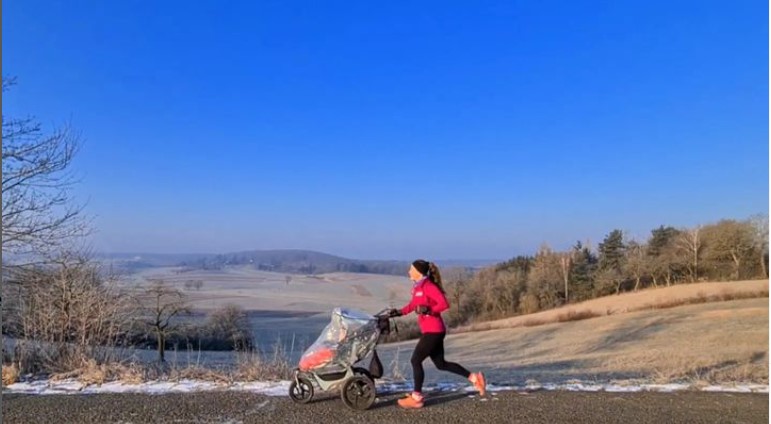
Because you didn’t stop running when you became a mom … @WomensRunning

Heck yeah, moms ❤️
Via TessChupinsky on IG pic.twitter.com/2I8IKVjxcG

— Women's Running (@WomensRunning) February 19, 2025

Women’s Running

@WomensRunning

·

21h

Heck yeah, moms ❤️ Via TessChupinsky on IG

Posted on May 8, 2025

Sound Sleep. Good Health.

Runner’s World‏Verified account @runnersworld Oct 28

Training hard? Don’t skimp on sleep. Here’s why: http://spr.ly/60178CvuZ ā

Posted on May 8, 2025

5 Sciatica Stretches to Relieve That Burning Pain @WomensRunning #physiotherapy


Women’s Running

@WomensRunning

·
Aug 11

Soothe sciatic nerve pain and release tension in your lower back and hips with these 5 yoga poses.

5 Sciatica Stretches to Relieve That Burning Pain – Women’s Running
Yoga can help relieve your sciatica symptoms—and improve your mental outlook when you’re faced with that persistent pain.
womensrunning.com

Posted on May 3, 2025

Dorothy Wall puts serious setback in perspective

dorothywall

•

Follow

UPMC Sports Surgery Clinic

Liked by padraicguilfoyle and others

  • dorothywall's profile picturedorothywall
  • Missing the World Cup brings with it a serious amount of shock and sadness, and the last few days have been nothing short of a whirlwind. Although my next chapter may not be so full of rugby, my desire to come back as a better athlete, a smarter player, and a more rounded and resilient person is at the forefront for me right now.
    In a sense, I don’t have to rely solely on myself for motivation during this time, as I’ve seen countless women in my life go through long-term injuries, having a baby, then tearing an ACL and getting back to international rugby, missing the Olympics, enduring countless operations, back-to-back ACLs, and broken legs.
    Sam, Bei, Aoibheann, Maeve Óg, Tricky, Erin, Eimear, Enya, Tash, Derv, and I could go on. I feel very lucky to have such an impressive group of women around me, who possess all of the experience and evidence to guide me through whatever it is I may face.

    Being able to complete my rehab in Exeter, where I couldn’t have met a better bunch of girls, makes me very happy, and I can’t wait to be reunited with them all soon 🩷

    More than anything I’m so excited to see where this Irish team can go; we have such talented and impressive girls whom I will miss playing with dearly. Myself and @erinking___ will be cooking on the sidelines at RWC2025, and I hope we see as many Irish fans there as possible.

    Plus, I heard rehab makes you hotter anyways?

Posts pagination

Previous page Page 1 … Page 7 Page 8 Page 9 … Page 122 Next page

Tags

  • core stability
  • core strength
  • diet
  • exercise
  • fitness
  • Fitnessaware
  • health
  • physical activity
  • physio
  • physiotherapy
  • Pilates
  • running
  • Therapy
  • womens health
  • yoga

Archives

  • December 2025
  • November 2025
  • October 2025
  • September 2025
  • August 2025
  • July 2025
  • June 2025
  • May 2025
  • April 2025
  • March 2025
  • February 2025
  • January 2025
  • December 2024
  • November 2024
  • October 2024
  • September 2024
  • August 2024
  • July 2024
  • June 2024
  • May 2024
  • April 2024
  • March 2024
  • February 2024
  • January 2024
  • December 2023
  • November 2023
  • October 2023
  • September 2023
  • August 2023
  • July 2023
  • June 2023
  • May 2023
  • April 2023
  • March 2023
  • February 2023
  • January 2023
  • December 2022
  • November 2022
  • October 2022
  • September 2022
  • August 2022
  • July 2022
  • June 2022
  • May 2022
  • April 2022
  • March 2022
  • February 2022
  • January 2022
  • December 2021
  • November 2021
  • October 2021
  • September 2021
  • August 2021
  • July 2021
  • June 2021
  • May 2021
  • April 2021
  • March 2021
  • February 2021
  • January 2021
  • December 2020
  • November 2020
  • October 2020
  • September 2020
  • August 2020
  • July 2020
  • June 2020
  • May 2020
  • April 2020
  • March 2020
  • February 2020
  • January 2020
  • December 2019
  • November 2019
  • October 2019
  • September 2019
  • August 2019
  • July 2019
  • June 2019
  • May 2019
  • April 2019
  • March 2019
  • February 2019
  • January 2019
  • December 2018
  • November 2018
  • October 2018
  • September 2018
  • August 2018
  • July 2018
  • June 2018
  • May 2018
  • April 2018
  • March 2018
  • January 2018
  • June 2016
  • May 2016
  • April 2016
  • March 2016
  • February 2016
  • December 2015
Create a free website or blog at WordPress.com.
Privacy & Cookies: This site uses cookies. By continuing to use this website, you agree to their use.
To find out more, including how to control cookies, see here: Cookie Policy
  • Subscribe Subscribed
    • Fitnessaware
    • Join 1,593 other subscribers
    • Already have a WordPress.com account? Log in now.
    • Fitnessaware
    • Subscribe Subscribed
    • Sign up
    • Log in
    • Report this content
    • View site in Reader
    • Manage subscriptions
    • Collapse this bar
 

Loading Comments...