In a world of green juice and chia seed pudding, this age-old dish is the original, and perhaps most powerful, superfood, especially for athletes competing at the highest levels.
“I’ve asked a lot of elite endurance athletes about their breakfast foods, particularly before races, and oatmeal comes up again and again and again,” says Matt Fitzgerald, endurance coach, nutritionist, and author of The Endurance Diet.
You’re most likely to see oatmeal served with a ton of fixin’s, but even a bowl of plain oats holds its own as a nutritional panacea. Oatmeal is a whole grain (unless you buy oat bran—just part of the seed—as opposed to rolled oats) filled with key vitamins and minerals, a low-glycemic carb that provides lasting energy for your workout and helps fuel recovery without causing a sugar crash, and high in fiber to aid your digestive and metabolic systems.
But a bowl of oats is also a big blank canvas, ready to be combined with a truckload of other high-quality, nutritious ingredients that make it even better training food. “That’s one of oatmeal’s great virtues. You can take it in so many directions,” says Fitzgerald.
Even energy bar companies use it. Picky Bars have Picky Oats, a lineup of better-for-the-athlete instant oatmeal chock-full of real ingredients to support performance, rather than added sugars or fake health foods. “I literally believe that besides energy bars, oatmeal is the next most pervasive food for athletes,” says Jesse Thomas, former professional triathlete and Picky Bars CEO.
It’s easy to make. All you have to do is boil a ratio of 1/2 cup rolled oats to one cup liquid—either water or a milk of your choice—and top it with whatever you need that day. (For steel-cut oats, change the ratio to 1/4 cup oats to one cup liquid.) Here’s how six athletes do it.
Relax into this form of stretching while a prop or partner assists you
When you think of stretching, you might picture someone sitting on the floor, legs extended, reaching for their toes. But passive stretching takes a different approach. Instead of relying on your own flexibility, you use something (or someone) else to help.
Licensed massage therapist and registered nurse DeBorah Hill, RN, LMT, explains passive stretching and how it can benefit your health.
What is passive stretching?
Most people are familiar with dynamic and static stretching. Static stretching focuses on holding a pose that stretches your muscle as far as you can. Dynamic stretching uses movements, like walking lunges or hip circles, to warm up your muscles before an activity.
Dynamic and static stretches are limited to how far you can physically move. Think of toe touches: Some people can touch their toes and beyond, while others can’t reach their knees.
Passive stretching uses other forces to stretch your muscles, rather than your own ability. “During passive stretching, your body is loose and relaxed,” says Hill. “You let an external force — like a partner, towel or fitness strap — do the work.”
For example, instead of touching your toes, you can perform a passive hamstring stretch. During this stretch, you lie on your back and use a rolled-up towel or strap to help you stretch the back of your thigh.
If you’re new to passive stretching, use care. You could accidentally stretch a muscle too much and cause injury.
“Listen to your body as you stretch,” advises Hill. “Passive stretching should not hurt, and many people overestimate how flexible they are. It’s helpful to talk with a licensed physical therapist or massage therapist before you start.”
Benefits of passive stretching
Consider adding passive stretching to your routine to:
Relieve stress
Unlike static or dynamic stretching, passive stretching requires your muscles to be relaxed for it to work. This release of physical tension can benefit your mental health.
“When you fully relax for a passive stretch, you tell your brain to shift out of fight-or-flight mode,” explains Hill. “Passive stretching can take you out of survival mode so you feel relaxed.”
Increase flexibility
One study found passive stretching to be better than dynamic stretching at increasing hamstring flexibility.
“Passive stretching can increase your range of motion when other stretches don’t work for you,” says Hill. “Your prop or partner can help you gently stretch beyond what you can normally do yourself.”
Overcome mobility limitations
If you have mobility issues or chronic pain, other forms of stretching can be difficult. Passive stretching works for people of all ages and fitness levels. Can’t bend over or move your body a certain way? Passive stretches can work around these limitations.
Examples of passive stretching
Passive stretches can work many different muscles. Try these stretches to get started:
1. Doorway stretch
This stretch focuses on your chest and shoulders:
Stand just behind a doorway.
Place one foot slightly in front of the other for stability.
Raise your arms to the side with your elbows bent at 90 degrees, palms facing forward like goal posts. Allow your elbows, forearms and palms to press against the doorframe.
Gently lean forward, keeping your arms on the doorframe.
Hold for 10 seconds.
Rest for five seconds and repeat.
2. Standing quad stretch
This passive stretch focuses on your quadriceps, or the muscles on the front of your thighs:
Stand next to a steady object, such as a table or wall, that can be used for balance.
Loop a rolled-up towel or fitness strap around your right ankle.
Hold the other end of the towel or strap with your right hand.
Place your left hand on the table or wall for balance.
Slowly bend your right knee and pull your right foot up toward your buttocks using the towel or strap.
Hold for up to 30 seconds.
Repeat on the opposite leg.
3. Towel hamstring stretch
The backs of your legs, or hamstrings, get a stretch here — no toe-touching required:
Lie on your back, with your legs straight and relaxed.
Slowly raise one leg up toward the ceiling without bending your knee, keeping your leg relaxed.
Hook the towel or strap behind your hamstring or calf or under the arch of your foot, depending on what’s comfortable for you.
Using your towel or strap, gently pull your leg towards you until you feel the stretch.
Hold for up to 30 seconds.
Switch legs.
A stretching routine is worth it
Taking a few minutes a day to stretch has big benefits, from preventing injuries to reducing joint pain. And if other forms of stretching haven’t worked for you, passive stretching is worth a try.
“The beauty of passive stretching is that it works for so many people,” states Hill. “Whether you’re just starting out or you’re an elite athlete, passive stretching can help you feel great physically and mentally.”
In a world of green juice and chia seed pudding, this age-old dish is the original, and perhaps most powerful, superfood, especially for athletes competing at the highest levels.
“I’ve asked a lot of elite endurance athletes about their breakfast foods, particularly before races, and oatmeal comes up again and again and again,” says Matt Fitzgerald, endurance coach, nutritionist, and author of The Endurance Diet.
You’re most likely to see oatmeal served with a ton of fixin’s, but even a bowl of plain oats holds its own as a nutritional panacea. Oatmeal is a whole grain (unless you buy oat bran—just part of the seed—as opposed to rolled oats) filled with key vitamins and minerals, a low-glycemic carb that provides lasting energy for your workout and helps fuel recovery without causing a sugar crash, and high in fiber to aid your digestive and metabolic systems.
But a bowl of oats is also a big blank canvas, ready to be combined with a truckload of other high-quality, nutritious ingredients that make it even better training food. “That’s one of oatmeal’s great virtues. You can take it in so many directions,” says Fitzgerald.
Even energy bar companies use it. Picky Bars have Picky Oats, a lineup of better-for-the-athlete instant oatmeal chock-full of real ingredients to support performance, rather than added sugars or fake health foods. “I literally believe that besides energy bars, oatmeal is the next most pervasive food for athletes,” says Jesse Thomas, former professional triathlete and Picky Bars CEO.
It’s easy to make. All you have to do is boil a ratio of 1/2 cup rolled oats to one cup liquid—either water or a milk of your choice—and top it with whatever you need that day. (For steel-cut oats, change the ratio to 1/4 cup oats to one cup liquid.) Here’s how six athletes do it.
Relax into this form of stretching while a prop or partner assists you
When you think of stretching, you might picture someone sitting on the floor, legs extended, reaching for their toes. But passive stretching takes a different approach. Instead of relying on your own flexibility, you use something (or someone) else to help.
Licensed massage therapist and registered nurse DeBorah Hill, RN, LMT, explains passive stretching and how it can benefit your health.
What is passive stretching?
Most people are familiar with dynamic and static stretching. Static stretching focuses on holding a pose that stretches your muscle as far as you can. Dynamic stretching uses movements, like walking lunges or hip circles, to warm up your muscles before an activity.
Dynamic and static stretches are limited to how far you can physically move. Think of toe touches: Some people can touch their toes and beyond, while others can’t reach their knees.
Passive stretching uses other forces to stretch your muscles, rather than your own ability. “During passive stretching, your body is loose and relaxed,” says Hill. “You let an external force — like a partner, towel or fitness strap — do the work.”
For example, instead of touching your toes, you can perform a passive hamstring stretch. During this stretch, you lie on your back and use a rolled-up towel or strap to help you stretch the back of your thigh.
If you’re new to passive stretching, use care. You could accidentally stretch a muscle too much and cause injury.
“Listen to your body as you stretch,” advises Hill. “Passive stretching should not hurt, and many people overestimate how flexible they are. It’s helpful to talk with a licensed physical therapist or massage therapist before you start.”
Benefits of passive stretching
Consider adding passive stretching to your routine to:
Relieve stress
Unlike static or dynamic stretching, passive stretching requires your muscles to be relaxed for it to work. This release of physical tension can benefit your mental health.
“When you fully relax for a passive stretch, you tell your brain to shift out of fight-or-flight mode,” explains Hill. “Passive stretching can take you out of survival mode so you feel relaxed.”
Increase flexibility
One study found passive stretching to be better than dynamic stretching at increasing hamstring flexibility.
“Passive stretching can increase your range of motion when other stretches don’t work for you,” says Hill. “Your prop or partner can help you gently stretch beyond what you can normally do yourself.”
Overcome mobility limitations
If you have mobility issues or chronic pain, other forms of stretching can be difficult. Passive stretching works for people of all ages and fitness levels. Can’t bend over or move your body a certain way? Passive stretches can work around these limitations.
Examples of passive stretching
Passive stretches can work many different muscles. Try these stretches to get started:
1. Doorway stretch
This stretch focuses on your chest and shoulders:
Stand just behind a doorway.
Place one foot slightly in front of the other for stability.
Raise your arms to the side with your elbows bent at 90 degrees, palms facing forward like goal posts. Allow your elbows, forearms and palms to press against the doorframe.
Gently lean forward, keeping your arms on the doorframe.
Hold for 10 seconds.
Rest for five seconds and repeat.
2. Standing quad stretch
This passive stretch focuses on your quadriceps, or the muscles on the front of your thighs:
Stand next to a steady object, such as a table or wall, that can be used for balance.
Loop a rolled-up towel or fitness strap around your right ankle.
Hold the other end of the towel or strap with your right hand.
Place your left hand on the table or wall for balance.
Slowly bend your right knee and pull your right foot up toward your buttocks using the towel or strap.
Hold for up to 30 seconds.
Repeat on the opposite leg.
3. Towel hamstring stretch
The backs of your legs, or hamstrings, get a stretch here — no toe-touching required:
Lie on your back, with your legs straight and relaxed.
Slowly raise one leg up toward the ceiling without bending your knee, keeping your leg relaxed.
Hook the towel or strap behind your hamstring or calf or under the arch of your foot, depending on what’s comfortable for you.
Using your towel or strap, gently pull your leg towards you until you feel the stretch.
Hold for up to 30 seconds.
Switch legs.
A stretching routine is worth it
Taking a few minutes a day to stretch has big benefits, from preventing injuries to reducing joint pain. And if other forms of stretching haven’t worked for you, passive stretching is worth a try.
“The beauty of passive stretching is that it works for so many people,” states Hill. “Whether you’re just starting out or you’re an elite athlete, passive stretching can help you feel great physically and mentally.”
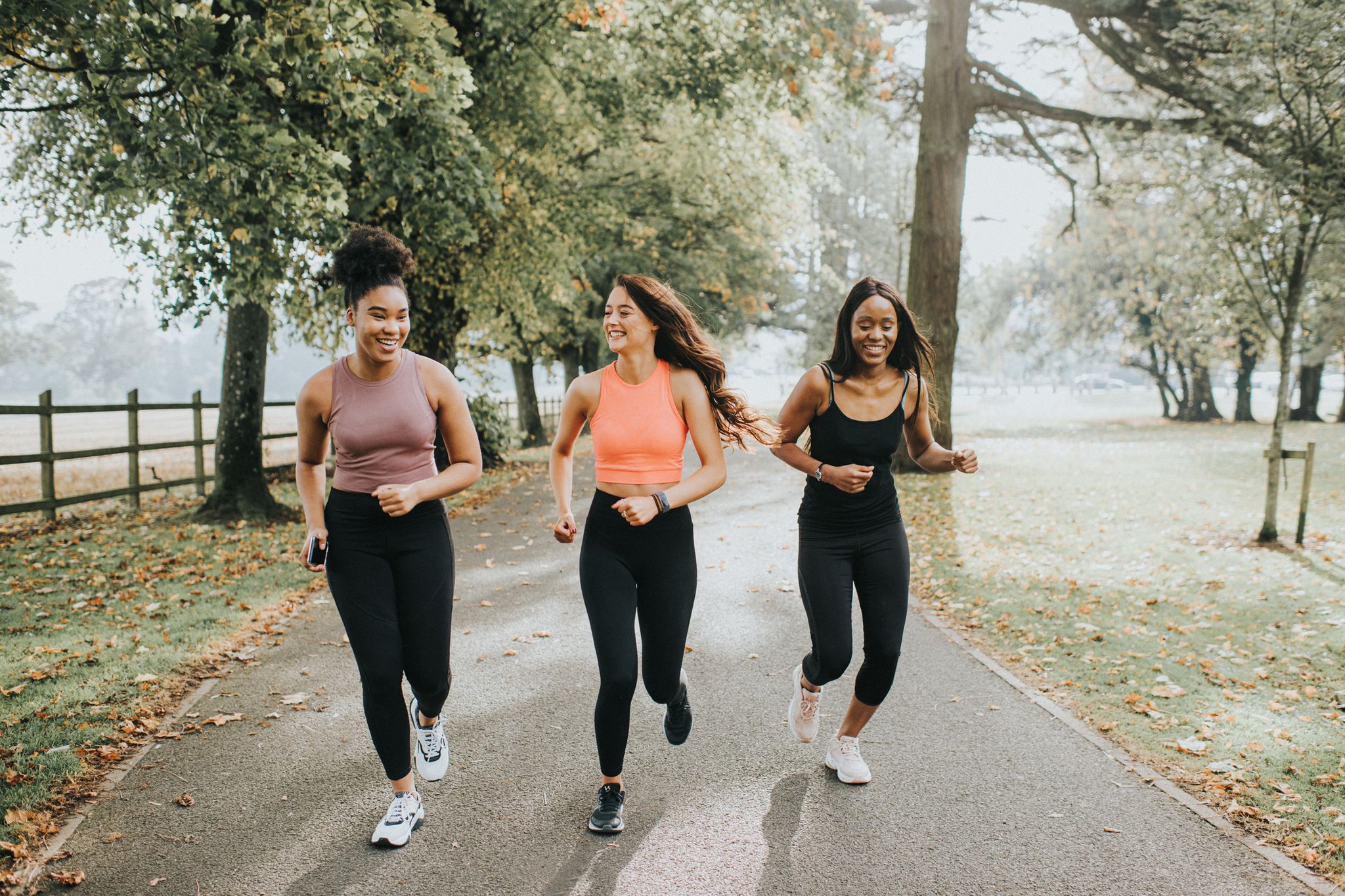
Occasions like Global Running Day and the London Marathon put a brilliant spotlight on the activity of running – but running isn’t just about single days. Instead, running is a sport, a hobby and a mental and physical release that everyone can enjoy and improve at. In other words, running can become a welcome, important and extremely beneficial part of your life.
If you’ve never run a step, here are 10 benefits of running that will inspire you to lace up those running shoes and get going today…
1. It strengthens your body
When you run, your whole physiology reaps the rewards of your movement. Here are just some parts of the body that feel the positive effects of those accumulated running steps.
The heart
Among other things, regular running helps to improve your respiratory function, lower your cholesterol, reduce your risk of diabetes and improve your heart health. In fact, according to leading cardiologist Dr Dan Augustine, ‘if you could put exercise into a pill, it would be better than most drugs that a doctor could give you’. That, in itself, is one mighty selling point for running.
The heart is like an engine. As you run, or do any form of endurance exercise, your heart must pump out more blood so it can deliver more oxygen to other muscles and organs in the body to keep them working effectively. In return, more blood must return to the heart so the cycle can continue. The more you run, the bigger and stronger your heart becomes, which means it can pump out more blood with each heartbeat. This, in turn, means that your heart can deliver the same amount of oxygen with fewer heartbeats, lowering your heart rate – and a lower heart rate is linked with more efficient heart function and better cardiovascular fitness.
The legs
Unsurprisingly, running is a lower limb-centric exercise that variously employs the four main leg muscle groups – quadriceps, calves, glutes and hamstrings – among other big muscles such as your hip flexors. As you run and repeatedly use these lower body muscles, you’ll gradually increase your muscle strength, build your speed and balance, reduce your risk of injury and improve your running economy. That amounts to many wins.
The joints
Sorry, naysayers! Despite popular legend, running won’t wreck your knees. Instead, it can actually strengthen your knees and other joints, with research from Stanford University in California finding that recreational runners showed less wear and tear on their joints than non-runners.
2. It can help you to live longer
Various studies add evidence to the pile that running works wonders for your lifespan.
A recent study published in the International Journal of Environmental Research & Public Health has found that running for 75 minutes per week can add a solid 12 years to your life. Looking at 4,400 subjects, it compared those who ran at least 75 minutes a week with those who ran less than 10 minutes a week, showing that big rewards can come from a small, manageable amount of running.
Meanwhile, another study of 55,000 people concluded that running three times a week for an average of just 17 minutes at a time reduced the risk of fatal heart attack or stroke by 55%.
3. It can reduce your risk of cancer
While running doesn’t cure cancer, plenty of research suggests that it can help to prevent it. A recent study published in Cancers (Basel) found that those who engaged in exercise had, for example, a 70% lower risk of developing colon cancer, around 30 to 40% less chance of developing breast cancer and an overall prostate cancer risk reduction ranging from 5% to 65%. It also concluded that exercise can also be used as ‘a complementary part of the medical treatment of cancer patients’.
Another study performed a genetic analysis of nearly 131,000 women from around the world, including nearly 70,000 who had been diagnosed with invasive breast cancer. It found that people who were likely to engage in ‘greater overall physical activity, greater vigorous activity, and lower sedentary time’ – based on their DNA – had a 41% lower risk of invasive breast cancer than those who were inactive. This means that physical activity such as running could help to safeguard your body against diseases such as this.
4. It keeps your mind sharp
While the physical benefits of running are enormous, let’s not overlook the psychological ones.
Research in the Psychonomic Bulletin and Review posited ‘insurmountable’ evidence that regular exercise helps to curb age-related mental decline, with Frontiers in Aging Neuroscience also finding that adults over the age of 50 who take up aerobic exercise benefit from better cognitive function and improved blood flow in the brain.
What’s more, a separate study in the Journal of Alzheimer’s Disease found that those who ran 15.3 miles per week had a 40% lower risk of dying from Alzheimer’s disease than non-runners.
As such, the cognitive benefits of running are worth keeping in mind.
5. It soothes stress
Ever felt more relaxed and energised after a run? If so, you aren’t alone, as running is repeatedly cited as an activity that helps to lift mental loads and reduce feelings of stress and anxiety.
A small study conducted by Asics measured the brain waves of participants before and after a 20-minute run, and found that even this relatively short bout of exercise led to a 58% reduction in levels of cognitive stress.
6. It doesn’t cost much
We all have different budgets and priorities when it comes to running, just like anything else.
While we can spend money on more premium running goods such as carbon plate running shoes, GPS running watches and compression boots for recovery should we want or be able to, it’s important to remember that running needn’t cost the earth. Strip things back to basics and all you really need to get started and feel the benefits of running is a pair of comfortable, supportive running shoes and good-fitting running kit that works with you as you move. As far as sports go, running is one of the most affordable you can choose to do.
7. It’s perfect ‘me time’
Running is a great way to give yourself permission to do something just for you. As you log the miles you can listen to music, catch up on an audiobook or tune into your favourite podcast. Or, you could leave your phone at home, unplug yourself altogether and be mindful of your breathing and the sights and sounds around you.
Whether it’s to escape the kids or your inbox, or to simply catch some fresh air while you can, carving out time for a run helps to keep the balance of your life in check.
8. It gives you a chance to enjoy nature
Talking of fresh air, going for a run really is an ideal reason to get outside and enjoy the therapeutic benefits of nature. One study published in Environmental Science & Technology found that people who exercised outdoors experienced increased energy levels and decreased feelings of depression, and were more likely to repeat their workouts.
Running in a natural environment is also good for boosting your levels of vitamin D – an all-important vitamin in which many Britons are deficient – so there’s no better reason to hit the trails or your local park for your next run.
9. It puts you in control
Adaptable and flexible, running is the ultimate pursuit for personalisation – you can choose precisely how and when you want to approach it.
You can run solo or with others; purely for fun or to prepare for goal races; for 10 minutes or for two hours; first thing in the morning or as the final activity to wrap up your day. A special benefit of running is that it’s not a one-size-fits-all activity – instead, it’s one that you can slot into your life according to your own targets, preferences and schedule. It’s up to you.
10. It can boost your happiness
When you go for a run, you can leave negativity at the door – studies have proven that running can enhance your mood and general sense of wellbeing.
One study, conducted by Glasgow Caledonian University, quizzed more than 8,000 parkrun regulars on their health and wellbeing. On average, they scored 4.4 out of 6 on the Oxford Happiness Questionnaire, which is above the average of score of 4 for the general population. Plus, 89% of parkrun participants said that running regularly made them feel happier and had a positive impact on their mental health – and that’s perhaps one of the best benefits of running you can get.
Adapted from Boosting Your Energy, Medical Editor: Anthony L. Komaroff, MD, Simcox-Clifford-Higby Professor of Medicine, Harvard Medical School; Senior Physician, Brigham & Women’s Hospital, Boston.
The benefits of exercise are truly profound. Exercise helps you feel better, think more clearly, and look your best. It also helps to control appetite, boost mood, improve sleep, and reduce your risk of heart disease, stroke, diabetes, dementia, depression, and many cancers.
Add to that long list of benefits that exercising regularly remains one of the most powerful ways to boost your energy. In fact, nothing medicine has ever invented or discovered rivals regular exercise when it comes to protecting your health and sustaining your energy.
Exercise boosts your energy
Think of your energy level as a rechargeable battery. Being active is like plugging in the battery and recharging it, while sitting idle causes the energy to drain away.
Boosting Your Energy
Fatigue is a symptom, not a disease, and it’s experienced differently by different people. Fatigue from stress or lack of sleep usually subsides after a good night’s rest, while other fatigue is more persistent and may be debilitating even after restful sleep. Harvard’s Special Health Report Boosting Your Energy provides advice and information from world-renowned medical experts that can help you discover the cause of your fatigue and find the right treatment or lifestyle changes.
When you’re inactive, you are losing muscle cells. The cells that remain have fewer mitochondria, which lowers their ability to produce energy. It’s remarkable how little time it takes to see the effects of this.
People who have a limb immobilized because of an injury or illness begin losing muscle cells within just six hours. With weaker muscles, everything you ask your muscles to do requires more effort, leaving less energy for other activities.
It’s particularly important to keep exercising as you age because muscle mass tends to decline over the years. Sarcopenia, the gradual decrease in muscle tissue, starts earlier than you may realize — around age 30.
The average 30-year-old can expect to lose about 25% or more of his or her muscle mass and strength by age 70, and another 25% by age 90. The result is not only a decrease in energy, but also an increase in risk for a host of other diseases.
Lack of exercise also causes changes in your heart and lungs. These organs become less efficient at oxygenating your blood and pumping that blood (along with nutrients) to the different parts of your body.
Starting to Exercise
What can improve your mood, boost your ability to fend off infection, and lower your risk for heart disease, diabetes, high blood pressure, and colon cancer? The answer is regular exercise. It may seem too good to be true, but it’s not. Hundreds of studies demonstrate that exercise helps you feel better and live longer. Starting to Exercise answers many important questions about physical activity. It will also help guide you through starting and maintaining an exercise program that suits your abilities and lifestyle.
That in turn affects your energy level, most noticeably during periods of physical exertion. Compared with an active person, a sedentary person experiences more fatigue when carrying out a physically demanding task and has both a higher heart rate and lower oxygen consumption.
Inactivity also has psychological effects. The less active you are, the less active you want to be. People who don’t exercise have a greater perception of fatigue than people who do.
The benefits of exercise: protecting your health
Regular physical activity not only increases your day-to-day vitality, but also helps prevent the kinds of illnesses that drain your energy over time. Strong evidence from thousands of studies shows that regular exercise delivers wide-ranging benefits, including
reducing your risks of heart disease, stroke, high blood pressure, and high cholesterol
lowering blood sugar levels and reducing your risk for type 2 diabetes and metabolic syndrome
reducing the risk of certain cancers, including breast and colon cancers
easing mild to moderate depression
reducing your risk for osteoporosis (provided you do weight-bearing exercise, meaning exercise where you work against gravity)
helping prevent or ease low back pain
relieving arthritis pain and expanding a limited range of motion
helping maintain muscle mass and prevent falls
boosting mental sharpness in older adults
strengthening your muscles, lungs, and heart
improving functional abilities in older adults, such as being able to walk up stairs or through a store, heft groceries, rise from a chair without help, and perform a multitude of other activities that allow independence
helping prevent weight gain, and possibly aid weight loss when combined with the proper diet
lowering the risk for hip fractures.
The bottom line: move more, feel more energetic
Regular exercise doesn’t just build strength and fitness; it keeps your internal “battery” charged by preserving muscle, boosting heart and lung function, and keeping diseases at bay. Even small, consistent steps — like walking, stretching, or light strength training — can make a big difference in your daily energy and long-term health.
Relax into this form of stretching while a prop or partner assists you
When you think of stretching, you might picture someone sitting on the floor, legs extended, reaching for their toes. But passive stretching takes a different approach. Instead of relying on your own flexibility, you use something (or someone) else to help.
Licensed massage therapist and registered nurse DeBorah Hill, RN, LMT, explains passive stretching and how it can benefit your health.
What is passive stretching?
Most people are familiar with dynamic and static stretching. Static stretching focuses on holding a pose that stretches your muscle as far as you can. Dynamic stretching uses movements, like walking lunges or hip circles, to warm up your muscles before an activity.
Dynamic and static stretches are limited to how far you can physically move. Think of toe touches: Some people can touch their toes and beyond, while others can’t reach their knees.
Passive stretching uses other forces to stretch your muscles, rather than your own ability. “During passive stretching, your body is loose and relaxed,” says Hill. “You let an external force — like a partner, towel or fitness strap — do the work.”
For example, instead of touching your toes, you can perform a passive hamstring stretch. During this stretch, you lie on your back and use a rolled-up towel or strap to help you stretch the back of your thigh.
If you’re new to passive stretching, use care. You could accidentally stretch a muscle too much and cause injury.
“Listen to your body as you stretch,” advises Hill. “Passive stretching should not hurt, and many people overestimate how flexible they are. It’s helpful to talk with a licensed physical therapist or massage therapist before you start.”
Benefits of passive stretching
Consider adding passive stretching to your routine to:
Relieve stress
Unlike static or dynamic stretching, passive stretching requires your muscles to be relaxed for it to work. This release of physical tension can benefit your mental health.
“When you fully relax for a passive stretch, you tell your brain to shift out of fight-or-flight mode,” explains Hill. “Passive stretching can take you out of survival mode so you feel relaxed.”
Increase flexibility
One study found passive stretching to be better than dynamic stretching at increasing hamstring flexibility.
“Passive stretching can increase your range of motion when other stretches don’t work for you,” says Hill. “Your prop or partner can help you gently stretch beyond what you can normally do yourself.”
Overcome mobility limitations
If you have mobility issues or chronic pain, other forms of stretching can be difficult. Passive stretching works for people of all ages and fitness levels. Can’t bend over or move your body a certain way? Passive stretches can work around these limitations.
Examples of passive stretching
Passive stretches can work many different muscles. Try these stretches to get started:
1. Doorway stretch
This stretch focuses on your chest and shoulders:
Stand just behind a doorway.
Place one foot slightly in front of the other for stability.
Raise your arms to the side with your elbows bent at 90 degrees, palms facing forward like goal posts. Allow your elbows, forearms and palms to press against the doorframe.
Gently lean forward, keeping your arms on the doorframe.
Hold for 10 seconds.
Rest for five seconds and repeat.
2. Standing quad stretch
This passive stretch focuses on your quadriceps, or the muscles on the front of your thighs:
Stand next to a steady object, such as a table or wall, that can be used for balance.
Loop a rolled-up towel or fitness strap around your right ankle.
Hold the other end of the towel or strap with your right hand.
Place your left hand on the table or wall for balance.
Slowly bend your right knee and pull your right foot up toward your buttocks using the towel or strap.
Hold for up to 30 seconds.
Repeat on the opposite leg.
3. Towel hamstring stretch
The backs of your legs, or hamstrings, get a stretch here — no toe-touching required:
Lie on your back, with your legs straight and relaxed.
Slowly raise one leg up toward the ceiling without bending your knee, keeping your leg relaxed.
Hook the towel or strap behind your hamstring or calf or under the arch of your foot, depending on what’s comfortable for you.
Using your towel or strap, gently pull your leg towards you until you feel the stretch.
Hold for up to 30 seconds.
Switch legs.
A stretching routine is worth it
Taking a few minutes a day to stretch has big benefits, from preventing injuries to reducing joint pain. And if other forms of stretching haven’t worked for you, passive stretching is worth a try.
“The beauty of passive stretching is that it works for so many people,” states Hill. “Whether you’re just starting out or you’re an elite athlete, passive stretching can help you feel great physically and mentally.”
Occasions like Global Running Day and the London Marathon put a brilliant spotlight on the activity of running – but running isn’t just about single days. Instead, running is a sport, a hobby and a mental and physical release that everyone can enjoy and improve at. In other words, running can become a welcome, important and extremely beneficial part of your life.
If you’ve never run a step, here are 10 benefits of running that will inspire you to lace up those running shoes and get going today…
1. It strengthens your body
When you run, your whole physiology reaps the rewards of your movement. Here are just some parts of the body that feel the positive effects of those accumulated running steps.
The heart
Among other things, regular running helps to improve your respiratory function, lower your cholesterol, reduce your risk of diabetes and improve your heart health. In fact, according to leading cardiologist Dr Dan Augustine, ‘if you could put exercise into a pill, it would be better than most drugs that a doctor could give you’. That, in itself, is one mighty selling point for running.
The heart is like an engine. As you run, or do any form of endurance exercise, your heart must pump out more blood so it can deliver more oxygen to other muscles and organs in the body to keep them working effectively. In return, more blood must return to the heart so the cycle can continue. The more you run, the bigger and stronger your heart becomes, which means it can pump out more blood with each heartbeat. This, in turn, means that your heart can deliver the same amount of oxygen with fewer heartbeats, lowering your heart rate – and a lower heart rate is linked with more efficient heart function and better cardiovascular fitness.
The legs
Unsurprisingly, running is a lower limb-centric exercise that variously employs the four main leg muscle groups – quadriceps, calves, glutes and hamstrings – among other big muscles such as your hip flexors. As you run and repeatedly use these lower body muscles, you’ll gradually increase your muscle strength, build your speed and balance, reduce your risk of injury and improve your running economy. That amounts to many wins.
The joints
Sorry, naysayers! Despite popular legend, running won’t wreck your knees. Instead, it can actually strengthen your knees and other joints, with research from Stanford University in California finding that recreational runners showed less wear and tear on their joints than non-runners.
2. It can help you to live longer
Various studies add evidence to the pile that running works wonders for your lifespan.
A recent study published in the International Journal of Environmental Research & Public Health has found that running for 75 minutes per week can add a solid 12 years to your life. Looking at 4,400 subjects, it compared those who ran at least 75 minutes a week with those who ran less than 10 minutes a week, showing that big rewards can come from a small, manageable amount of running.
Meanwhile, another study of 55,000 people concluded that running three times a week for an average of just 17 minutes at a time reduced the risk of fatal heart attack or stroke by 55%.
3. It can reduce your risk of cancer
While running doesn’t cure cancer, plenty of research suggests that it can help to prevent it. A recent study published in Cancers (Basel) found that those who engaged in exercise had, for example, a 70% lower risk of developing colon cancer, around 30 to 40% less chance of developing breast cancer and an overall prostate cancer risk reduction ranging from 5% to 65%. It also concluded that exercise can also be used as ‘a complementary part of the medical treatment of cancer patients’.
Another study performed a genetic analysis of nearly 131,000 women from around the world, including nearly 70,000 who had been diagnosed with invasive breast cancer. It found that people who were likely to engage in ‘greater overall physical activity, greater vigorous activity, and lower sedentary time’ – based on their DNA – had a 41% lower risk of invasive breast cancer than those who were inactive. This means that physical activity such as running could help to safeguard your body against diseases such as this.
4. It keeps your mind sharp
While the physical benefits of running are enormous, let’s not overlook the psychological ones.
Research in the Psychonomic Bulletin and Review posited ‘insurmountable’ evidence that regular exercise helps to curb age-related mental decline, with Frontiers in Aging Neuroscience also finding that adults over the age of 50 who take up aerobic exercise benefit from better cognitive function and improved blood flow in the brain.
What’s more, a separate study in the Journal of Alzheimer’s Disease found that those who ran 15.3 miles per week had a 40% lower risk of dying from Alzheimer’s disease than non-runners.
As such, the cognitive benefits of running are worth keeping in mind.
5. It soothes stress
Ever felt more relaxed and energised after a run? If so, you aren’t alone, as running is repeatedly cited as an activity that helps to lift mental loads and reduce feelings of stress and anxiety.
A small study conducted by Asics measured the brain waves of participants before and after a 20-minute run, and found that even this relatively short bout of exercise led to a 58% reduction in levels of cognitive stress.
6. It doesn’t cost much
We all have different budgets and priorities when it comes to running, just like anything else.
While we can spend money on more premium running goods such as carbon plate running shoes, GPS running watches and compression boots for recovery should we want or be able to, it’s important to remember that running needn’t cost the earth. Strip things back to basics and all you really need to get started and feel the benefits of running is a pair of comfortable, supportive running shoes and good-fitting running kit that works with you as you move. As far as sports go, running is one of the most affordable you can choose to do.
7. It’s perfect ‘me time’
Running is a great way to give yourself permission to do something just for you. As you log the miles you can listen to music, catch up on an audiobook or tune into your favourite podcast. Or, you could leave your phone at home, unplug yourself altogether and be mindful of your breathing and the sights and sounds around you.
Whether it’s to escape the kids or your inbox, or to simply catch some fresh air while you can, carving out time for a run helps to keep the balance of your life in check.
8. It gives you a chance to enjoy nature
Talking of fresh air, going for a run really is an ideal reason to get outside and enjoy the therapeutic benefits of nature. One study published in Environmental Science & Technology found that people who exercised outdoors experienced increased energy levels and decreased feelings of depression, and were more likely to repeat their workouts.
Running in a natural environment is also good for boosting your levels of vitamin D – an all-important vitamin in which many Britons are deficient – so there’s no better reason to hit the trails or your local park for your next run.
9. It puts you in control
Adaptable and flexible, running is the ultimate pursuit for personalisation – you can choose precisely how and when you want to approach it.
You can run solo or with others; purely for fun or to prepare for goal races; for 10 minutes or for two hours; first thing in the morning or as the final activity to wrap up your day. A special benefit of running is that it’s not a one-size-fits-all activity – instead, it’s one that you can slot into your life according to your own targets, preferences and schedule. It’s up to you.
10. It can boost your happiness
When you go for a run, you can leave negativity at the door – studies have proven that running can enhance your mood and general sense of wellbeing.
One study, conducted by Glasgow Caledonian University, quizzed more than 8,000 parkrun regulars on their health and wellbeing. On average, they scored 4.4 out of 6 on the Oxford Happiness Questionnaire, which is above the average of score of 4 for the general population. Plus, 89% of parkrun participants said that running regularly made them feel happier and had a positive impact on their mental health – and that’s perhaps one of the best benefits of running you can get.
Heading out the door? Read this article on the new Outside+ app available now on iOS devices for members! Download the app.
Last Thursday night, I unrolled my yoga mat in my small New York City apartment, sunk my hips toward my heels in Child’s Pose, and heard it—the jangle of my poodle mix’s collar as she hopped off the sofa. It had been a long day, and I wanted to dim the city’s noise and find stillness in my practice. But my dog, Sukhi, had other plans.
Her paws hit the hardwood as she came at me from the other room while I took some slow breaths. By the time I was in Down Dog, there was a literal dog beneath me, rolling on her back in a blur of white fur. Sukhi always sparks joy in me, but tonight it was backlit with annoyance. I stepped over her to make my way to the top of the mat and she followed, romping near my toes. I moved through a Sun Salutation, trying to ignore her, but she was everywhere. I didn’t know how to find my balance or move my body with anything resembling grace when her furry body was intercepting all my intentions.
I finally gave in, thinking I’d incorporate Sukhi into my practice by dropping her a kiss on my way from Plank to Chaturanga. Instead she bounded at my face. If yoga was about connection to others, Sukhi was really going for it.
But what exactly is it about my yoga practice that draws her to me from whatever room she’s in?
Group Practice
Friends have also mentioned that as soon as they start to set up for yoga, their animal friends come running.
“My dog always comes over and tries to get belly rubs when I practice,” says Siri Newman, a Wyoming-based yoga teacher and practitioner.
“It’s mostly endearing,” says Lori Walker, a digital marketer and yoga practitioner, with a laugh. “Mostly.”
“My pets zoom underneath me at top speed if I’m in Down Dog!” says Kathryn Chaya Lubow, a Southern California therapist and yoga practitioner.
Many of us have seen videos on social media of pets inviting themselves onto the mat as their humans practice. One post of a cute Australian Shepard practicing alongside her human has had more than 90 thousand shares on Instagram. (Was that the key? Getting your dog their own mat?)
It’s almost uncanny. No matter where our pets are hiding, once yoga practice starts, they tend to wriggle themselves in our way. But why? And how do other practitioners handle the cute madness?
More Than Just Playtime
“I’m not aware of any specific studies to evaluate this pattern of behavior in a scientific context, but I think there are a few possible explanations,” says Christopher Pachel, a doctor of veterinary medicine and certified animal behavior consultant in Portland, Oregon, who also practices yoga.
“Many pets interpret their owner getting down on the floor as an invitation to play or to interact,” says Pachel. “And for humans who routinely practice yoga, it’s only going to take a few repetitions of ‘mat to yoga’ for most pets to figure out that the unrolling of the mat is a predictor of floor time activity.”
This helped me understand why setting up my mat and props brought Sukhi into the room from wherever she’d been hiding. It was almost as effective a way to get her to come to me as saying “treat!”
“Animals love to get involved with what you’re doing,” says Anthony Newman, dog behavior expert and founder of Calm Energy Dog Training. “They want to be included. And when you get on the ground, you’re getting on their ‘level,’ literally and figuratively. Being down low and moving in ways that are non-confrontational, inviting, and playful (including showing your belly) takes you out of a ‘leadership’ position. Around that, dogs feel more free.”
But it isn’t only the act of getting on the floor or unrolling a mat that draws animals to their person. Beyond the physicality of the practice of yoga, there seems to be something…more.
Adaptive yoga teacher and founder of online studio Auzho Audrey L practices on a chair, sofa or bed. Her pup, Ruby, still wants to be part of it. “The weirdest thing has to be when I’m on the sofa during meditation. She just sits at my feet and stares. And when I go to my practice chair she always finds me there,” says Audrey.
“Pets feel the shift in our energy,” says Olivia LaBarre, an animal communicator, Reiki practitioner, and pet loss bereavement specialist. “Our animal companions are very aware of our emotions, nervous system states, and overall energy, and they sense the shifts that happen when we begin a practice such as yoga.”
It seems a sense of ease and happiness in us is not only palpable to our pets but inviting. “I do suspect that some dogs and cats pick up on breathwork, calmer energy, a focused mindset that typically go along with a yoga practice,” says Pachel. “They then seek out interactions with their caregivers at those times based on the positive vibes.”
How interesting that the yoga practice—accessible and available to all—can be felt throughout the animal realm, not just by humans. Maybe I wasn’t imagining it when I had thought my happier yoga vibes could be drawing Sukhi to the mat.
An Invitation
If animals can sense our energy, maybe we can use the practice of yoga to connect in new ways with our animal friends. Just as they affect us, we affect them. We can use the breathing and gentle movements to help calm our pets as we calm ourselves.
I keep going back to that old adage: what you resist persists. Framed that way, I took a second look at my practices with Sukhi. Instead of trying to rigidly adhere to my routine or urge her off the mat, I started to expand what my idea of a home yoga practice could be and challenge myself to take in Sukhi’s presence in my practice, no matter how wildly she shows up. Rather than just step around the situation, I allow it to bring my focus back to me.
It’s a different experience than practicing in a quiet studio for sure, but it lights my heart now that I’ve opened to it. And it reminds me of aspects of the practice that I’d become disconnected from. Perhaps it’s a chance to be playful and to remind myself to take in the present moment and soften into it rather than hit a set number of Warrior poses. In the play is something profound.
When I adopted Sukhi from a Los Angeles shelter, she went without a name for two weeks. The staff had called her “Heidi,” but that didn’t seem to fit her. I wasn’t sure what name would until my favorite Sanskrit teacher suggested Sukhi, related to sukha, which translates to “happiness” and “ease.” Maybe that’s exactly what we’re intended to experience when we share our practice.
About Our Contributor
Sarah Herrington is a writer, poet, and teacher. She is the founder of OM Schooled kids yoga teacher trainings and Mindful Writing Workshops.
Sarah Herrington is a writer and teacher. She is the founder of OM Schooled kids yoga teacher trainings and the Mindful Writing Workshop. Her work has appeared in New York Times, Los Angeles Times, Poets & Writers Magazine, and more.
You Can Do This 15-Minute Yoga Flow Anytime, Anywhere
Ah the hour-long yoga class. It’s quite luxurious, isn’t it? But let’s be frank—some days, it seems impossible to carve out a large chunk of time for your practice. If you ever feel this way (and who hasn’t?) know this: even a few minutes of movement can make a huge difference in how you approach … Continued
Toward the end of a long run your calf is in a knot the size of a grapefruit. Is this an over-excited neuron taking out its anxiety on a muscle? Or is your qi depleted? You may need a new recovery technique.
Western hemisphere physios of yore saw the body as an organization of bones, muscles, fascia, and nerves, so bodywork that originated there, like Swedish massage, attempts to heal and realign those parts.
Eastern folk saw the body as a vessel of energy and breath. Bodywork that grew out of that philosophy, like acupressure, sought to open blocked energy pathways and restore balance.
Here’s a quick look at three types of bodywork from around the world—three philosophies—that can be used as prevention during training, or for recovery from an injury or race.
Recovery Modalities From Around The World
Shiatsu Origin: Japan
Shiatsu is based on theories of acupuncture and Chinese medicine that were imported to Japan around 5 AD. According to Cari Johnson Pelava, director of Centerpoint Massage & Shiatsu Therapy School & Clinic, in Minneapolis, a system of energy, “qi,” runs through the body on pathways, and along those pathways lie points where one can access that energy to make a difference in the body. Symptoms like pain or fatigue are said to be caused by an imbalance of energy. By applying pressure, kneading, and stretching, a shiatsu therapist can restore the body’s energy balance.
“We’ve worked with triathletes pre-event and post,” Johnson Pelava says. “Pre-event we’ll focus on tonifying energy so that it’s most accessible to the athlete on event day. We’ll do stretching, hip rotations, and other range of motion work to open energetic pathways. Post-event, we’ll work deeper to pull that energy that’s been depleted back.”
Thai Yoga Origin: Thailand
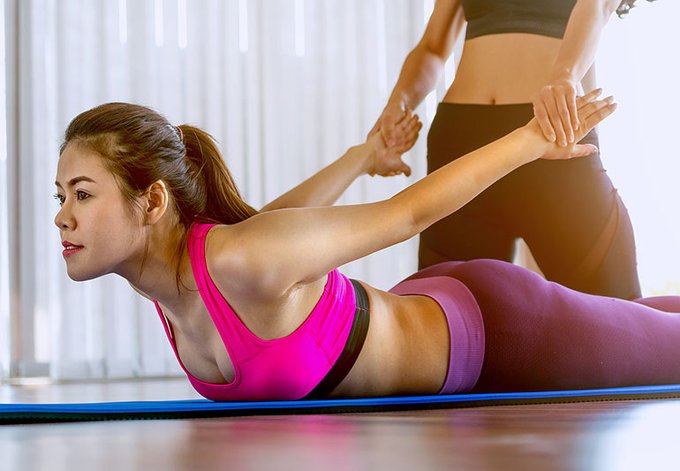
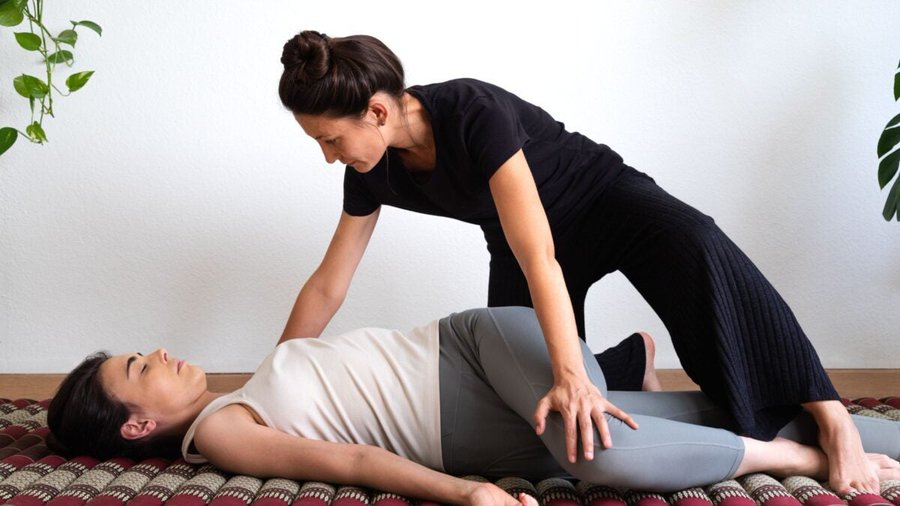
Thai yoga bodywork has an eastern flavor informed by yoga, Ayurveda, and Buddhism. It combines rhythmic massage, assisted yoga poses, acupressure along energy meridians, healing energy work, and meditation.
Tanya Boigenzahn, director of Devanadi School of Yoga and Wellness in Minneapolis, says Thai yoga bodywork can help athletes with flexibility, alignment, and breath control, as well as their mental game—mood, concentration, confidence.
Thai yoga is accomplished in a one-on-one session with clothes on. The therapist moves a passive client through positions, stretching tight areas, and encouraging range of motion and mindful breathwork.
Boigenzahn says Thai yoga helps optimize training pre-event, and eases recovery afterward. “Athletes can expect to have a quicker bounce back time, as well as less discomfort after a tough event.”
Rolfing Origin: USA
Ida Rolf thought that pain, inefficient movement, and imbalance was were the result of the body being improperly organized around its axis. In New York during the 1940s, Rolf began reorganizing clients’ bodies by manipulating fascia—the connective tissue separating muscles and other organs— which developed into the therapeutic approach called Rolfing Structural Integration. “It’s a combination of participatory bodywork and active experimentation with body movement education,” says Kevin McCarthy, an advanced rolfer with In|Form Rolfing in Minneapolis. “We teach clients how to be aware of and work with their body for better function.”
Rolfing is a holistic approach that seeks to find the source of the dysfunction rather than merely treat the symptom. “Participatory” is a key word, McCarthy says.
“Unlike most forms of massage where you’re lying passively on a table, we’re asking, ‘Can you stand up using the outside of your leg? Do you notice the difference in how that feels?’” he says. “We’re using the body to repattern the brain.”
Because it involves education, rolfing is not a one-and-done—a rolfing treatment is actually usually a series of 10 sessions.





 Fitnessaware