Skip to content

Fitnessaware

Health & Wellbeing

Tag: womens health

Posted on May 24, 2025

Mother is a verb. It’s something you do. Not just who you are. @WomensRunning #movement

Women’s Running

@WomensRunning

·

May 15

Mother is a verb. It’s something you do. Not just who you are. Thank you for all you do. Happy Mother’s Day

Posted on May 20, 2025October 17, 2025

Dragon Boating 🤑😃 Lough Rynn #BreastCancerAwareness

Posted on May 12, 2025

Knead, stretch, awaken your qi: here’s the right way to tackle recovery depends on where in the world you are.@WomensRunning #physiotherapy

Toward the end of a long run your calf is in a knot the size of a grapefruit. Is this an over-excited neuron taking out its anxiety on a muscle? Or is your qi depleted? You may need a new recovery technique.

Western hemisphere physios of yore saw the body as an organization of bones, muscles, fascia, and nerves, so bodywork that originated there, like Swedish massage, attempts to heal and realign those parts.

Eastern folk saw the body as a vessel of energy and breath. Bodywork that grew out of that philosophy, like acupressure, sought to open blocked energy pathways and restore balance.

Here’s a quick look at three types of bodywork from around the world—three philosophies—that can be used as prevention during training, or for recovery from an injury or race.

Recovery Modalities From Around The World

Shiatsu
Origin: Japan

Shiatsu is based on theories of acupuncture and Chinese medicine that were imported to Japan around 5 AD. According to Cari Johnson Pelava, director of Centerpoint Massage & Shiatsu Therapy School & Clinic, in Minneapolis, a system of energy, “qi,” runs through the body on pathways, and along those pathways lie points where one can access that energy to make a difference in the body. Symptoms like pain or fatigue are said to be caused by an imbalance of energy. By applying pressure, kneading, and stretching, a shiatsu therapist can restore the body’s energy balance.

“We’ve worked with triathletes pre-event and post,” Johnson Pelava says. “Pre-event we’ll focus on tonifying energy so that it’s most accessible to the athlete on event day. We’ll do stretching, hip rotations, and other range of motion work to open energetic pathways. Post-event, we’ll work deeper to pull that energy that’s been depleted back.”

Thai Yoga
Origin: Thailand

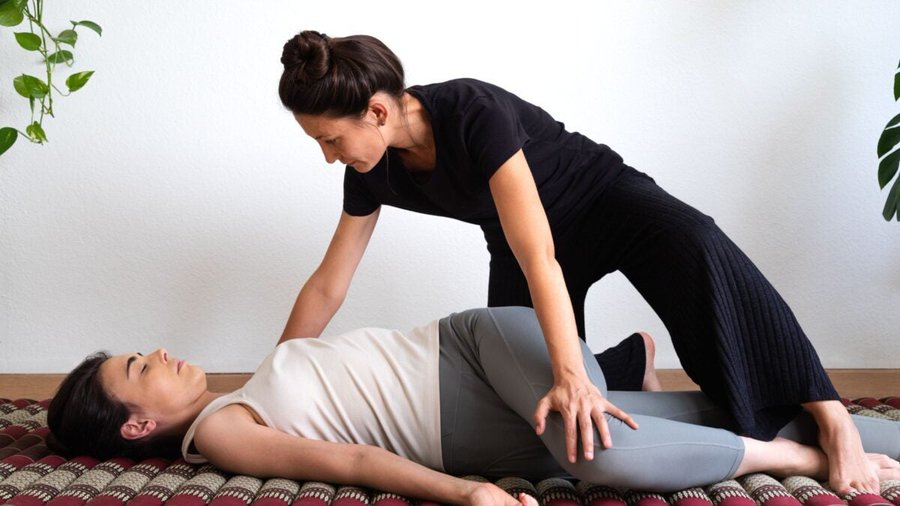
Thai yoga bodywork has an eastern flavor informed by yoga, Ayurveda, and Buddhism. It combines rhythmic massage, assisted yoga poses, acupressure along energy meridians, healing energy work, and meditation.

Tanya Boigenzahn, director of Devanadi School of Yoga and Wellness in Minneapolis, says Thai yoga bodywork can help athletes with flexibility, alignment, and breath control, as well as their mental game—mood, concentration, confidence.

Thai yoga is accomplished in a one-on-one session with clothes on. The therapist moves a passive client through positions, stretching tight areas, and encouraging range of motion and mindful breathwork.

Boigenzahn says Thai yoga helps optimize training pre-event, and eases recovery afterward. “Athletes can expect to have a quicker bounce back time, as well as less discomfort after a tough event.”

Rolfing
Origin: USA

Ida Rolf thought that pain, inefficient movement, and imbalance was were the result of the body being improperly organized around its axis. In New York during the 1940s, Rolf began reorganizing clients’ bodies by manipulating fascia—the connective tissue separating muscles and other organs— which developed into the therapeutic approach called Rolfing Structural Integration. “It’s a combination of participatory bodywork and active experimentation with body movement education,” says Kevin McCarthy, an advanced rolfer with In|Form Rolfing in Minneapolis. “We teach clients how to be aware of and work with their body for better function.”

Rolfing is a holistic approach that seeks to find the source of the dysfunction rather than merely treat the symptom. “Participatory” is a key word, McCarthy says.

“Unlike most forms of massage where you’re lying passively on a table, we’re asking, ‘Can you stand up using the outside of your leg? Do you notice the difference in how that feels?’” he says. “We’re using the body to repattern the brain.”

Because it involves education, rolfing is not a one-and-done—a rolfing treatment is actually usually a series of 10 sessions.

Posted on May 9, 2025

Trés Chic @paulcostelloeofficial @dunnesstores

Liked by somers_lily1701 and others

dunnesstores

Embrace the new season ahead with key wardrobe pieces that will effortlessly transition from one occasion to the next, all from Paul Costelloe’s spring collection.

@paulcostelloeofficial

Posted on May 8, 2025

Sound Sleep. Good Health.

Runner’s World‏Verified account @runnersworld Oct 28

Training hard? Don’t skimp on sleep. Here’s why: http://spr.ly/60178CvuZ ā

Posted on May 8, 2025

How To Do Cat-Cow Properly To Warm Up Your Spine — Or Relieve Back Pain.@mindbodygreen

mindbodygreen@mindbodygreen·19m

Here’s how to do cat-cow (or chakravakasana in Sanskrit), as demonstrated by a certified yoga instructor.

September 10, 2021 — 14:39 PM Share on:

How to do cat-cow, chakravakasana

This Ridiculously Satisfying Stretch Warms Up Your Spine & Relieves Back PainYou may have done this pose before, but are you doing it properly?mindbodygreen.com

Posted on May 8, 2025

5 Sciatica Stretches to Relieve That Burning Pain @WomensRunning #physiotherapy


Women’s Running

@WomensRunning

·
Aug 11

Soothe sciatic nerve pain and release tension in your lower back and hips with these 5 yoga poses.

5 Sciatica Stretches to Relieve That Burning Pain – Women’s Running
Yoga can help relieve your sciatica symptoms—and improve your mental outlook when you’re faced with that persistent pain.
womensrunning.com

Posted on April 27, 2025

Step into sunshine. Sun-ready sandals for every spring/summer moment. @cindersshoeheaven @dunnesstores

dunnesstores

•

Liked by evelynriordan367 and others

Step into sunshine. Sun-ready sandals for every spring/summer moment. @cindersshoeheaven

Available in:

Cornelscourt
Dundrum
Liffey Valley
Blanchardstown
Swords Pavilions
Stephens Green
Henry St
Newbridge
Jetland Limerick
Terryland

Posted on April 21, 2025

The 25 Golden Rules of Long Distance Running @runnersworld

  • Runner’s World‏Verified account @runnersworld 23m23 minutes ago

Do you know the golden rules?

https://www.runnersworld.com/training/a20790553/the-25-golden-rules-of-running/?utm_campaign=socialflowTWRW&utm_source=twitter&utm_medium=social-media

Posted on April 17, 2025

Knead, stretch, awaken your qi: here’s the right way to tackle recovery depends on where in the world you are.@WomensRunning #physiotherapy

Toward the end of a long run your calf is in a knot the size of a grapefruit. Is this an over-excited neuron taking out its anxiety on a muscle? Or is your qi depleted? You may need a new recovery technique.

Western hemisphere physios of yore saw the body as an organization of bones, muscles, fascia, and nerves, so bodywork that originated there, like Swedish massage, attempts to heal and realign those parts.

Eastern folk saw the body as a vessel of energy and breath. Bodywork that grew out of that philosophy, like acupressure, sought to open blocked energy pathways and restore balance.

Here’s a quick look at three types of bodywork from around the world—three philosophies—that can be used as prevention during training, or for recovery from an injury or race.

Recovery Modalities From Around The World

Shiatsu
Origin: Japan

Shiatsu is based on theories of acupuncture and Chinese medicine that were imported to Japan around 5 AD. According to Cari Johnson Pelava, director of Centerpoint Massage & Shiatsu Therapy School & Clinic, in Minneapolis, a system of energy, “qi,” runs through the body on pathways, and along those pathways lie points where one can access that energy to make a difference in the body. Symptoms like pain or fatigue are said to be caused by an imbalance of energy. By applying pressure, kneading, and stretching, a shiatsu therapist can restore the body’s energy balance.

“We’ve worked with triathletes pre-event and post,” Johnson Pelava says. “Pre-event we’ll focus on tonifying energy so that it’s most accessible to the athlete on event day. We’ll do stretching, hip rotations, and other range of motion work to open energetic pathways. Post-event, we’ll work deeper to pull that energy that’s been depleted back.”

Thai Yoga
Origin: Thailand

Thai yoga bodywork has an eastern flavor informed by yoga, Ayurveda, and Buddhism. It combines rhythmic massage, assisted yoga poses, acupressure along energy meridians, healing energy work, and meditation.

Tanya Boigenzahn, director of Devanadi School of Yoga and Wellness in Minneapolis, says Thai yoga bodywork can help athletes with flexibility, alignment, and breath control, as well as their mental game—mood, concentration, confidence.

Thai yoga is accomplished in a one-on-one session with clothes on. The therapist moves a passive client through positions, stretching tight areas, and encouraging range of motion and mindful breathwork.

Boigenzahn says Thai yoga helps optimize training pre-event, and eases recovery afterward. “Athletes can expect to have a quicker bounce back time, as well as less discomfort after a tough event.”

Rolfing
Origin: USA

Ida Rolf thought that pain, inefficient movement, and imbalance was were the result of the body being improperly organized around its axis. In New York during the 1940s, Rolf began reorganizing clients’ bodies by manipulating fascia—the connective tissue separating muscles and other organs— which developed into the therapeutic approach called Rolfing Structural Integration. “It’s a combination of participatory bodywork and active experimentation with body movement education,” says Kevin McCarthy, an advanced rolfer with In|Form Rolfing in Minneapolis. “We teach clients how to be aware of and work with their body for better function.”

Rolfing is a holistic approach that seeks to find the source of the dysfunction rather than merely treat the symptom. “Participatory” is a key word, McCarthy says.

“Unlike most forms of massage where you’re lying passively on a table, we’re asking, ‘Can you stand up using the outside of your leg? Do you notice the difference in how that feels?’” he says. “We’re using the body to repattern the brain.”

Because it involves education, rolfing is not a one-and-done—a rolfing treatment is actually usually a series of 10 sessions.

Posts pagination

Previous page Page 1 … Page 4 Page 5 Page 6 … Page 107 Next page

Tags

  • core stability
  • core strength
  • diet
  • exercise
  • fitness
  • Fitnessaware
  • health
  • physical activity
  • physio
  • physiotherapy
  • Pilates
  • running
  • Therapy
  • womens health
  • yoga

Archives

  • December 2025
  • November 2025
  • October 2025
  • September 2025
  • August 2025
  • July 2025
  • June 2025
  • May 2025
  • April 2025
  • March 2025
  • February 2025
  • January 2025
  • December 2024
  • November 2024
  • October 2024
  • September 2024
  • August 2024
  • July 2024
  • June 2024
  • May 2024
  • April 2024
  • March 2024
  • February 2024
  • January 2024
  • December 2023
  • November 2023
  • October 2023
  • September 2023
  • August 2023
  • July 2023
  • June 2023
  • May 2023
  • April 2023
  • March 2023
  • February 2023
  • January 2023
  • December 2022
  • November 2022
  • October 2022
  • September 2022
  • August 2022
  • July 2022
  • June 2022
  • May 2022
  • April 2022
  • March 2022
  • February 2022
  • January 2022
  • December 2021
  • November 2021
  • October 2021
  • September 2021
  • August 2021
  • July 2021
  • June 2021
  • May 2021
  • April 2021
  • March 2021
  • February 2021
  • January 2021
  • December 2020
  • November 2020
  • October 2020
  • September 2020
  • August 2020
  • July 2020
  • June 2020
  • May 2020
  • April 2020
  • March 2020
  • February 2020
  • January 2020
  • December 2019
  • November 2019
  • October 2019
  • September 2019
  • August 2019
  • July 2019
  • June 2019
  • May 2019
  • April 2019
  • March 2019
  • February 2019
  • January 2019
  • December 2018
  • November 2018
  • October 2018
  • September 2018
  • August 2018
  • July 2018
  • June 2018
  • May 2018
  • April 2018
  • March 2018
  • January 2018
  • June 2016
  • May 2016
  • April 2016
  • March 2016
  • February 2016
  • December 2015
Blog at WordPress.com.
Privacy & Cookies: This site uses cookies. By continuing to use this website, you agree to their use.
To find out more, including how to control cookies, see here: Cookie Policy
  • Subscribe Subscribed
    • Fitnessaware
    • Join 1,593 other subscribers
    • Already have a WordPress.com account? Log in now.
    • Fitnessaware
    • Subscribe Subscribed
    • Sign up
    • Log in
    • Report this content
    • View site in Reader
    • Manage subscriptions
    • Collapse this bar
 

Loading Comments...