How to fit in your work out at home – Katie Lawton MEd @ClevelandClinic #consistency

cleveland work out at home

Whether you’re a fitness fanatic or casual gym goer, the thought of picking up a dumbbell covered in germs is enough to make anyone cringe. And with the spread of coronavirus (COVID-19) becoming more prominent every day, gyms and fitness centers across the country are closing their doors to help protect members.

If staying active is an important part of your life (as it should be!) you might be wondering how you’re supposed to go about this whole at-home workout thing. Thankfully, it’s easier than you think.

“A lot of what you’ll find with at-home workouts is about maintaining your current level of fitness,” explains exercise physiologist Katie Lawton. “And with workouts, consistency is key.”

Here Lawton shares some practical advice about how to stay active at home.

  1. Find workouts through online videos and apps. The internet is choked full of free workout videos. From yoga, to Zumba, to circuit training that you can do in your backyard. Test out a few workouts to find a series, program or instructor that you like. (Bonus points if you can get other members of your household to join you!)
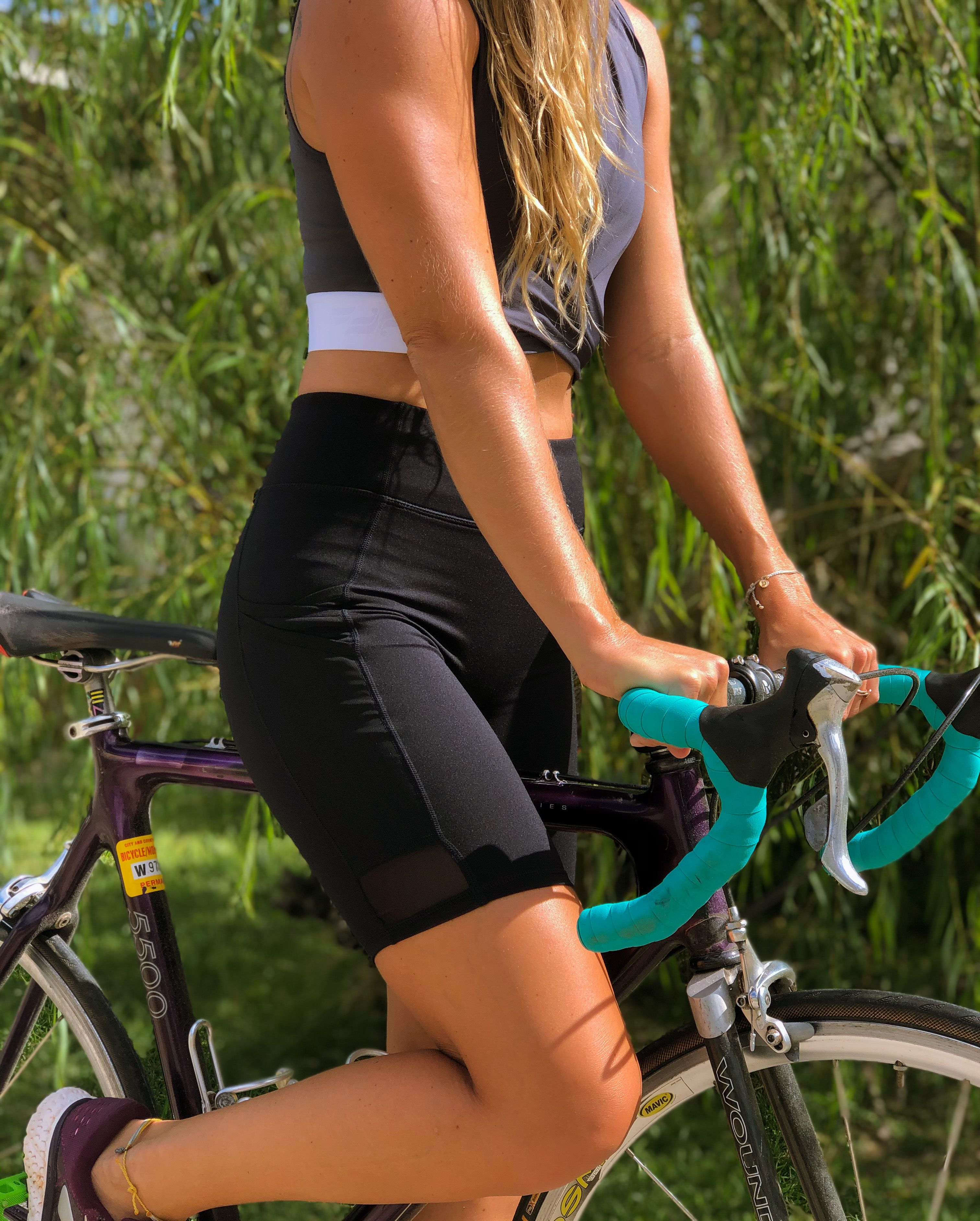
  2. Walk, run or bike outside. Everyone could use a little fresh air. Hit the pavement in your neighborhood and challenge yourself to walk, run or bike a certain number of minutes or miles. If you’re an experienced fitness buff and you’re really looking to ramp up your heart rate, opt for hills or try a running based HIIT workout.
  3. Focus on body weight movements. Now’s the time to incorporate body weight exercises into your workouts. These tried and true movements include things like pushups, squats, lunges, planks and burpees. They’re convenient, efficient and inexpensive (AKA free). Pick a few different movements and create a circuit workout by completing as many reps of that one movement as possible in one minute. Then rest for a minute and continue on to the next movement and do the same thing. Repeat this for 15 to 20 minutes.
  4. Order inexpensive fitness equipment online. Things like jump ropes, pull up bars that attach to door frames, suspension trainers and resistance bands are inexpensive items that can pack a punch when it comes to your workouts. Lawton recommends choosing a heavier resistance band and suggests tying the suspension trainer to a tree outside. You could also ask around if other family members or neighbors have old dumbbells or barbells that they no longer use.
  5. Utilize items around your house. Lawton encourages creativity when it comes to working out at home. Run up and down your basement stairs, use a chair for triceps dips or grab cans of soup or a gallon of water as a weight. Even jumping over a shoebox a few times can be a quick burst of cardio.
  6. Get your household involved. If you have kids, chances are they have more energy to burn off than you know what to do with and they’d be thrilled to be involved. Try to incorporate them into your plans to stay active – whether it’s encouraging them to do pushups with you or organizing a backyard obstacle course. Try to walk your dog every day, play tag with your kids or get your whole family involved in a backyard soccer game. Also never underestimate the power of a good dance party! It’s a great way to make memories with your family and burn off some stress and anxiety.

Linkedin Pinterest

How to fit in your work out at home – Katie Lawton MEd @ClevelandClinic #consistency

cleveland work out at home

Whether you’re a fitness fanatic or casual gym goer, the thought of picking up a dumbbell covered in germs is enough to make anyone cringe. And with the spread of coronavirus (COVID-19) becoming more prominent every day, gyms and fitness centers across the country are closing their doors to help protect members.

If staying active is an important part of your life (as it should be!) you might be wondering how you’re supposed to go about this whole at-home workout thing. Thankfully, it’s easier than you think.

“A lot of what you’ll find with at-home workouts is about maintaining your current level of fitness,” explains exercise physiologist Katie Lawton. “And with workouts, consistency is key.”

Here Lawton shares some practical advice about how to stay active at home.

  1. Find workouts through online videos and apps. The internet is choked full of free workout videos. From yoga, to Zumba, to circuit training that you can do in your backyard. Test out a few workouts to find a series, program or instructor that you like. (Bonus points if you can get other members of your household to join you!)
  2. Walk, run or bike outside. Everyone could use a little fresh air. Hit the pavement in your neighborhood and challenge yourself to walk, run or bike a certain number of minutes or miles. If you’re an experienced fitness buff and you’re really looking to ramp up your heart rate, opt for hills or try a running based HIIT workout.
  3. Focus on body weight movements. Now’s the time to incorporate body weight exercises into your workouts. These tried and true movements include things like pushups, squats, lunges, planks and burpees. They’re convenient, efficient and inexpensive (AKA free). Pick a few different movements and create a circuit workout by completing as many reps of that one movement as possible in one minute. Then rest for a minute and continue on to the next movement and do the same thing. Repeat this for 15 to 20 minutes.
  4. Order inexpensive fitness equipment online. Things like jump ropes, pull up bars that attach to door frames, suspension trainers and resistance bands are inexpensive items that can pack a punch when it comes to your workouts. Lawton recommends choosing a heavier resistance band and suggests tying the suspension trainer to a tree outside. You could also ask around if other family members or neighbors have old dumbbells or barbells that they no longer use.
  5. Utilize items around your house. Lawton encourages creativity when it comes to working out at home. Run up and down your basement stairs, use a chair for triceps dips or grab cans of soup or a gallon of water as a weight. Even jumping over a shoebox a few times can be a quick burst of cardio.
  6. Get your household involved. If you have kids, chances are they have more energy to burn off than you know what to do with and they’d be thrilled to be involved. Try to incorporate them into your plans to stay active – whether it’s encouraging them to do pushups with you or organizing a backyard obstacle course. Try to walk your dog every day, play tag with your kids or get your whole family involved in a backyard soccer game. Also never underestimate the power of a good dance party! It’s a great way to make memories with your family and burn off some stress and anxiety.

Linkedin Pinterest

What Happens When You Stretch? @Yoga_Journal #runners

For years we were told that we were rubber bands—that if we didn’t stretch we’d turn crusty and snap from disuse. Then we were told that tension was good and that if we were overstretched, we’d be akin to a loose and useless rubber band. And now you might be feeling more like a yo-yo than a rubber band. 

So what’s the actual deal with stretching? What does it do for runners? And when should it be utilized?  Well, that depends on what type of stretching you’re talking about. 

Static vs. Dynamic Stretching

In regards to the rubber band analogy, David Behm, professor in the School of Human Kinetics and Recreation at Memorial University of Newfoundland, describes stretching to be more of a Goldilocks scenario: “You want a tighter but not too tight muscle and tendon,” he says. Static and dynamic stretching serve different purposes in helping your body reach that homeostasis needed to keep running efficiently.  

Static stretching usually involves moving a joint as far as it will comfortably go and then holding it. A static hold can last 30 seconds or more. It’s a very effective way to increase range of motion, relax muscles, and prevent post-exercise stiffness and soreness. Hurdler stretches or kneeling hip flexor stretches are considered static. 

Dynamic stretches are controlled, active movements aimed at helping your muscles rehearse the type of movement they’ll be doing while running. This kind of stretching activates the muscle, causing it to contract and physically warm up. “It also warms up and prepares the nervous system by increasing its activity in anticipation of the activity,” says Behm. Walking lunges, leg swings, and heel to sky pulses are all examples of a dynamic stretch. 

But stretching isn’t just about your muscles and tendons. A study, published recently in the Journal of Physical Activity and Health, found that stretching can also lower blood pressure by physically stretching the blood vessels. The authors found that stretching was more effective in doing so than walking was, a common intervention prescribed for people with hypertension. 

When Should Runners Stretch?

When just fitting the run into your schedule is hard enough, you might be tempted to cut corners in your warm-up and cool-down routines. But here’s why you should consider keeping up stretching. 

Stretching Before a Run

Stretching as part of a warm-up seems to be where the most confusion comes in. It’s a common question: Should you stretch before running? 

Static stretching, when held in long durations, can actually cause you to tense up and get tighter, which is not what you want right before going for a run. “A static stretch would be great if we were about to go hold a static position for an hour. But when we’re running we’re about to go do repeated muscle firing for a set duration. We need to be getting our bodies ready for that physiological movement, not a 30 second static hold,” says Mackenzie Wartenberger, head coach of the University of Wisconsin’s women’s cross country team and assistant track and field coach.

Instead she recommends focusing on dynamic stretches as part of your warm-up routine. The idea is to push your range of motion. “It’s all about pushing right to the point where you can feel it — it should feel a little bit like you’re on the edge of that range of motion—and then immediately backing off,” she says. That process should be repeated three to five times, aiming to go two percent deeper on each repetition. “That contraction or extension depending on what movement you’re doing that’s rapid and repeated, warms your muscles up and it gets your muscles and tendons firing.”

Nell Rojas, a strength and running coach and pro runner herself, agrees that dynamic stretching should be incorporated into the mobility work in a warm-up. “It kind of tricks your muscles, neuromuscularly, to relax,” she says. “You’re not getting any lengthening in your muscles, but your body will be able to relax a little bit.” 

Behm’s research has showed that some static stretching in a warm-up is fine. Some coaches like to incorporate a static hip stretch into the warm-up, for example. “If static stretching is incorporated within a full warm-up, there are trivial effects on performance,” he says. “Static stretching can decrease muscle and tendon injuries, especially with explosive actions, but stretching does not decrease the incidence of all cause injuries.”

YogaJournal.com

There’s no time like the present: get started on your half-marathon journey today with our eight week training plan.@WomensRunning

8-Week Intermediate Half Marathon Training Plan

You’ll get into half marathon running shape in 2 months with this training plan.

Updated Dec 28, 2024

The Editors of RUNFollow

from Women’s Running

If done correctly, it is possible to “crash train” for a half marathon. Whether it’s an injury, an illness, work stress or scheduling that threw you off track, even just four weeks is enough time to prepare for a successful 13.1-miler provided you’re healthy and able to train without further interruptions. But a better approach is to follow this 8-week intermediate half marathon training plan.

The key to crash training is building fitness quickly without taking big risks. The best tools for fast fitness are frequency and intensity. Doing some kind of cardio almost every day—whether that means running, walking or cross-training—will help you make the most of the time you have.

RELATED: Take the “You vs. the Year 2025” Running Challenge

Getting Started

This 8-week intermediate half marathon training plan is perfect if your half marathon is eight weeks away and you’re fit enough to run 5 miles comfortably.

The plan includes “optional” days, when you have a choice to rest, run or cross-train (XT) with non-impact cardio, such as cycling or elliptical training. You’ll get fitter faster if you choose the rest option only when you feel your body needs it.

Each run uses a five-point intensity scale based on ratings of perceived effort (RPE). Heart-rate monitors can be helpful, but going by feel works just as well. Use these guidelines to understand your plan’s intensity scale.

RPE 1: Very Easy—a pleasant effort you feel you could keep up almost indefinitely.
RPE 2: Comfortable—you’re not holding yourself back but you can still easily carry on a conversation.
RPE 3: Comfortably Hard—the highest intensity at which you can speak comfortably.
RPE 4: Hard—after a few minutes at this intensity, your breathing is labored.
RPE 5: Very Hard—an effort that you can sustain for a couple of minutes at most

0 of 4 minutes, 46 secondsVolume 90%

Week 1
Monday: REST
Tuesday: FAST FINISH RUN 30 min @ RPE 2 + 5 min @ RPE 3
Wednesday: EASY RUN 35 min @ RPE 2
Thursday: OPTIONAL: WALK, RUN or XT 35 min @ RPE 1-2 or Rest
Friday: INTERVAL RUN/WALK 5 min @ RPE 1 + 5 min @ RPE 2 + 5 x (1 min @ RPE 5/2 min @ RPE 1) + 5 min @ RPE 2 + 5 min @ RPE 1
Saturday: XT 35 min @ RPE 2
Sunday: LONG RUN 5 miles @ RPE 2

Week 2
Monday: REST
Tuesday: FAST FINISH RUN 35 min @ RPE 2 + 5 min @ RPE 3
Wednesday: EASY RUN 40 min @ RPE 2
Thursday: OPTIONAL: WALK, RUN or XT 35 min @ RPE 1-2 or Rest
Friday: INTERVAL RUN/WALK 5 min @ RPE 1 + 5 min @ RPE 2 + 7 x (1 min @ RPE 5/2 min @ RPE 1) + 5 min @ RPE 2 + 5 min @ RPE 1
Saturday: XT 40 min @ RPE 2
Sunday: LONG RUN 6 miles @ RPE 2

Week 3
Monday: REST
Tuesday: FAST FINISH RUN 35 min @ RPE 2 + 10 min @ RPE 3
Wednesday: EASY RUN 45 min @ RPE 2
Thursday: OPTIONAL: WALK, RUN or XT 40 min @ RPE 1-2 or Rest
Friday: INTERVAL RUN/WALK 5 min @ RPE 1 + 5 min @ RPE 2 + 9 x (1 min @ RPE 4/2 min @ RPE 1) + 5 min @ RPE 2 + 5 min @ RPE 1
Saturday: XT 45 min @ RPE 2
Sunday: LONG RUN 7 miles @ RPE 2

Week 4
Monday: REST
Tuesday: FAST FINISH RUN 30 min @ RPE 2 + 5 min @ RPE 3
Wednesday: EASY RUN 35 min @ RPE 2
Thursday: OPTIONAL: WALK, RUN or XT 35 min @ RPE 1-2 or Rest
Friday: INTERVAL RUN/WALK 5 min @ RPE 1 + 5 min @ RPE 2 + 7 x (1 min @ RPE 5/2 min @ RPE 1) + 5 min @ RPE 2 + 5 min @ RPE 1
Saturday: XT 35 min @ RPE 2
Sunday: LONG RUN 6 miles @ RPE 2

Week 5
Monday: REST
Tuesday: TEMPO RUN 5 min @ RPE 1 + 10 min @ RPE 2 + 15 min @ RPE 3 + 10 min @ RPE 2 + 5 min @ RPE 1
Wednesday: EASY RUN 45 min @ RPE 2
Thursday: OPTIONAL: WALK, RUN or XT 45 min @ RPE 1-2 or Rest
Friday: INTERVAL RUN/WALK 5 min @ RPE 1 + 5 min @ RPE 2 + 6 x (2 min @ RPE 4/2 min @ RPE 1) + 5 min @ RPE 2 + 5 min @ RPE 1
Saturday: XT 45 min @ RPE 2
Sunday: LONG RUN WITH FAST FINISH 7 miles @ RPE 2 + 1 mile @ RPE 3

Week 6
Monday: REST
Tuesday: TEMPO RUN 5 min @ RPE 1 + 10 min @ RPE 2 + 20 min @ RPE 3 + 10 min @ RPE 2 + 5 min @ RPE 1
Wednesday: EASY RUN 50 min @ RPE 2
Thursday: OPTIONAL: WALK, RUN or XT 50 min @ RPE 1-2 or Rest
Friday: INTERVAL RUN/WALK 5 min @ RPE 1 + 5 min @ RPE 2 + 5 x (3 min @ RPE 4/2 min @ RPE 1) + 5 min @ RPE 2 + 5 min @ RPE 1
Saturday: XT 50 min @ RPE 2
Sunday: LONG RUN WITH FAST FINISH 7.5 miles @ RPE 2 + 1.5 mile @ RPE 3

Week 7
Monday: REST
Tuesday: TEMPO RUN 5 min @ RPE 1 + 10 min @ RPE 2 + 25 min @ RPE 3 + 10 min @ RPE 2 + 5 min @ RPE 1
Wednesday: EASY RUN 55 min @ RPE 2
Thursday: OPTIONAL: WALK, RUN or XT 50 min @ RPE 1-2 or Rest
Friday: INTERVAL RUN/WALK 5 min @ RPE 1 + 5 min @ RPE 2 + 4 x (4 min @ RPE 4/2 min @ RPE 1) + 5 min @ RPE 2 + 5 min @ RPE 1
Saturday: XT 55 min @ RPE 2
Sunday: LONG RUN WITH FAST FINISH 9 miles @ RPE 2 + 2 mile @ RPE 3

Week 8
Monday: REST
Tuesday: TEMPO RUN 5 min @ RPE 1 + 10 min @ RPE 2 + 20 min @ RPE 3 + 10 min @ RPE 2 + 5 min @ RPE 1
Wednesday: EASY RUN 45 min @ RPE 2
Thursday: INTERVAL RUN/WALK 5 min @ RPE 1 + 5 min @ RPE 2 + 4 x (2 min @ RPE 4/2 min @ RPE 1) + 5 min @ RPE 2 + 5 min @ RPE 1
Friday: XT 35 min @ RPE 2
Saturday: REST
Sunday: HALF MARATHON

Rowing. The Total Body Workout @crewclassdublin #physicaltherapy

crewclassdublin's profile picture
crewclassdublin
The picture says it all! You use 87% of the muscles in your body indoor rowing. Every muscle, every stroke! 

The Catch: Your torso and shoulders tilt forward, arms and hands extend towards the fan. Deltoids, triceps and upper back are taut. Legs contract, ready to drive!

The Drive: Your body hangs off the handle, feet push off the footplate. A strong leg drive propels the body backwards down the slide, activating calves, quads and hamstrings. Shoulders and arms accelerate the handle towards the chest. The core and glutes stabilise the upper body, hinging from the hips.

The Finish: Your full leg extension activates the quads and glutes, arms are taut toward the chest. The core stabilises the end of the stroke and the start of the recovery. 

With correct indoor rowing technique, EACH stroke gives you get a TOTAL body workout, training more of your body, in more ways, in less time. So learn how to row, and get fitter faster!

#totalbodyworkout
#crewclassdublin #crewclass #rowing #rowingrelated #indoorrowing #concept2 #rowingmachine #rowingmorethanasport #rowingbible #generationrowing #rowingnothingelse #rudern #aviron #irishfitfam