
Liked by coleycashmangray and others
- dunnesstores
- New & Exclusive: Hero Fleeces from Helen Steele’s latest drop, KRAFTWORK 💜 🎶
@helensteelefash
#helensteelexdunnesstores #kraftwork5d
Health & Wellbeing
Liked by coleycashmangray and others
https://www.instagram.com/reel/DGBpBC_SIpF/?igsh=MXBpMWR6ZmpwcTV5bQ==
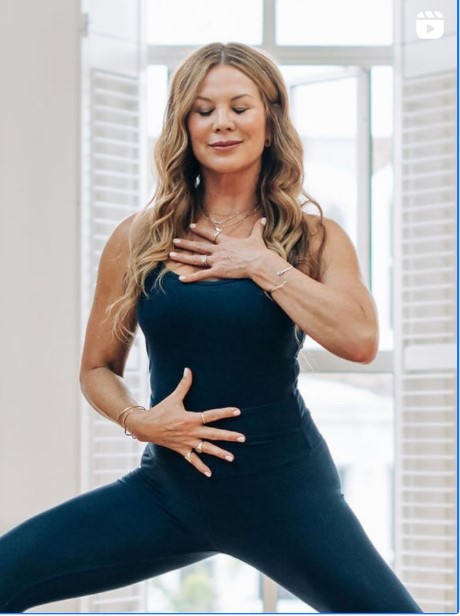
We see you doom scrolling 👀 Take a quick break from the noise of social media to meditate and reset your mind with @miatogo 🤍

•
Follow
Liked by anetcoffey and others
 dunnesstores
https://www.instagram.com/reel/DGBpBC_SIpF/?igsh=MXBpMWR6ZmpwcTV5bQ==
We see you doom scrolling 👀 Take a quick break from the noise of social media to meditate and reset your mind with @miatogo 🤍
Toward the end of a long run your calf is in a knot the size of a grapefruit. Is this an over-excited neuron taking out its anxiety on a muscle? Or is your qi depleted? You may need a new recovery technique.
Western hemisphere physios of yore saw the body as an organization of bones, muscles, fascia, and nerves, so bodywork that originated there, like Swedish massage, attempts to heal and realign those parts.
Eastern folk saw the body as a vessel of energy and breath. Bodywork that grew out of that philosophy, like acupressure, sought to open blocked energy pathways and restore balance.
Here’s a quick look at three types of bodywork from around the world—three philosophies—that can be used as prevention during training, or for recovery from an injury or race.
Shiatsu is based on theories of acupuncture and Chinese medicine that were imported to Japan around 5 AD. According to Cari Johnson Pelava, director of Centerpoint Massage & Shiatsu Therapy School & Clinic, in Minneapolis, a system of energy, “qi,” runs through the body on pathways, and along those pathways lie points where one can access that energy to make a difference in the body. Symptoms like pain or fatigue are said to be caused by an imbalance of energy. By applying pressure, kneading, and stretching, a shiatsu therapist can restore the body’s energy balance.
“We’ve worked with triathletes pre-event and post,” Johnson Pelava says. “Pre-event we’ll focus on tonifying energy so that it’s most accessible to the athlete on event day. We’ll do stretching, hip rotations, and other range of motion work to open energetic pathways. Post-event, we’ll work deeper to pull that energy that’s been depleted back.”
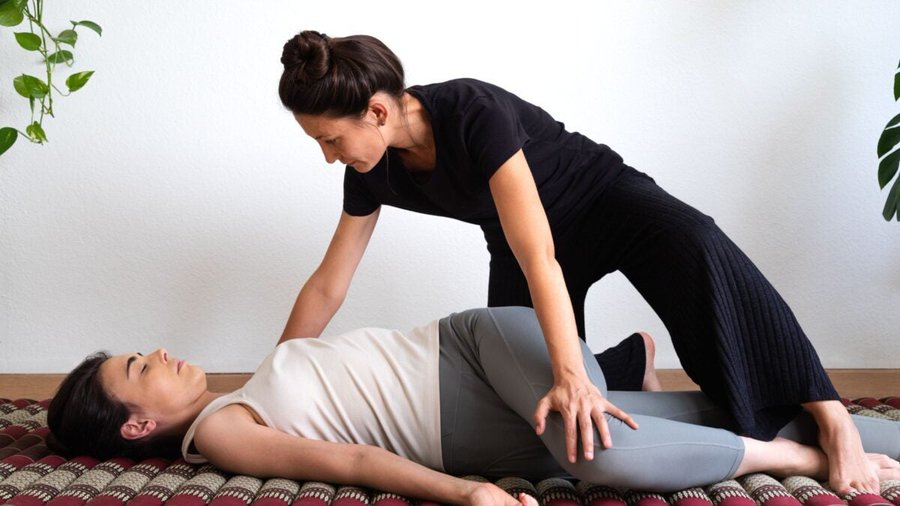
Thai yoga bodywork has an eastern flavor informed by yoga, Ayurveda, and Buddhism. It combines rhythmic massage, assisted yoga poses, acupressure along energy meridians, healing energy work, and meditation.
Tanya Boigenzahn, director of Devanadi School of Yoga and Wellness in Minneapolis, says Thai yoga bodywork can help athletes with flexibility, alignment, and breath control, as well as their mental game—mood, concentration, confidence.
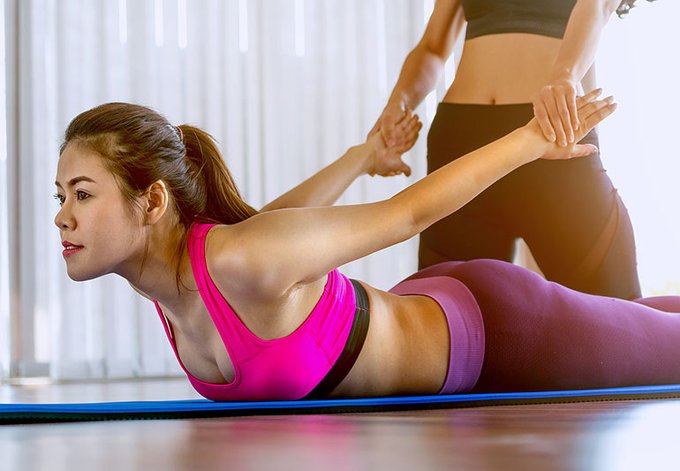
Thai yoga is accomplished in a one-on-one session with clothes on. The therapist moves a passive client through positions, stretching tight areas, and encouraging range of motion and mindful breathwork.
Boigenzahn says Thai yoga helps optimize training pre-event, and eases recovery afterward. “Athletes can expect to have a quicker bounce back time, as well as less discomfort after a tough event.”
Ida Rolf thought that pain, inefficient movement, and imbalance was were the result of the body being improperly organized around its axis. In New York during the 1940s, Rolf began reorganizing clients’ bodies by manipulating fascia—the connective tissue separating muscles and other organs— which developed into the therapeutic approach called Rolfing Structural Integration. “It’s a combination of participatory bodywork and active experimentation with body movement education,” says Kevin McCarthy, an advanced rolfer with In|Form Rolfing in Minneapolis. “We teach clients how to be aware of and work with their body for better function.”
Rolfing is a holistic approach that seeks to find the source of the dysfunction rather than merely treat the symptom. “Participatory” is a key word, McCarthy says.
“Unlike most forms of massage where you’re lying passively on a table, we’re asking, ‘Can you stand up using the outside of your leg? Do you notice the difference in how that feels?’” he says. “We’re using the body to repattern the brain.”
Because it involves education, rolfing is not a one-and-done—a rolfing treatment is actually usually a series of 10 sessions.


Yoga Rebel @yogarebellondon 2 hours ago
Lunch anyone?  Avocado Ribbons + Smoked Chipotle Black Bean Mushroom + Broccoli Rabe Flowers and Leaves + Cilantro Jalapeño Dressing. PC: @conscious_cooking


It’s never too late to improve your golf swing. Our Mayo Clinic experts have the stretches to take your game to the next level:
Golf stretches can help get you ready for a day on the golf course. These golf stretches may help promote a fluid, full golf swing, which can improve your performance.
Before you start your golf stretches, you may want to warm up with 5 to 10 minutes of light activity, such as walking around the practice tee. If you have time, finish the full series of golf stretches found here. Hold each stretch for about 30 seconds.
Doing a single stretch one time is helpful. Do one set of golf stretches every day and another set before and after each round of golf.
Remember: Keep stretching gentle. Don’t bounce. If you feel pain, you’ve stretched too far.
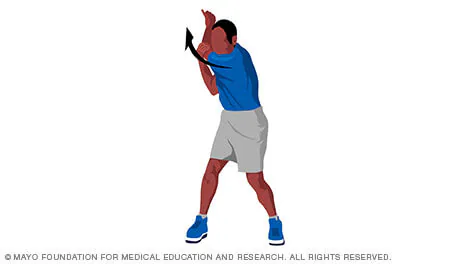
Start off your golf stretches by first stretching the quadriceps. Quadriceps are the muscles in the front of the thighs. Start with this stretch:
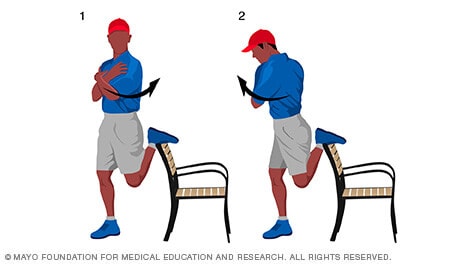
Next, stretch the back muscles:
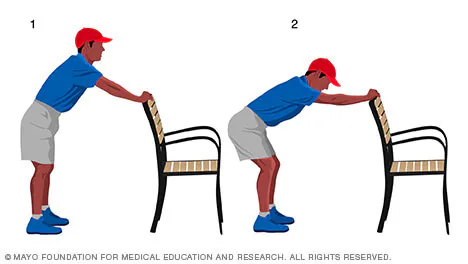
Now move on to the hamstrings. Hamstrings are the muscles in the back of the thighs. To do this stretch:
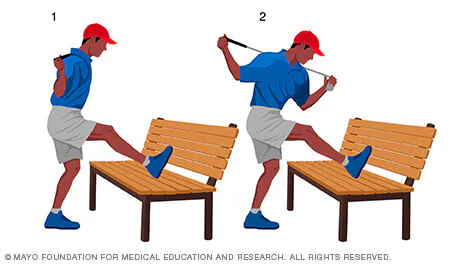
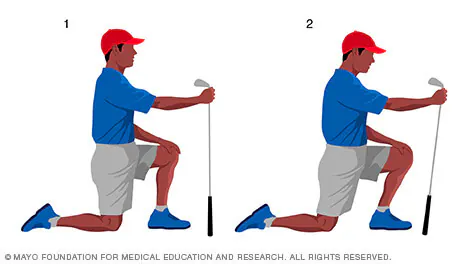
You can stretch your hips many ways. Try this seated stretch first:
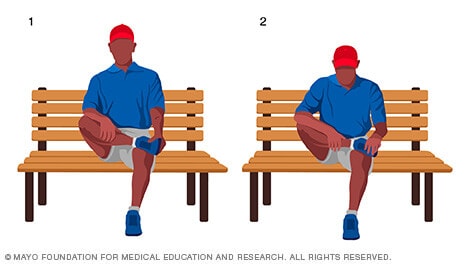
Try this hip and back stretch:
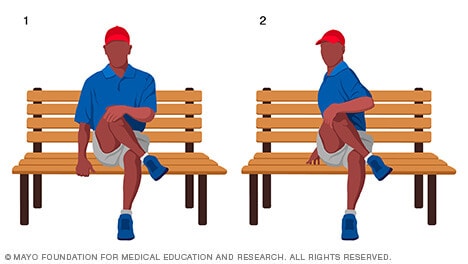
Here’s a final hip stretch:
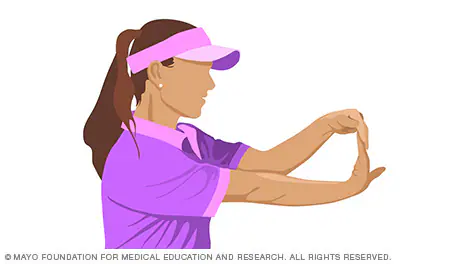
Now stretch your wrists upward:
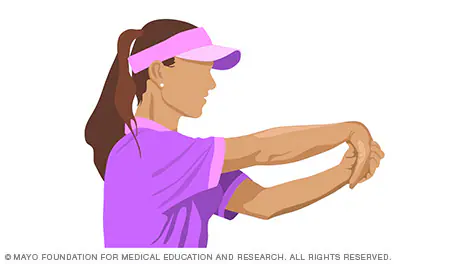
Stretch your wrists downward too:
Next stretch your shoulders:
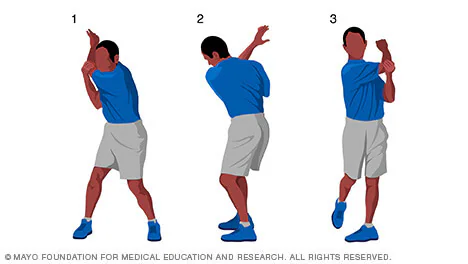
Finally, stretch the core muscles:
Originally published on Mayo Clinic
It’s never too late to improve your golf swing. Our Mayo Clinic experts have the stretches to take your game to the next level:
Golf stretches can help get you ready for a day on the golf course. These golf stretches may help promote a fluid, full golf swing, which can improve your performance.
Before you start your golf stretches, you may want to warm up with 5 to 10 minutes of light activity, such as walking around the practice tee. If you have time, finish the full series of golf stretches found here. Hold each stretch for about 30 seconds.
Doing a single stretch one time is helpful. Do one set of golf stretches every day and another set before and after each round of golf.
Remember: Keep stretching gentle. Don’t bounce. If you feel pain, you’ve stretched too far.
Start off your golf stretches by first stretching the quadriceps. Quadriceps are the muscles in the front of the thighs. Start with this stretch:
Next, stretch the back muscles:
Now move on to the hamstrings. Hamstrings are the muscles in the back of the thighs. To do this stretch:
You can stretch your hips many ways. Try this seated stretch first:
Try this hip and back stretch:
Here’s a final hip stretch:
Now stretch your wrists upward:
Stretch your wrists downward too:
Next stretch your shoulders:
Finally, stretch the core muscles:
Originally published on Mayo Clinic
health.clevelandclinic.org
What Is Passive Stretching?
Relax into this form of stretching while a prop or partner assists you
When you think of stretching, you might picture someone sitting on the floor, legs extended, reaching for their toes. But passive stretching takes a different approach. Instead of relying on your own flexibility, you use something (or someone) else to help.
Licensed massage therapist and registered nurse DeBorah Hill, RN, LMT, explains passive stretching and how it can benefit your health.
Most people are familiar with dynamic and static stretching. Static stretching focuses on holding a pose that stretches your muscle as far as you can. Dynamic stretching uses movements, like walking lunges or hip circles, to warm up your muscles before an activity.
Dynamic and static stretches are limited to how far you can physically move. Think of toe touches: Some people can touch their toes and beyond, while others can’t reach their knees.
Passive stretching uses other forces to stretch your muscles, rather than your own ability. “During passive stretching, your body is loose and relaxed,” says Hill. “You let an external force — like a partner, towel or fitness strap — do the work.”
For example, instead of touching your toes, you can perform a passive hamstring stretch. During this stretch, you lie on your back and use a rolled-up towel or strap to help you stretch the back of your thigh.
If you’re new to passive stretching, use care. You could accidentally stretch a muscle too much and cause injury.
“Listen to your body as you stretch,” advises Hill. “Passive stretching should not hurt, and many people overestimate how flexible they are. It’s helpful to talk with a licensed physical therapist or massage therapist before you start.”
Consider adding passive stretching to your routine to:
Unlike static or dynamic stretching, passive stretching requires your muscles to be relaxed for it to work. This release of physical tension can benefit your mental health.
“When you fully relax for a passive stretch, you tell your brain to shift out of fight-or-flight mode,” explains Hill. “Passive stretching can take you out of survival mode so you feel relaxed.”
One study found passive stretching to be better than dynamic stretching at increasing hamstring flexibility.
“Passive stretching can increase your range of motion when other stretches don’t work for you,” says Hill. “Your prop or partner can help you gently stretch beyond what you can normally do yourself.”
If you have mobility issues or chronic pain, other forms of stretching can be difficult. Passive stretching works for people of all ages and fitness levels. Can’t bend over or move your body a certain way? Passive stretches can work around these limitations.
Passive stretches can work many different muscles. Try these stretches to get started:
This stretch focuses on your chest and shoulders:
This passive stretch focuses on your quadriceps, or the muscles on the front of your thighs:
The backs of your legs, or hamstrings, get a stretch here — no toe-touching required:
Taking a few minutes a day to stretch has big benefits, from preventing injuries to reducing joint pain. And if other forms of stretching haven’t worked for you, passive stretching is worth a try.
“The beauty of passive stretching is that it works for so many people,” states Hill. “Whether you’re just starting out or you’re an elite athlete, passive stretching can help you feel great physically and mentally.”
 Fitnessaware