Stretching each day is an integral part of improving your overall health.

elitespinecentres

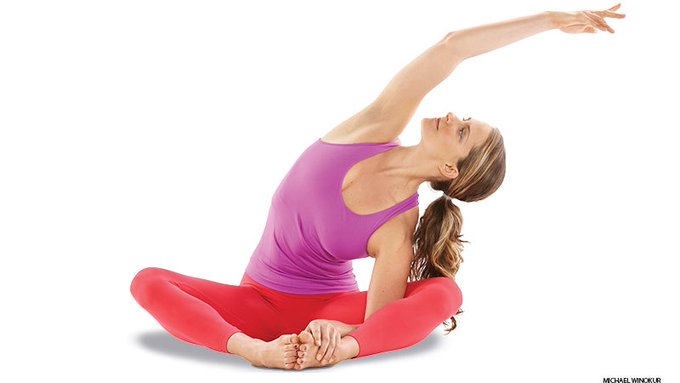
Stretching each day is an integral part of improving your overall health. Even if you’re not an athlete, stretching provides important benefits for both your mind and body.
Believe it or not, there is a right and wrong way to stretch.
Knowing the differences and understanding the proper technique will help you stay more energized throughout the day and can also improve the flexibility of your joints.

Dorothy Wall puts serious setback in perspective

dorothywall

Follow

UPMC Sports Surgery Clinic

Liked by padraicguilfoyle and others

  • dorothywall's profile picturedorothywall
  • Missing the World Cup brings with it a serious amount of shock and sadness, and the last few days have been nothing short of a whirlwind. Although my next chapter may not be so full of rugby, my desire to come back as a better athlete, a smarter player, and a more rounded and resilient person is at the forefront for me right now.
    In a sense, I don’t have to rely solely on myself for motivation during this time, as I’ve seen countless women in my life go through long-term injuries, having a baby, then tearing an ACL and getting back to international rugby, missing the Olympics, enduring countless operations, back-to-back ACLs, and broken legs.
    Sam, Bei, Aoibheann, Maeve Óg, Tricky, Erin, Eimear, Enya, Tash, Derv, and I could go on. I feel very lucky to have such an impressive group of women around me, who possess all of the experience and evidence to guide me through whatever it is I may face.

    Being able to complete my rehab in Exeter, where I couldn’t have met a better bunch of girls, makes me very happy, and I can’t wait to be reunited with them all soon 🩷

    More than anything I’m so excited to see where this Irish team can go; we have such talented and impressive girls whom I will miss playing with dearly. Myself and @erinking___ will be cooking on the sidelines at RWC2025, and I hope we see as many Irish fans there as possible.

    Plus, I heard rehab makes you hotter anyways?

How to fit in your work out at home – Katie Lawton MEd @ClevelandClinic #consistency

cleveland work out at home

Whether you’re a fitness fanatic or casual gym goer, the thought of picking up a dumbbell covered in germs is enough to make anyone cringe. And with the spread of coronavirus (COVID-19) becoming more prominent every day, gyms and fitness centers across the country are closing their doors to help protect members.

If staying active is an important part of your life (as it should be!) you might be wondering how you’re supposed to go about this whole at-home workout thing. Thankfully, it’s easier than you think.

“A lot of what you’ll find with at-home workouts is about maintaining your current level of fitness,” explains exercise physiologist Katie Lawton. “And with workouts, consistency is key.”

Here Lawton shares some practical advice about how to stay active at home.

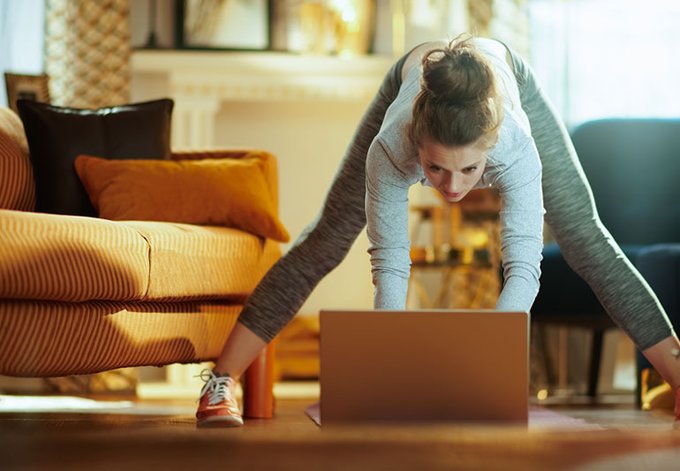
  1. Find workouts through online videos and apps. The internet is choked full of free workout videos. From yoga, to Zumba, to circuit training that you can do in your backyard. Test out a few workouts to find a series, program or instructor that you like. (Bonus points if you can get other members of your household to join you!)
  2. Walk, run or bike outside. Everyone could use a little fresh air. Hit the pavement in your neighborhood and challenge yourself to walk, run or bike a certain number of minutes or miles. If you’re an experienced fitness buff and you’re really looking to ramp up your heart rate, opt for hills or try a running based HIIT workout.
  3. Focus on body weight movements. Now’s the time to incorporate body weight exercises into your workouts. These tried and true movements include things like pushups, squats, lunges, planks and burpees. They’re convenient, efficient and inexpensive (AKA free). Pick a few different movements and create a circuit workout by completing as many reps of that one movement as possible in one minute. Then rest for a minute and continue on to the next movement and do the same thing. Repeat this for 15 to 20 minutes.
  4. Order inexpensive fitness equipment online. Things like jump ropes, pull up bars that attach to door frames, suspension trainers and resistance bands are inexpensive items that can pack a punch when it comes to your workouts. Lawton recommends choosing a heavier resistance band and suggests tying the suspension trainer to a tree outside. You could also ask around if other family members or neighbors have old dumbbells or barbells that they no longer use.
  5. Utilize items around your house. Lawton encourages creativity when it comes to working out at home. Run up and down your basement stairs, use a chair for triceps dips or grab cans of soup or a gallon of water as a weight. Even jumping over a shoebox a few times can be a quick burst of cardio.
  6. Get your household involved. If you have kids, chances are they have more energy to burn off than you know what to do with and they’d be thrilled to be involved. Try to incorporate them into your plans to stay active – whether it’s encouraging them to do pushups with you or organizing a backyard obstacle course. Try to walk your dog every day, play tag with your kids or get your whole family involved in a backyard soccer game. Also never underestimate the power of a good dance party! It’s a great way to make memories with your family and burn off some stress and anxiety.

Linkedin Pinterest

Knead, stretch, awaken your qi: here’s the right way to tackle recovery depends on where in the world you are.@WomensRunning #physiotherapy

Toward the end of a long run your calf is in a knot the size of a grapefruit. Is this an over-excited neuron taking out its anxiety on a muscle? Or is your qi depleted? You may need a new recovery technique.

Western hemisphere physios of yore saw the body as an organization of bones, muscles, fascia, and nerves, so bodywork that originated there, like Swedish massage, attempts to heal and realign those parts.

Eastern folk saw the body as a vessel of energy and breath. Bodywork that grew out of that philosophy, like acupressure, sought to open blocked energy pathways and restore balance.

Here’s a quick look at three types of bodywork from around the world—three philosophies—that can be used as prevention during training, or for recovery from an injury or race.

Recovery Modalities From Around The World

Shiatsu
Origin: Japan

Shiatsu is based on theories of acupuncture and Chinese medicine that were imported to Japan around 5 AD. According to Cari Johnson Pelava, director of Centerpoint Massage & Shiatsu Therapy School & Clinic, in Minneapolis, a system of energy, “qi,” runs through the body on pathways, and along those pathways lie points where one can access that energy to make a difference in the body. Symptoms like pain or fatigue are said to be caused by an imbalance of energy. By applying pressure, kneading, and stretching, a shiatsu therapist can restore the body’s energy balance.

“We’ve worked with triathletes pre-event and post,” Johnson Pelava says. “Pre-event we’ll focus on tonifying energy so that it’s most accessible to the athlete on event day. We’ll do stretching, hip rotations, and other range of motion work to open energetic pathways. Post-event, we’ll work deeper to pull that energy that’s been depleted back.”

Thai Yoga
Origin: Thailand

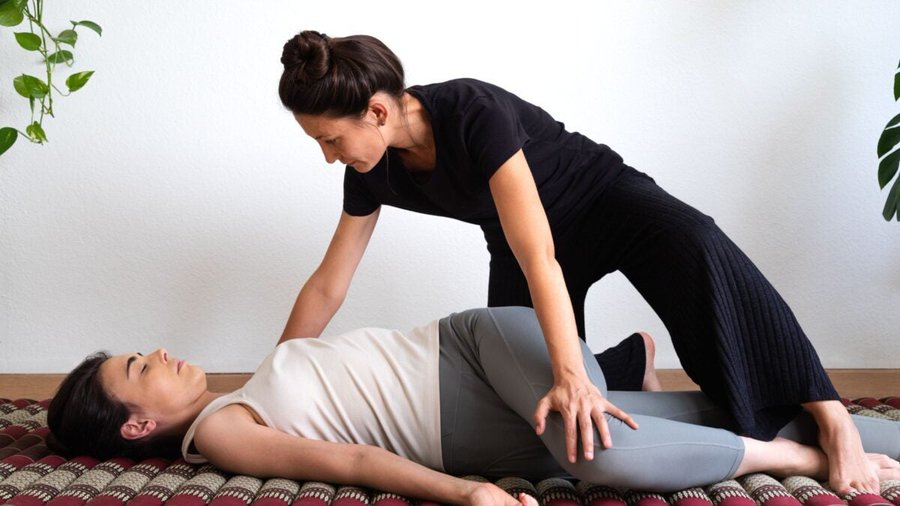
Thai yoga bodywork has an eastern flavor informed by yoga, Ayurveda, and Buddhism. It combines rhythmic massage, assisted yoga poses, acupressure along energy meridians, healing energy work, and meditation.

Tanya Boigenzahn, director of Devanadi School of Yoga and Wellness in Minneapolis, says Thai yoga bodywork can help athletes with flexibility, alignment, and breath control, as well as their mental game—mood, concentration, confidence.

Thai yoga is accomplished in a one-on-one session with clothes on. The therapist moves a passive client through positions, stretching tight areas, and encouraging range of motion and mindful breathwork.

Boigenzahn says Thai yoga helps optimize training pre-event, and eases recovery afterward. “Athletes can expect to have a quicker bounce back time, as well as less discomfort after a tough event.”

Rolfing
Origin: USA

Ida Rolf thought that pain, inefficient movement, and imbalance was were the result of the body being improperly organized around its axis. In New York during the 1940s, Rolf began reorganizing clients’ bodies by manipulating fascia—the connective tissue separating muscles and other organs— which developed into the therapeutic approach called Rolfing Structural Integration. “It’s a combination of participatory bodywork and active experimentation with body movement education,” says Kevin McCarthy, an advanced rolfer with In|Form Rolfing in Minneapolis. “We teach clients how to be aware of and work with their body for better function.”

Rolfing is a holistic approach that seeks to find the source of the dysfunction rather than merely treat the symptom. “Participatory” is a key word, McCarthy says.

“Unlike most forms of massage where you’re lying passively on a table, we’re asking, ‘Can you stand up using the outside of your leg? Do you notice the difference in how that feels?’” he says. “We’re using the body to repattern the brain.”

Because it involves education, rolfing is not a one-and-done—a rolfing treatment is actually usually a series of 10 sessions.

Golf stretches for a more fluid swing @mayoclinicsport

Mayo Clinic Sports Medicine

@mayoclinicsport

It’s never too late to improve your golf swing. Our Mayo Clinic experts have the stretches to take your game to the next level:

Golf stretches can help get you ready for a day on the golf course. These golf stretches may help promote a fluid, full golf swing, which can improve your performance.

Warmup golf stretches

Before you start your golf stretches, you may want to warm up with 5 to 10 minutes of light activity, such as walking around the practice tee. If you have time, finish the full series of golf stretches found here. Hold each stretch for about 30 seconds.

Doing a single stretch one time is helpful. Do one set of golf stretches every day and another set before and after each round of golf.

Remember: Keep stretching gentle. Don’t bounce. If you feel pain, you’ve stretched too far.

Golf stretches for the quadriceps

Start off your golf stretches by first stretching the quadriceps. Quadriceps are the muscles in the front of the thighs. Start with this stretch:

  • Stand with your back to a chair or bench and cross your arms over your chest. Place your left foot on the bench, as shown in image 1. You can use a chair or bench with a lower seat than the one shown here.
  • Keep your left knee even with or behind your right knee. Tighten the left buttock muscles. You’ll feel a stretch in the front of your left thigh.
  • To mimic your backswing, rotate your shoulders and torso to the right and bend your left shoulder and trunk slightly toward the ground, as shown in image 2.
  • Repeat the stretch on the opposite side.

Golf stretches for the back

Next, stretch the back muscles:

  • Stand with your feet apart, facing the back of a chair or bench.
  • Grasp the back of the bench with your hands, as shown in image 1.
  • Hold on to the bench and keep your spine straight. Move your body down and away from your hands until you feel a stretch near both armpits, as shown in image 2.

Golf stretches for the hamstrings

Now move on to the hamstrings. Hamstrings are the muscles in the back of the thighs. To do this stretch:

  • Hold your golf club behind your shoulders. Stand next to a step, low table or bench. Put your right foot on the bench and bend your right knee slightly, as shown in image 1.
  • Bend your upper body forward at your hips. Keep your spine straight until you feel a comfortable stretch in the back of your right thigh.
  • Hold this stretch while rotating your back and shoulders to the left and to the right, as shown in image 2.
  • Repeat the stretch on the opposite side.

Golf stretches for the hips while seated

You can stretch your hips many ways. Try this seated stretch first:

  • Sit on a chair, low table or bench. Place your right ankle on top of your left thigh, as shown in image 1.
  • Push down on your right knee with your right forearm. Then lean forward at your waist until you feel a gentle stretch in your right hip, as shown in image 2.
  • Repeat the stretch on the opposite side.

Golf stretches for the hips and back

Try this hip and back stretch:

  • Sit on a chair, low table or bench. Place your right ankle on top of your left thigh. Raise your right knee and grasp it with your left hand, as shown in image 1.
  • Keeping your spine straight, pull your right knee up toward your left shoulder. You’ll feel a stretch in your right buttock.
  • Mimic the position of your right hip when you’re at the top of your backswing by turning your shoulders to the right as shown in image 2.
  • Repeat the stretch on the opposite side.

Golf stretches for the front hip muscles

Here’s a final hip stretch:

  • Kneel on your right knee and hold your golf club with your right hand. Place your left foot in front of you and bend your knee. Place your left hand on your left leg for stability, as shown in image 1.
  • Keep your back straight and abdominal muscles tight. Then lean forward, shifting more weight onto your left leg, as shown in image 2. You’ll feel a stretch in the front of your right hip and thigh.
  • Repeat the stretch on the opposite side.

Golf stretches for the wrists

Now stretch your wrists upward:

  • Hold your right arm in front of you with your palm facing down.
  • Keep your elbow straight and gently pull your wrist up by grabbing the top of your fingers with your left hand.
  • Repeat the stretch on the opposite side.

More golf stretches for the wrists

Stretch your wrists downward too:

  • Hold your right arm in front of you with your palm facing down.
  • Keep your elbow straight and gently pull your wrist down with your left hand. You’ll feel the stretch in your right forearm and wrist.
  • Repeat the stretch on the opposite side.

Golf stretches for the shoulders

Next stretch your shoulders:

  • Stand with your feet shoulder-width apart as though you’re getting ready to hit the golf ball. Hold your left elbow with your right hand, as shown in image 1.
  • Keeping your left thumb pointed up, bend your left wrist toward your left thumb.
  • Rotate your trunk to the right.
  • Pull on your left elbow until you feel a stretch in your back, as shown in image 2.
  • To stretch your trailing shoulder — the right shoulder — grab your right elbow with your left hand. Then rotate your trunk to the left, as shown in image 3.

Golf stretches for the core muscles

Finally, stretch the core muscles:

  • Stand with your feet shoulder-width apart, and fold your arms across your chest, as shown in image 1.
  • Bend your knees and lean forward slightly, as shown in image 2.
  • Rotate your trunk in your backswing motion, as shown in image 3.
  • Continue from the top of your backswing position to your follow-through, as shown in image 4.
  • At home, you may want to try this stretch in front of a mirror to check the different positions of your swing.

Originally published on Mayo Clinic