Your pelvic floor muscles are to your body what a structural frame is to your house: foundational.
Spanning from hip-to-hip and back-to-front, the pelvic floor muscles are a flexible sling of muscles that support your reproductive and excretory organs, says Kandis Daroski, a physical therapist. This includes your bladder, bowels, rectum, and uterus (if you have one).
Healthy pelvic floor muscles also support sexual arousal and orgasms, says Daroski. And as part of your core, these muscles help protect your spine and support overall balance, she says.
Just like the other muscles in your body, your pelvic floor can weaken as a result of misuse or overuse, says Corey Silbert, a pelvic floor therapist. Also, pregnancy, menopause, obesity, chronic constipation, even improper form while lifting can injure these muscles. As a result, your pelvic floor may be unable to relax, contract, or move with coordination.
Click the link in our bio for the 5 best yoga poses for pelvic floor dysfunction!
Core exercises train the muscles in your pelvis, lower back, hips and abdomen to work in harmony. Learn more and find out why core exercises are an important part of a well-rounded fitness program. https://mayocl.in/2oZ4fPd
RT brownthomas “Let’s Dance. From studio to street, the limited edition lululemonUK collection created with dancer Francesca Hayward, of the Royal Ballet is designed to empower. Shop the collection in our Dublin store. #lululemon “
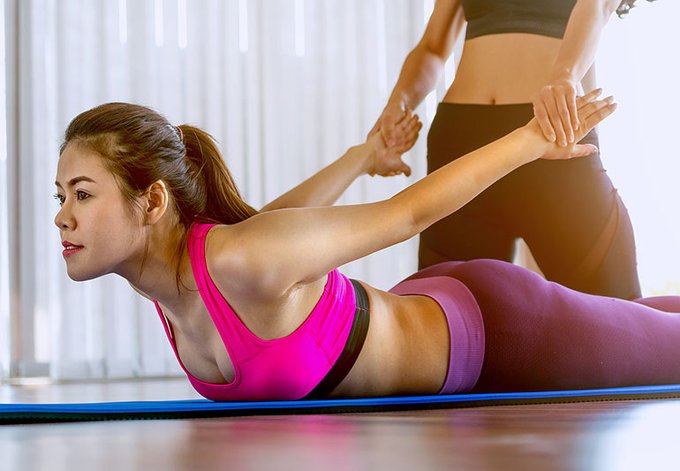
Relax into this form of stretching while a prop or partner assists you
When you think of stretching, you might picture someone sitting on the floor, legs extended, reaching for their toes. But passive stretching takes a different approach. Instead of relying on your own flexibility, you use something (or someone) else to help.
Licensed massage therapist and registered nurse DeBorah Hill, RN, LMT, explains passive stretching and how it can benefit your health.
What is passive stretching?
Most people are familiar with dynamic and static stretching. Static stretching focuses on holding a pose that stretches your muscle as far as you can. Dynamic stretching uses movements, like walking lunges or hip circles, to warm up your muscles before an activity.
Dynamic and static stretches are limited to how far you can physically move. Think of toe touches: Some people can touch their toes and beyond, while others can’t reach their knees.
Passive stretching uses other forces to stretch your muscles, rather than your own ability. “During passive stretching, your body is loose and relaxed,” says Hill. “You let an external force — like a partner, towel or fitness strap — do the work.”
For example, instead of touching your toes, you can perform a passive hamstring stretch. During this stretch, you lie on your back and use a rolled-up towel or strap to help you stretch the back of your thigh.
If you’re new to passive stretching, use care. You could accidentally stretch a muscle too much and cause injury.
“Listen to your body as you stretch,” advises Hill. “Passive stretching should not hurt, and many people overestimate how flexible they are. It’s helpful to talk with a licensed physical therapist or massage therapist before you start.”
Benefits of passive stretching
Consider adding passive stretching to your routine to:
Relieve stress
Unlike static or dynamic stretching, passive stretching requires your muscles to be relaxed for it to work. This release of physical tension can benefit your mental health.
“When you fully relax for a passive stretch, you tell your brain to shift out of fight-or-flight mode,” explains Hill. “Passive stretching can take you out of survival mode so you feel relaxed.”
Increase flexibility
One study found passive stretching to be better than dynamic stretching at increasing hamstring flexibility.
“Passive stretching can increase your range of motion when other stretches don’t work for you,” says Hill. “Your prop or partner can help you gently stretch beyond what you can normally do yourself.”
Overcome mobility limitations
If you have mobility issues or chronic pain, other forms of stretching can be difficult. Passive stretching works for people of all ages and fitness levels. Can’t bend over or move your body a certain way? Passive stretches can work around these limitations.
Examples of passive stretching
Passive stretches can work many different muscles. Try these stretches to get started:
1. Doorway stretch
This stretch focuses on your chest and shoulders:
Stand just behind a doorway.
Place one foot slightly in front of the other for stability.
Raise your arms to the side with your elbows bent at 90 degrees, palms facing forward like goal posts. Allow your elbows, forearms and palms to press against the doorframe.
Gently lean forward, keeping your arms on the doorframe.
Hold for 10 seconds.
Rest for five seconds and repeat.
2. Standing quad stretch
This passive stretch focuses on your quadriceps, or the muscles on the front of your thighs:
Stand next to a steady object, such as a table or wall, that can be used for balance.
Loop a rolled-up towel or fitness strap around your right ankle.
Hold the other end of the towel or strap with your right hand.
Place your left hand on the table or wall for balance.
Slowly bend your right knee and pull your right foot up toward your buttocks using the towel or strap.
Hold for up to 30 seconds.
Repeat on the opposite leg.
3. Towel hamstring stretch
The backs of your legs, or hamstrings, get a stretch here — no toe-touching required:
Lie on your back, with your legs straight and relaxed.
Slowly raise one leg up toward the ceiling without bending your knee, keeping your leg relaxed.
Hook the towel or strap behind your hamstring or calf or under the arch of your foot, depending on what’s comfortable for you.
Using your towel or strap, gently pull your leg towards you until you feel the stretch.
Hold for up to 30 seconds.
Switch legs.
A stretching routine is worth it
Taking a few minutes a day to stretch has big benefits, from preventing injuries to reducing joint pain. And if other forms of stretching haven’t worked for you, passive stretching is worth a try.
“The beauty of passive stretching is that it works for so many people,” states Hill. “Whether you’re just starting out or you’re an elite athlete, passive stretching can help you feel great physically and mentally.”
5 Steps to Seriously Superior Salads Apply these tried-and-true cooking tricks to salad-making, and you’ll be making the best veggie-packed dishes ever. July 31, 2021Ivy Manning
Your go-to bowl of greens may be a good salad, but is it the best salad? Some of the best cooking tricks can be applied to salad-making. Here are five game changers that will help take your salads to a new level. 1. Season it We season everything else, so why skip your salad? A pinch of coarse sea salt and a few grinds of pepper enhance the flavors in salads, too. But don’t stop there! Spices can amp up the natural sweetness of vegetables both raw and cooked. Try this homemade toasted spice blend on salads to turn a ho-hum salads into the best salad with grilled shrimp, sprinkle nutritional yeast on slaws for a savory boost, or herby-tart za’atar blend on a cucumber tomato salad with feta. 2. Underdress Err on the side of underdressing your salads. You need less dressing than you think, and you can always add more, but you can’t remove dressing from a soggy salad. As a general rule, add ½ tablespoon of dressing, gently toss, taste, and add more until the ingredients are very lightly coated. Another option for chronic over-dressers, pour out small amounts of dressing (about 1 tablespoon per person) into a small ramekin and dip your fork into it before each bite of undressed salad. 3. Hands on Toss your salads with your hands in a large bowl, this helps coat all the ingredients with seasonings and dressing and it’s gentler on tender greens. If you’d rather not get your hands dirty, use kitchen tongs to even toss things together. 4. Balance textures Try to choose a balance of elements – fluffy leaves, creamy elements like avocado or cheese, crunchy items like nuts or seeds, something substantial like roasted squash, meat, seafood and juicy/crisp elements like apple, tomato, or celery. And remember, we eat with our eyes, so arrange elements artfully for a more satisfying meal. Click here for a handy chart on how to build a well composed, best salad recipes ever. 5. Herbs are salad leaves, too. Herbs are a mainstay of salad dressing, but they are also delicious by themselves tucked into leafy salads. Fresh, tender herbs like basil, cilantro, dill, basil, parsley, and mint blend right in with lettuce plus they add little pops of fresh flavor that are unexpected and make salads more interesting. Make sure to remove any tough or stringy stems…concentrating on the juicy leaves instead.



 Ezra Clemons




 : Maria Vasco
 Fitnessaware