Dan Lambert, chief commercial officer at Bohemian Football Club – better known as Bohs – has been named as this year’s Marketer of the Year (MotY)

Dan Lambert, chief commercial officer at Bohemian Football Club – better known as Bohs – has been named as this year’s Marketer of the Year (MotY) for his strategy in rescuing the famous Dublin club from bankruptcy and paving a path to commercial success through progressive causes. In winning the industry’s most prized award, Lambert saw off competition from three other finalists – Fiona Curtin, Heineken Ireland, Roma O’Connor, Dalata Hotel Group and Louise Cassidy, Aldi Ireland – all of whom are recognised as highly accomplished for their achievements in more conventional marketing roles.

For Lambert, “marketing must have a meaning”. He believed it was about developing a real connection to Bohs, Dalymount and the local community in Phibsborough, Dublin 7. The clearest example was the club’s shirts, with players and fans literally wearing their values close to their hearts. Traditionally, a League of Ireland replica jersey is merchandise with a corporate logo – a perishable item. Lambert began to think about the shirt differently and asked could it become a thing of pride, a platform through which they could tell stories about Bohs, Dublin and the things people care about. Something that could represent the values of the wearer anywhere in the world?

Strategy

The strategy led to collaborations with Guinness, Des Kelly, Dublin Bus, Palestine Sport for Life, Amnesty International, Siptu, Bob Marley, Fontaines DC and Oasis. They worked with Aslan after Christy Dignam’s death, raising €142,000 for the St Francis Hospice. There were no fee-paying endorsements. A third of the funds went to a charity. Mr Green was a shirt sponsor, but after the deal ended Bohs stopped working with gambling brands. Lambert’s approach allowed the shirts to reach audiences far beyond traditional support, with broadened appeal.

In 2014, the club generated €100,000 annually from merchandise. By 2025, merchandise revenue soared to €6.7 million – almost 70% of turnover. The club went from selling an average of 100 away shirts a year to as many as 80,000. Membership quadrupled to over 3,000 fans in recent years. Plans are now underway for a new 8,000 capacity stadium at Dalymount Park with seating for over 6,000 fans. Bohs will share the stadium with Shelbourne FC. The project is expected to cost €62 million, backed by €25 million from the Government and Dublin City Council.

Viable

Dan Lambert studied business and completed a master’s degree in international conflict at DCU. He worked with Ireland’s Department of Foreign Affairs, including at the UN in New York as a security advisor. He has been involved with Bohs for over 15 years, first as a member and volunteer before assuming marketing and commercial roles. He is now chief commercial officer. When he joined the board in 2011, the club was on the brink of going bust. His immediate goal was survival. He devised a marketing plan to become financially viable off the pitch and competitive on it by embracing the fan-owned model. Bohs is now owned by its supporters. Lambert is co-founder of Bang Bang café in Phibsborough, named after the notorious Dublin street character. He has managed Kneecap since 2019.

Ryan Tubridy was MC at the awards


MotY was launched by Marketing.ie in 1993 and is partnered by DMG Media and powered by Business Plus. This year’s judging panel, chaired by Barry Dooley, chief executive, Association of Advertisers in Ireland (AAI), comprised Caroline Donnellan, Sky Ireland; David Field, Fresh; Nicky Doran, NDAS; Greta Hammel, Promise Gluten Free; Sinead Mitchell, Guaranteed Irish; Viv Chambers, Bricolage; Loretta Dignam, The Menopause Hub; Geoff Codd, Energia; Cliona Hayes, Indeed; Chris Cashen, WPP Media Ireland and Karen Hand, Strategy & Research.

Top: Pictured at the Marketer of the Year 2026 awards lunch in Fire restaurant, from left: Barry Dooley, AAI and chair of the MotY judging panel; Paul Henderson, DMG Media, Dan Lambert, Bohs and Michael Cullen, Marketing.ie
Swimming is not only a great cardio workout but great for stress relief and a form of rehabilitation.@mayoclinicsport #physicalactivity


Mayo Clinic Sports Medicine

@mayoclinicsport
·


Swimming is not only a great cardio workout but great for stress relief and a form of rehabilitation. “Swimming is a wonderful sport. I definitely recommend swimming for people of all ages.” – Dr. Matthew Crowe. https://mayocl.in/3vsFAEC

For decades, women have been running in shoes designed for men’s feet and bodies. That’s starting to change. About time too @WomensRunning

That was the widely held belief among nearly all the women who participated in a recent qualitative study on running footwear needs and preferences. The author of the study, Chris Napier, PT, PhD, Director of Simon Fraser University Run Lab, assembled a group of 21 recreational and competitive female runners ranging from 20 to 70 years old to collect feedback on their experiences with running shoes, in terms of fit, comfort, injury prevention, and performance.

The interviews confirmed what the researchers had suspected: Many mainstream running shoe brands are failing women.

“Shrink It and Pink It” Still Exists

Though the study was small, there are known issues with women’s footwear, which Napier asserts is rooted in the design and testing process. He explains that most major shoe manufacturers use a single foot-shaped form known as a “last” to design their entire line. In most cases, the last is based on male foot anatomy.

Shoes are scaled up and down to create a range of sizes, some of which are marketed to women. But the shoe itself, despite any stereotypically feminine colorways or aesthetic elements, is made for a man’s foot. It’s yet another example of “shrink it and pink it,” a pervasive yet misguided design process that fails to address the unique needs of female consumers. Notably, Lululemon, Altra, and Asics, do use separate lasts to design their women’s running shoes.

Shoe testing is male-centric, too. “Women’s shoes just don’t get the same amount of attention that men’s shoes get,” says Geoffrey Gray, DPT, founder of Heeluxe, a biomechanics lab that specializes in footwear innovation.

“In 2017, when we first started getting really passionate about improving how we analyze women’s footwear, we were testing men’s [running] shoes relative to women’s [running] shoes at a rate of four to one,” he says. The ratio has since improved slightly, and some brands now test as many women’s shoes as they do men’s, but there’s still an imbalance, Gray says.

The Why Behind the Disparity

Testing fewer shoes and using just one last are cost-saving measures that benefit shoe makers, at least in the short term. “If they have a separate last, they have to essentially double their capacity. It’s definitely an additional cost. Companies will just continue to weigh the cost/benefit of having just one last versus two,” Napier says.

Gray points out that women’s voices are often missing from these decision-making conversations. (A global survey conducted by SGI Europe found that just 23.9% of executive positions at sporting goods companies were filled by women.)

He shares a story about working with a brand on a women-specific basketball shoe. “There was a lot of excitement for the women on that team and the athletes we were working with. And then it got up to a middle-aged white guy VP, and he was like, ‘Why are we doing this? We sell plenty of women’s basketball shoes.’” The project was canceled, he says, because the people who understood the value of women-specific weren’t in a position to challenge the status quo.

Brands that want to introduce a broader range of products may encounter resistance at the manufacturing level as well. “Factories don’t like to change,” Gray says. “If they change, there’s a greater chance that things could go wrong, and that’s going to cost them a lot of money. So, a lot of times it isn’t just the footwear brands, it’s the factories that are making the footwear.”

How Women’s Feet Are Different

There’s a reason why the male lasts don’t always work for women. In general, women’s feet are more triangular or “pie-shaped” than men’s feet. This means women, on average, have a wider forefoot (ball of the foot) and a narrower heel than men. Women also tend to have higher arches and lower ankle bones and are also more likely to develop bunions.

Additionally, women’s feet can change during pregnancy and postpartum, so they often require different types and sizes of shoes, as well as more cushioning, as they move through various stages of life.

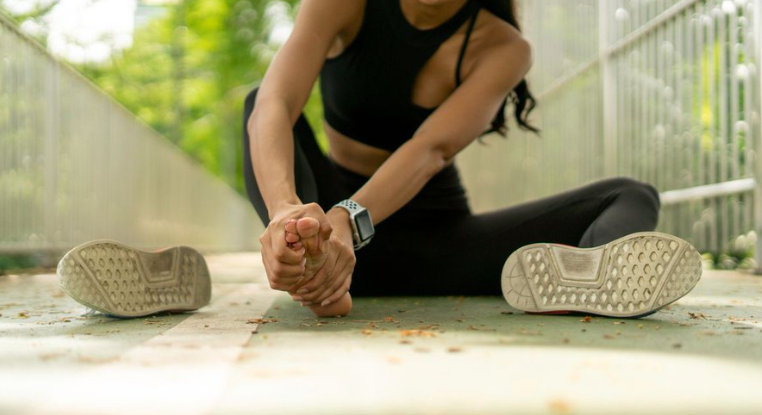
From his study, Napier and his team learned that women found ways to adapt to subpar-fitting shoes. Some women sized up to accommodate their forefoot and used an alternative lacing technique to secure their heel. Others popped in inserts for better cushioning and arch support. Some even wore shoes that were a bit too small because they felt unstable in the next size up. The workarounds helped, but many never had the experience of slipping on a running shoe that truly fit.

A Growing Shift in Women’s Footwear

While it may not be happening quickly enough, companies are starting to put more time and money into developing running shoes for women. Just less than 10 years ago, Gray says, is when he began having conversations with brands about how their shoes were missing the mark with women.

“It was the first time that we were aware of that these brands, both small and really large, were hearing this information from an independent source,” he says. “They would say, ‘We care about women. We want to win with women,’ but they didn’t have the data to know how much worse women’s shoes are relative to men,” Gray says.

Now that manufacturers know how women’s running shoe needs differ,  some companies, like Altra, Asics, and Lululemon, are doing better and using women’s lasts. Hettas, which provided the grant for Napier’s study, Ryka, and Saysh only produce running shoes specifically designed and tested for female runners. Other companies are still using a single last for both men’s and women’s shoes.

How to Find Shoes That Fit

When shoe shopping, Napier recommends asking retailers to try on shoes specifically designed for women. “That’s not to say that those will necessarily be the right shoes,” he says. “There’s individuality across each sex.” But it’s a good starting point. (And be sure to wear your running socks when trying on shoes, as sock style can affect fit.)

Gray urges every woman to measure her feet with a 3D foot scan. While there are a number of mobile apps that use your phone’s camera, he says that the in-store machines in specialty running stores are significantly more accurate. Plus, running shoe retailers are familiar with all the available products and trained to use your data to find the best shoe for you.

Also, your feet are always changing, so get them scanned at least once a year, and don’t be afraid to try a different shoe if the one you’ve been wearing is no longer working for you.