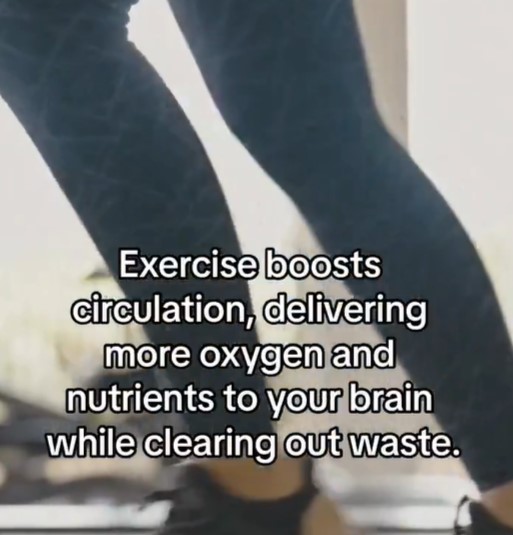
Exercise enhances memory and cognitive function @ClevelandClinic
Health & Wellbeing


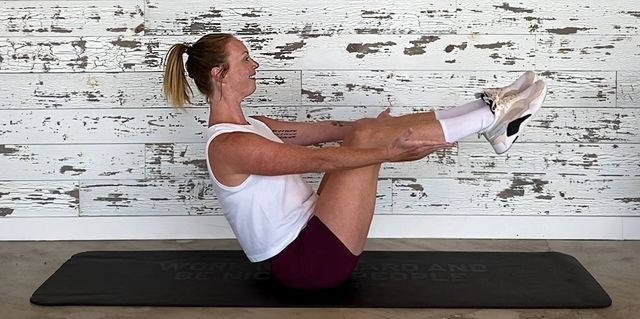
Whether you’re trying to build a six-pack or just trying to tone your body, ab workouts are a terrific way to get in shape and strengthen your core. Plus, ab exercises require no extra equipment and can be done from just about anywhere.
But there are many variations of ab workouts, so it can be hard to know which ones to try. To get a better idea of where to start, we talked to exercise physiologist Katie Lawton about six great ab workouts to add to your workout routine.
While these exercises all focus on your abdomen muscles, they also strengthen your entire core. Your abs are simply a component of the core muscle group, which includes the oblique muscles along your side, your gluteal muscles, certain muscles along your spine, your diaphragm, muscles of your pelvic floor and hip flexors.
Your core provides stability for your entire body and impacts your movements. Core strength even affects your posture and back pain. The bottom line: A healthy, strong core is important for your overall health.
Before getting down to the floor and getting your workouts in, though, Lawton has a few tips to remember.
Keeping these tips in mind, you can get started on all of these exercises. Be sure to wear comfortable workout clothing, but make sure your gear isn’t so loose it interferes with your movement.
And since these workouts all involve being on the floor, make sure you’ve got a yoga or workout mat that provides some padding and can keep you comfortable while you go through your reps.
Crunches are probably the most well-known of the major ab workouts, a variation on the classic sit-up. They’re also very simple to do, though you need to take care you don’t exacerbate any back and neck injuries.
“They’re a great workout that targets your abs and strengthens your core,” says Lawton. “But if you have any disc issues, complications or neck problems, you might want to skip crunches because of the stress that can be put on those parts of the body.”
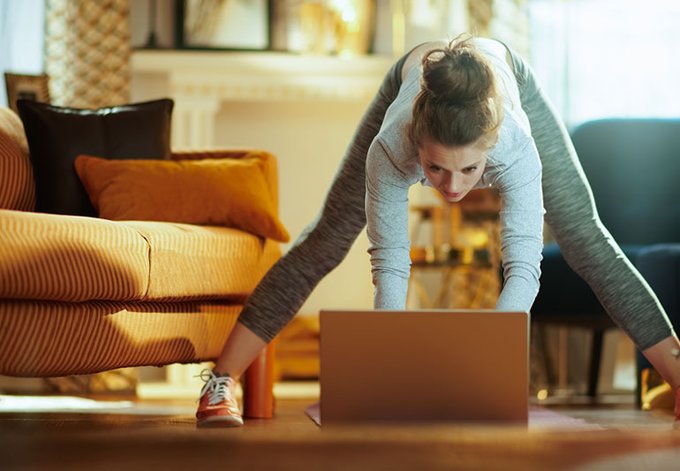
Whether you’re a fitness fanatic or casual gym goer, the thought of picking up a dumbbell covered in germs is enough to make anyone cringe. And with the spread of coronavirus (COVID-19) becoming more prominent every day, gyms and fitness centers across the country are closing their doors to help protect members.
If staying active is an important part of your life (as it should be!) you might be wondering how you’re supposed to go about this whole at-home workout thing. Thankfully, it’s easier than you think.
“A lot of what you’ll find with at-home workouts is about maintaining your current level of fitness,” explains exercise physiologist Katie Lawton. “And with workouts, consistency is key.”
Here Lawton shares some practical advice about how to stay active at home.

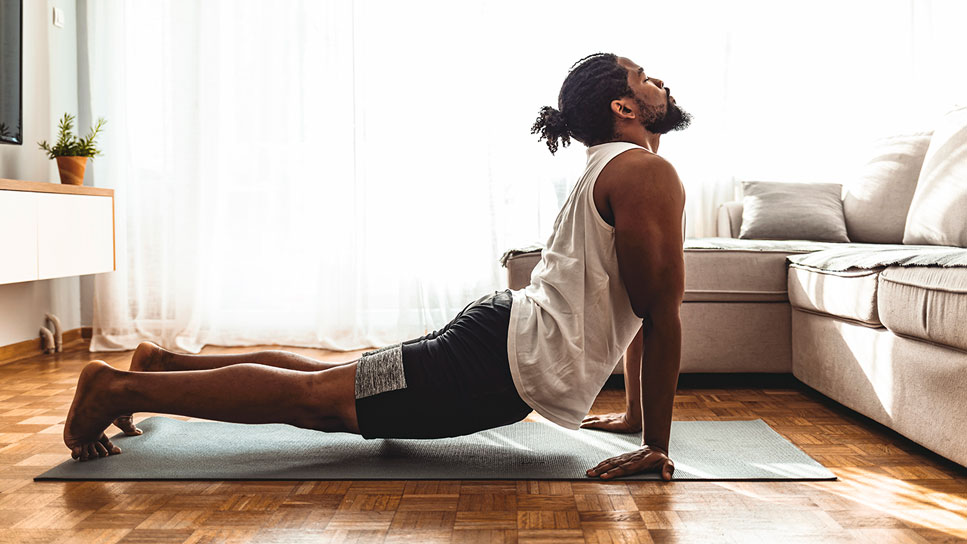
Both practices are worth exploring and offer amazing health benefits
To improve your overall health and wellness, there’s no shortage of physical activities you can do on your own or with a group of people. But when it comes to yoga or Pilates, people are often unclear about what separates the two activities and whether they should choose one over the other.
There are some similarities that crossover between yoga and Pilates, but both classes are built off foundational differences. When done on their own or even paired together, both yoga and Pilates can really infuse several health benefits and awareness into your daily routines.
Yoga instructor and retired pediatrician Johanna Goldfarb, MD, E-RYT-200, explains the differences between yoga and Pilates, along with the benefits of each.
Pilates was invented by a German anatomist in 1926 as a way of conditioning the body and providing rehabilitation to World War I veterans. The practice quickly grew as a means of building core strength and improving endurance, particularly for those in the field of ballet and dance who were seeking rehabilitation from injuries.
“The goal,” explains Dr. Goldfarb, “was to help people with injuries to heal using core strength and guided exercises.”
Yoga, on the other hand, is rooted in a centuries-old spiritual practice meant to enhance your mind-body connection to achieve enlightenment.
But traditional yoga is more than just a workout routine — it’s a lifestyle that embraces a philosophy and a set of tenets built around nourishing your physical, emotional and spiritual growth. Yoga teaches you how to navigate life by creating and honoring boundaries, embracing a no-harm mentality, surrendering to the divine, and aligning your mind, body and spirit.
And while many Westernized versions of yoga have often emphasized the more physical aspects of yoga (or Asanas), yoga, for many people, is much more than just a simple workout — again, it’s a way of living.
Still, yoga helps develop strength, flexibility and balance (often in preparation for meditation) by bringing awareness to the connections of your mind, body and breath in every pose. Often, yoga sessions end with a brief meditation to close out the practice.
Pilates is focused more on building your core strength through a disciplined practice of several small-movement exercises during each session. A fundamental set of exercises is basic to each class and is learned first to strengthen your core and teach you how to move with each breath. Over time, you can level up to doing more advanced exercises with the help of an instructor.
While there are traditionally far fewer versions of Pilates, there are many different kinds of yoga that provide a variety of experiences.
Most kinds of yoga practiced in the United States today are rooted in Hatha yoga. Hatha yoga is the oldest traditional East Indian practice of the form. Hatha yoga focuses on mindfulness, meditation and precise posture.
All yoga focuses on the breath and links with movement. But, as yoga has become more commercialized in the West, other kinds of practices have been designed for a multitude of different audiences.
Vinyasa yoga incorporates quick movements from one pose to the next, focusing on the connection of mind, body and breath. Conversely, yoga nidra involves no movement at all in a deep, meditative practice and often takes place at the end of a yoga session.
And restorative yoga is a much slower practice that relies on blankets, pillows and near darkness to provide comfort and space for meditation.
These are just a few of the many kinds of yoga available to learn from. But regardless of the type, each version of yoga offers a variety of different benefits when you make it a part of your weekly routine.
“Yoga has much more of a spiritual aspect to it, while Pilates is more about an approach to rehab,” clarifies Dr. Goldfarb. “People come to Pilates often because of an injury or because they want to prevent injury.”
Despite their differences, yoga and Pilates both share common techniques around:
Both practices rely on supporting your own body weight, but Pilates works to incorporate additional equipment like resistance bands, resistance-based reformer machines, foam rollers, barrels and bars to provide an additional challenge and further strengthen your muscles. Props are used in yoga, too, but more so for modification or to deepen specific poses or stretches.
“The equipment you use in Pilates is often added to make sure exercise can occur with a safe alignment,” says Dr. Goldfarb. “In yoga, props (like blocks, straps and blankets) are more limited and used to make certain poses easier to approach. And as we age and experience physical issues that come up, props can be extremely useful in yoga to help you get into a pose safely.”
Between the two practices, several of the following benefits arise.
Both Pilates and yoga strengthen several sets of muscles, including:
While Pilates and yoga don’t help you gain muscle mass in these areas the same way you would by doing strength-training exercises, they help tone these muscle groups and increase your strength and flexibility.
Whether you’re moving slowly from one pose to the next or you’re holding a pose for longer lengths of time, both Pilates and yoga focus on maintaining full-body alignment across every single movement. That means your back is often kept straight (but not rigid), with your neck and legs supported and your knees straight, or slightly bent but never locked too tightly in place. In a lunge, for example, your knees are directly over your ankles.
Whether you’re lying flat on a mat, standing tall or in a forward fold, your posture can continue to improve even as you work through a regular series of stretches and poses across both disciplines.
“The loss of proper posture itself can lead to several medical complications,” notes Dr. Goldfarb. “A yoga or Pilates instructor is, at every moment, making sure your posture is correct before you start using these muscles because it’s really important when preventing and treating injuries. Both yoga and Pilates will help improve your posture, which is a key source of disability as we age, as well as a source of pain.”
If you’re dealing with chronic low back pain, low-impact exercises like Pilates and yoga can help. Not only do they assist in building the strength you need to support your body, but they also allow you to stretch out problem areas that are causing you pain like your lower back. Plus, with the help of a physical therapist or certified instructor, Pilates and yoga can both aid with rehabilitation when it comes to certain injuries.
Consistent yoga practices can help you improve your flexibility and regain your range of motion if you haven’t been active for some time or were never flexible. This happens because you’re not only stretching the necessary muscles needed for mobility, but you’re also activating those muscles frequently in a variety of positions. Plus, on days when you’re not doing strenuous exercises like aerobics or strength training, both yoga and Pilates can become a part of your active recovery process to help your muscles heal more efficiently.
You can practice mindfulness in any setting. Both Pilates and yoga use breathwork as a means of looking inward and being in tune with how you’re feeling, what’s working, and what could use a little bit more support and comfort. Yoga, in particular, often weaves meditative practices into each session and uses it as an ending point largely for building this kind of self-awareness.
“Meditation is as important as any physical movement in yoga because it teaches your mind and body the importance of being in the moment and having periods of time where you’re not doing anything — you’re just being still,” says Dr. Goldfarb.
By enhancing your mental health in these small ways, and by regularly participating in these activities, Pilates and yoga can both help:
Only you, and perhaps your primary care provider, can decide if Pilates or yoga are right for you. While both offer low-impact exercise with a relatively low risk for injury, if you have underlying health conditions or injuries that disrupt your mobility, or if you have high blood pressure or you’re anemic, you’ll want to check with your healthcare provider which poses you may want to avoid or modify before diving in to a full-blown class.
Otherwise, Dr. Goldfarb highly encourages people interested in either Pilates or yoga to participate in both classes to get a feel for what they like and what they prefer. In general, if you were to work Pilates and/or yoga into your weekly routine, you may want to do them up to two to three times each week, between other strength training and cardio exercises.
“There’s such a range of approaches to both Pilates and yoga, so your experience is going to be completely based on where you start,” says Dr. Goldfarb.
“The ability to learn how to relax in yoga is what makes it especially important for people who are stressed. If it’s about an injury and you need physical strengthening, you might go to Pilates. But again, you’ve got to find the right mix. I would say try both yoga and Pilates before you give up on exploring one or the other. Finding the right class that’s safe and the right teacher is absolutely key to these experiences.”
 Fitnessaware