Sports nutrition isn’t just about protein shakes. A dietitian breaks down how hydration, timing and balance impact results. @ClevelandClinic

What Athletes Need To Know About Sports Nutrition

Having a well-rounded, healthy nutrition plan is just as important as staying consistent with your exercise routine

When you’re an athlete racking up miles and muscle, your body needs extra fuel to keep up with the amount of exercise you’re doing and help speed up recovery. That’s what makes sports nutrition so important — it offers you a path to making sure you’re getting all the nutrients you need, even as you sweat.

Sports and nutrition

For the most part, athletes will eat higher quantities of food more often than non-athletes because food is equivalent to energy. But that isn’t always the case, and some meal plans may work better for you than for someone else.

“Everyone’s body is very different, so it’s really important that we specialize individualized nutrition plans,” says registered dietitian Carly Sedlacek, RD, LD.

Bringing your physical fitness goals to a dietitian can help provide you with a holistic, balanced and personalized approach to eating healthy beyond simply counting calories. If you’re trying to build muscle, for example, your goals for nutrition will likely be different from someone who’s trying to lose weight.

Overall, when sports nutrition is combined with consistent exercise, it can boost your performance and help you feel great, even on rest days. Regardless of your goals, the following areas of sports nutrition can help.

Hydration

When you exercise, you lose a lot of water and electrolytes through sweating. Drinking enough water before a training session and throughout a workout can help replenish what’s lost.

At minimum, you should drink about 16 ounces of water two to three hours before exercise, and about 4 ounces every 15 to 20 minutes while exercising. It’s also important to make sure you’re drinking plenty of water throughout the entire day.

Sometimes, athletes prefer to use sports drinks after exercising because they’re packed with electrolytes to replace what was lost in sweat. “Electrolyte beverages should be used during activities lasting longer than 60 minutes,” says Sedlacek. “If you have a history of chronic disease or conditions, check with your doctor before including higher sodium beverages.”

Carbohydrates

Carbohydrates are your body’s main source of energy. While carbs are not the only food you should focus on, they should be something you consider as part of every meal, especially in the hours leading up to a workout or training session.

“Before exercising, you want to stick with foods that tend to digest easily, including some carbohydrate sources like fruits (bananas, apples or oranges), oatmeal or rice,” advises Sedlacek. “If you’re doing a longer workout routine that’s more than an hour long, you’ll want carbohydrates during that time to get that boost of quick-acting energy.”

Protein

Protein is the building block for your muscles. Without it, muscle recovery slows, along with your ability to build muscle mass. In general, you should try and get most of your protein from whole food sources like:

  • Salmon and other fish
  • Eggs and egg whites
  • Greek yogurt
  • Beans and legumes
  • Chicken
  • Tofu
  • Low-fat cheeses

But when you’re short on time, you can turn to protein powders or protein shakes between meals, in addition to having some protein at every meal.

“Protein helps with muscle recovery,” shares Sedlacek. “Getting at least 25 to 35 grams of protein right after exercise is helpful because that’s when your body prefers to use it.”

Fats

In general, having a healthy, well-rounded diet that incorporates an abundance of fruits, vegetables and plant- or animal-based sources of protein is key. That means healthy fats (like olive oil, avocado and fatty fish) also play a role as a secondary source of energy. Not only do they fill you up faster, but they also help your body better process other micronutrients, like fat-soluble vitamins.

Supplements

When it comes to supplements (like protein powders or pre-workout beverages), you want to use them sparingly. As you’re consuming more than the general population to keep up with your level of athleticism, supplements should be used to fill in a gap and not as a meal replacement.

“We want to try and stick to a food-first approach the best we can because the body is able to utilize those sources a little bit better than supplements,” explains Sedlacek.

Timing

When it comes to meals and snacks, timing is everything. You should try to aim for three spaced-out meals a day with snacks in between each meal. When it comes to exercise, you’ll want to have something small to eat (usually carbs or protein) at least an hour or two before exercising and immediately after a workout.

“It’s important to be consistent,” states Sedlacek. “If we’re going into an exercise and we don’t have enough energy to pull from, our body can end up pulling energy from our muscles. So, it’s important to have something small to eat before working out.”

Next steps

Sports nutrition can require a lot of fine-tuning, especially when you’re just getting started. Working with a dietitian and a physical fitness trainer can help get you the support you need for your specific situation.

And if at any point you feel lightheaded, dizzy or even experience hunger pangs, it might be a result of not eating enough or having enough water to keep up with the physical demands of exercise. In those cases, trying to level out your blood sugars and electrolytes is important, as well as seeing a healthcare provider if issues continue.


Down dog for real.@Yoga_Journal 🐕 🐶

The Reason Why Your Dog Always Wants to Practice Yoga With You, According to Experts

Down dog for real.

Published Aug 31, 2023

Sarah HerringtonFollow

High FiveShareWoman in a yoga pose on her yoga mat facing her dog who is mimicking the pose

Photo: @maikeyoga

Heading out the door? Read this article on the new Outside+ app available now on iOS devices for members! Download the app.

Last Thursday night, I unrolled my yoga mat in my small New York City apartment, sunk my hips toward my heels in Child’s Pose, and heard it—the jangle of my poodle mix’s collar as she hopped off the sofa. It had been a long day, and I wanted to dim the city’s noise and find stillness in my practice. But my dog, Sukhi, had other plans.

Her paws hit the hardwood as she came at me from the other room while I took some slow breaths. By the time I was in Down Dog, there was a literal dog beneath me, rolling on her back in a blur of white fur. Sukhi always sparks joy in me, but tonight it was backlit with annoyance. I stepped over her to make my way to the top of the mat and she followed, romping near my toes. I moved through a Sun Salutation, trying to ignore her, but she was everywhere. I didn’t know how to find my balance or move my body with anything resembling grace when her furry body was intercepting all my intentions.

I finally gave in, thinking I’d incorporate Sukhi into my practice by dropping her a kiss on my way from Plank to Chaturanga. Instead she bounded at my face. If yoga was about connection to others, Sukhi was really going for it.

But what exactly is it about my yoga practice that draws her to me from whatever room she’s in?

Group Practice

Friends have also mentioned that as soon as they start to set up for yoga, their animal friends come running.

“My dog always comes over and tries to get belly rubs when I practice,” says Siri Newman, a Wyoming-based yoga teacher and practitioner.

“It’s mostly endearing,” says Lori Walker, a digital marketer and yoga practitioner, with a laugh. “Mostly.”

“My pets zoom underneath me at top speed if I’m in Down Dog!” says Kathryn Chaya Lubow, a Southern California therapist and yoga practitioner.

Many of us have seen videos on social media of pets inviting themselves onto the mat as their humans practice. One post of a cute Australian Shepard practicing alongside her human has had more than 90 thousand shares on Instagram.  (Was that the key? Getting your dog their own mat?)

It’s almost uncanny.  No matter where our pets are hiding, once yoga practice starts, they tend to wriggle themselves in our way. But why? And how do other practitioners handle the cute madness?

More Than Just Playtime

“I’m not aware of any specific studies to evaluate this pattern of behavior in a scientific context,  but I think there are a few possible explanations,” says Christopher Pachel, a doctor of veterinary medicine and certified animal behavior consultant in Portland, Oregon, who also practices yoga.

“Many pets interpret their owner getting down on the floor as an invitation to play or to interact,” says Pachel. “And for humans who routinely practice yoga, it’s only going to take a few repetitions of ‘mat to yoga’ for most pets to figure out that the unrolling of the mat is a predictor of floor time activity.”

This helped me understand why setting up my mat and props brought Sukhi into the room from wherever she’d been hiding. It was almost as effective a way to get her to come to me as saying “treat!”

“Animals love to get involved with what you’re doing,” says Anthony Newman, dog behavior expert and founder of Calm Energy Dog Training. “They want to be included. And when you get on the ground, you’re getting on their ‘level,’  literally and figuratively. Being down low and moving in ways that are non-confrontational, inviting, and playful (including showing your belly) takes you out of a ‘leadership’ position. Around that, dogs feel more free.”

But it isn’t only the act of getting on the floor or unrolling a mat that draws animals to their person. Beyond the physicality of the practice of yoga, there seems to be something…more.

Adaptive yoga teacher and founder of online studio Auzho Audrey L practices on a chair, sofa or bed. Her pup, Ruby, still wants to be part of it. “The weirdest thing has to be when I’m on the sofa during meditation. She just sits at my feet and stares. And when I go to my practice chair she always finds me there,” says Audrey.

“Pets feel the shift in our energy,” says Olivia LaBarre, an animal communicator, Reiki practitioner, and pet loss bereavement specialist. “Our animal companions are very aware of our emotions, nervous system states, and overall energy, and they sense the shifts that happen when we begin a practice such as yoga.”

It seems a sense of ease and happiness in us is not only palpable to our pets but inviting.  “I do suspect that some dogs and cats pick up on breathwork, calmer energy, a focused mindset that typically go along with a yoga practice,” says Pachel. “They then seek out interactions with their caregivers at those times based on the positive vibes.”

How interesting that the yoga practice—accessible and available to all—can be felt throughout the animal realm, not just by humans. Maybe I wasn’t imagining it when I had thought my happier yoga vibes could be drawing Sukhi to the mat.

An Invitation

If animals can sense our energy, maybe we can use the practice of yoga to connect in new ways with our animal friends. Just as they affect us, we affect them. We can use the breathing and gentle movements to help calm our pets as we calm ourselves.

I keep going back to that old adage: what you resist persists. Framed that way, I took a second look at my practices with Sukhi. Instead of trying to rigidly adhere to my routine or urge her off the mat, I started to expand what my idea of a home yoga practice could be and challenge myself to take in Sukhi’s presence in my practice, no matter how wildly she shows up. Rather than just step around the situation, I allow it to bring my focus back to me.

It’s a different experience than practicing in a quiet studio for sure, but it lights my heart now that I’ve opened to it. And it reminds me of aspects of the practice that I’d  become disconnected from. Perhaps it’s a chance to be playful and to remind myself to take in the present moment and soften into it rather than hit a set number of Warrior poses. In the play is something profound.

When I adopted Sukhi from a Los Angeles shelter, she went without a name for two weeks. The staff had called her “Heidi,” but that didn’t seem to fit her. I wasn’t sure what name would until my favorite Sanskrit teacher suggested Sukhi, related to sukha, which translates to “happiness” and “ease.” Maybe that’s exactly what we’re intended to experience when we share our practice.

About Our Contributor

Sarah Herrington is a writer, poet, and teacher. She is the founder of OM Schooled kids yoga teacher trainings and Mindful Writing Workshops.

High Five

Sarah Herrington

Follow

Sarah Herrington

Sarah Herrington is a writer and teacher. She is the founder of OM Schooled kids yoga teacher trainings and the Mindful Writing Workshop. Her work has appeared in New York Times, Los Angeles Times, Poets & Writers Magazine, and more.

Similar Reads

Where Do You Place Your Yoga Mat in Class? It May Say a Lot About You.

This Is the Most Popular Yoga Practice on YouTube

20 Ways to Change Up Your Down Dog

9 Yoga Poses For When You Need a Fresh Start

Popular on Yoga Journal

What The Full Moon in Aquarius Means for You

Are You Gripping Your Glutes Without Realizing It? Here’s What Will Help.

Your Weekly Horoscope, August 10-16, 2025: Moving Ahead With Ease

Doing Your Own Yoga Class Sequence Doesn’t Make You Enlightened, it Makes You Distracting

You Can Do This 15-Minute Yoga Flow Anytime, Anywhere

Ah the hour-long yoga class. It’s quite luxurious, isn’t it? But let’s be frank—some days, it seems impossible to carve out a large chunk of time for your practice. If you ever feel this way (and who hasn’t?) know this: even a few minutes of movement can make a huge difference in how you approach … Continued

Keywords:

Related content from the Outside Network

This Meditation Encourages You to Embrace Your Active Mind

Build a Stronger Bow Pose With This Prop-Supported SequenceIf You Have a Hard Time Sitting Still, This Flow Is for YouGot Back Pain? These Tips Will Help You Twist Your Way to Relief

Outside+

Join Outside+ to get access to exclusive sequences and other members-only content, and more than 8,000 healthy recipes.Learn More

   Advertise With Us

Join Now

Get inspired with adventure reads, dream up your next trip with travel advice, and navigate offline with Gaia GPS Premium.Join NowSign In

ContactCareersDigital ArchivesGear Up Give BackLicensing & AccoladesSitemap

© 2025 Outside Interactive, Inc.Terms of UsePrivacy PolicyManage Cookie Preferences

Your Privacy ChoicesWA Privacy Notice

https://buy.tinypass.com/checkout/offer/show?displayMode=inline&containerSelector=%23piano-meter&templateId=OT3ISHA1VYOP&templateVariantId=OTVQ4FCIPFUZV&offerId=OFNYF3YJ1ROX&formNameByTermId=%7B%7D&hideCompletedFields=true&showCloseButton=false&experienceActionId=showOffer5YXQI52WY1PPXP8&offerType=purchase&experienceId=EXG1HCCZ8BGC&activeMeters=%5B%7B%22meterName%22%3A%225%20PV%20Meter%22%2C%22views%22%3A1%2C%22viewsLeft%22%3A1%2C%22maxViews%22%3A2%2C%22totalViews%22%3A1%7D%5D&sessions=&widget=offer&iframeId=offer-0-TWXBP&url=https%3A%2F%2Fwww.yogajournal.com%2Flifestyle%2Fyoga-with-dogs%2F&parentDualScreenLeft=0&parentDualScreenTop=0&parentWidth=1280&parentHeight=559&parentOuterHeight=680&aid=gL0Np9Mqpu&customVariables=%7B%22analytics_domain%22%3A%22yogajournal%22%2C%22trialRedeemed%22%3Afalse%7D&browserId=lvf4s5btszzyn94g&userState=anon&pianoIdUrl=https%3A%2F%2Fid.tinypass.com%2Fid%2F&userProvider=piano_id_lite&userToken=&customCookies=%7B%7D&hasLoginRequiredCallback=true&initMode=context&requestUserAuthForLinkedTerm=true&initTime=11208.59999999404&logType=offerShow&width=1264.666748046875&_qh=bdfd9dec4b

Knead, stretch, awaken your qi: here’s the right way to tackle recovery depends on where in the world you are.@WomensRunning

Toward the end of a long run your calf is in a knot the size of a grapefruit. Is this an over-excited neuron taking out its anxiety on a muscle? Or is your qi depleted? You may need a new recovery technique.

Western hemisphere physios of yore saw the body as an organization of bones, muscles, fascia, and nerves, so bodywork that originated there, like Swedish massage, attempts to heal and realign those parts.

Eastern folk saw the body as a vessel of energy and breath. Bodywork that grew out of that philosophy, like acupressure, sought to open blocked energy pathways and restore balance.

Here’s a quick look at three types of bodywork from around the world—three philosophies—that can be used as prevention during training, or for recovery from an injury or race.

Recovery Modalities From Around The World

Shiatsu
Origin: Japan

Shiatsu is based on theories of acupuncture and Chinese medicine that were imported to Japan around 5 AD. According to Cari Johnson Pelava, director of Centerpoint Massage & Shiatsu Therapy School & Clinic, in Minneapolis, a system of energy, “qi,” runs through the body on pathways, and along those pathways lie points where one can access that energy to make a difference in the body. Symptoms like pain or fatigue are said to be caused by an imbalance of energy. By applying pressure, kneading, and stretching, a shiatsu therapist can restore the body’s energy balance.

“We’ve worked with triathletes pre-event and post,” Johnson Pelava says. “Pre-event we’ll focus on tonifying energy so that it’s most accessible to the athlete on event day. We’ll do stretching, hip rotations, and other range of motion work to open energetic pathways. Post-event, we’ll work deeper to pull that energy that’s been depleted back.”

Thai Yoga
Origin: Thailand

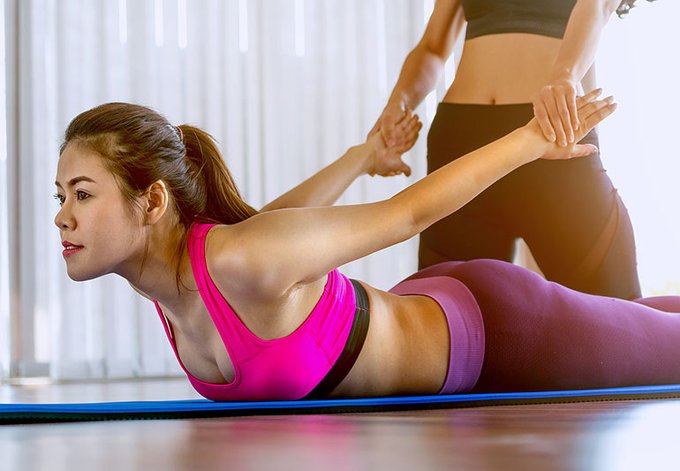
Thai yoga bodywork has an eastern flavor informed by yoga, Ayurveda, and Buddhism. It combines rhythmic massage, assisted yoga poses, acupressure along energy meridians, healing energy work, and meditation.

Tanya Boigenzahn, director of Devanadi School of Yoga and Wellness in Minneapolis, says Thai yoga bodywork can help athletes with flexibility, alignment, and breath control, as well as their mental game—mood, concentration, confidence.

Thai yoga is accomplished in a one-on-one session with clothes on. The therapist moves a passive client through positions, stretching tight areas, and encouraging range of motion and mindful breathwork.

Boigenzahn says Thai yoga helps optimize training pre-event, and eases recovery afterward. “Athletes can expect to have a quicker bounce back time, as well as less discomfort after a tough event.”

Rolfing
Origin: USA

Ida Rolf thought that pain, inefficient movement, and imbalance was were the result of the body being improperly organized around its axis. In New York during the 1940s, Rolf began reorganizing clients’ bodies by manipulating fascia—the connective tissue separating muscles and other organs— which developed into the therapeutic approach called Rolfing Structural Integration. “It’s a combination of participatory bodywork and active experimentation with body movement education,” says Kevin McCarthy, an advanced rolfer with In|Form Rolfing in Minneapolis. “We teach clients how to be aware of and work with their body for better function.”

Rolfing is a holistic approach that seeks to find the source of the dysfunction rather than merely treat the symptom. “Participatory” is a key word, McCarthy says.

“Unlike most forms of massage where you’re lying passively on a table, we’re asking, ‘Can you stand up using the outside of your leg? Do you notice the difference in how that feels?’” he says. “We’re using the body to repattern the brain.”

Because it involves education, rolfing is not a one-and-done—a rolfing treatment is actually usually a series of 10 sessions.

How to fit in your work out at home – Katie Lawton MEd @ClevelandClinic #consistency

cleveland work out at home

Whether you’re a fitness fanatic or casual gym goer, the thought of picking up a dumbbell covered in germs is enough to make anyone cringe. And with the spread of coronavirus (COVID-19) becoming more prominent every day, gyms and fitness centers across the country are closing their doors to help protect members.

If staying active is an important part of your life (as it should be!) you might be wondering how you’re supposed to go about this whole at-home workout thing. Thankfully, it’s easier than you think.

“A lot of what you’ll find with at-home workouts is about maintaining your current level of fitness,” explains exercise physiologist Katie Lawton. “And with workouts, consistency is key.”

Here Lawton shares some practical advice about how to stay active at home.

  1. Find workouts through online videos and apps. The internet is choked full of free workout videos. From yoga, to Zumba, to circuit training that you can do in your backyard. Test out a few workouts to find a series, program or instructor that you like. (Bonus points if you can get other members of your household to join you!)
  2. Walk, run or bike outside. Everyone could use a little fresh air. Hit the pavement in your neighborhood and challenge yourself to walk, run or bike a certain number of minutes or miles. If you’re an experienced fitness buff and you’re really looking to ramp up your heart rate, opt for hills or try a running based HIIT workout.
  3. Focus on body weight movements. Now’s the time to incorporate body weight exercises into your workouts. These tried and true movements include things like pushups, squats, lunges, planks and burpees. They’re convenient, efficient and inexpensive (AKA free). Pick a few different movements and create a circuit workout by completing as many reps of that one movement as possible in one minute. Then rest for a minute and continue on to the next movement and do the same thing. Repeat this for 15 to 20 minutes.
  4. Order inexpensive fitness equipment online. Things like jump ropes, pull up bars that attach to door frames, suspension trainers and resistance bands are inexpensive items that can pack a punch when it comes to your workouts. Lawton recommends choosing a heavier resistance band and suggests tying the suspension trainer to a tree outside. You could also ask around if other family members or neighbors have old dumbbells or barbells that they no longer use.
  5. Utilize items around your house. Lawton encourages creativity when it comes to working out at home. Run up and down your basement stairs, use a chair for triceps dips or grab cans of soup or a gallon of water as a weight. Even jumping over a shoebox a few times can be a quick burst of cardio.
  6. Get your household involved. If you have kids, chances are they have more energy to burn off than you know what to do with and they’d be thrilled to be involved. Try to incorporate them into your plans to stay active – whether it’s encouraging them to do pushups with you or organizing a backyard obstacle course. Try to walk your dog every day, play tag with your kids or get your whole family involved in a backyard soccer game. Also never underestimate the power of a good dance party! It’s a great way to make memories with your family and burn off some stress and anxiety.

Linkedin Pinterest