
Core exercises train the muscles in your pelvis, lower back, hips and abdomen to work in harmony. Learn more and find out why core exercises are an important part of a well-rounded fitness program.  https://mayocl.in/2oZ4fPd
Health & Wellbeing
Core exercises train the muscles in your pelvis, lower back, hips and abdomen to work in harmony. Learn more and find out why core exercises are an important part of a well-rounded fitness program. https://mayocl.in/2oZ4fPd


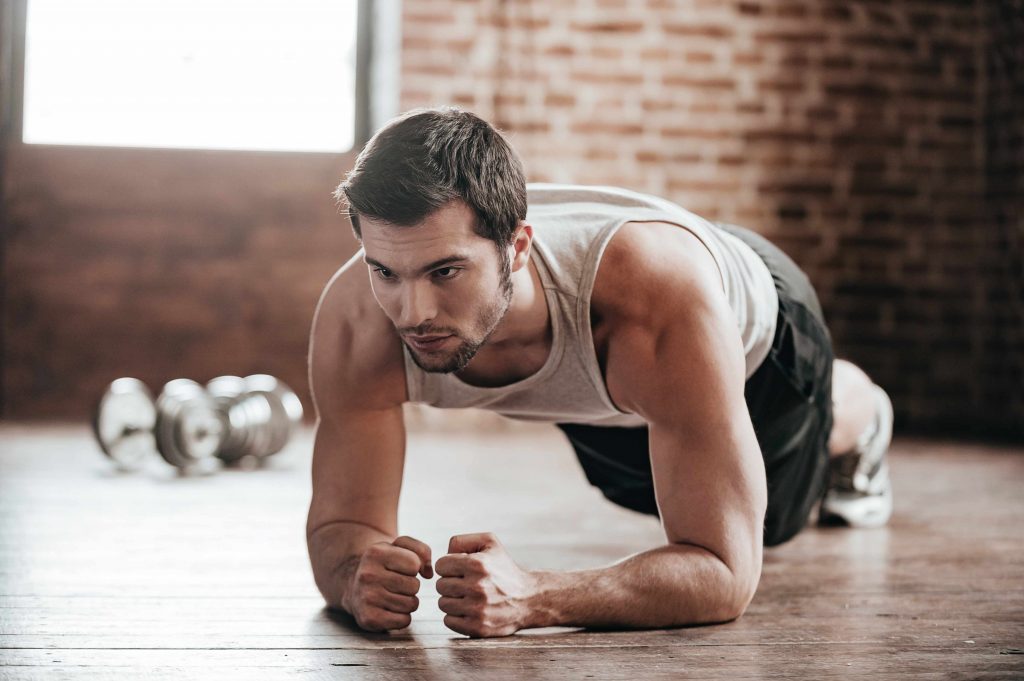
Once you’ve nailed the proper plank form, challenge yourself with these slight modifications—they’ll help you really tap into all the benefits you can get from spending that time on your hands and forearms.
Clasping your hands in a forearm plank makes the exercise feel easier—but that means you’re not maxing out the benefits. “It can also promote a rounded posture instead of a stable, upright one,” says O’Brien, and that’s the opposite of what you’re going for in this position. Instead, press your palms into the floor. “That will create more shoulder engagement and stability as a bonus.”
A straight arm plank is going to be more challenging, says O’Brien. “Dropping to the elbows can help you maintain proper form because it’s easier to hold,” she says. It’s a great option for someone who isn’t yet strong enough to maintain an engaged core and flat back (it also takes some of the work off of the shoulders, if that’s a problem area for you).
It’s tempting to grit your teeth as you hold the pose, but you want to inhale and exhale steadily throughout. “Breathing will help you consciously engage the transverse abdominis muscle,” says DuFlo. “If you see your belly doming or bulging outward along midline, it means you are likely not engaging this correctly or holding your breath.”
RELATED: 5 Strength Training Myths for Runners (and the Truth Behind Them)
If holding a plank for a minute or more is easy for you, place your palms, forearms, or feet on a pillow, BOSU ball, Swiss ball, or other unstable surface. “That can kick on the deeper core, the transverse abdominis, in a different way, and just add an additional challenge to your other muscles,” says DuFlo.
There are tons of ways to make a plank more challenging, in addition to targeting other muscles that will help your running form. Spider planks (bringing your knee to tap the same shoulder) and windshield wiper planks (where you extend one leg at a time out towards the hip) help with the hip rotator muscles, for example, while reverse planks activate the glutes and stretch the chest, says O’Brien. Just make sure you can maintain good form while doing these harder variations.
RELATED: I Completely Swear By This 3-Move Core-Strengthening Sequence
0
Once you’ve nailed the proper plank form, challenge yourself with these slight modifications—they’ll help you really tap into all the benefits you can get from spending that time on your hands and forearms.
Clasping your hands in a forearm plank makes the exercise feel easier—but that means you’re not maxing out the benefits. “It can also promote a rounded posture instead of a stable, upright one,” says O’Brien, and that’s the opposite of what you’re going for in this position. Instead, press your palms into the floor. “That will create more shoulder engagement and stability as a bonus.”
A straight arm plank is going to be more challenging, says O’Brien. “Dropping to the elbows can help you maintain proper form because it’s easier to hold,” she says. It’s a great option for someone who isn’t yet strong enough to maintain an engaged core and flat back (it also takes some of the work off of the shoulders, if that’s a problem area for you).
It’s tempting to grit your teeth as you hold the pose, but you want to inhale and exhale steadily throughout. “Breathing will help you consciously engage the transverse abdominis muscle,” says DuFlo. “If you see your belly doming or bulging outward along midline, it means you are likely not engaging this correctly or holding your breath.”
RELATED: 5 Strength Training Myths for Runners (and the Truth Behind Them)
If holding a plank for a minute or more is easy for you, place your palms, forearms, or feet on a pillow, BOSU ball, Swiss ball, or other unstable surface. “That can kick on the deeper core, the transverse abdominis, in a different way, and just add an additional challenge to your other muscles,” says DuFlo.
There are tons of ways to make a plank more challenging, in addition to targeting other muscles that will help your running form. Spider planks (bringing your knee to tap the same shoulder) and windshield wiper planks (where you extend one leg at a time out towards the hip) help with the hip rotator muscles, for example, while reverse planks activate the glutes and stretch the chest, says O’Brien. Just make sure you can maintain good form while doing these harder variations.
RELATED: I Completely Swear By This 3-Move Core-Strengthening Sequence
0
Once you’ve nailed the proper plank form, challenge yourself with these slight modifications—they’ll help you really tap into all the benefits you can get from spending that time on your hands and forearms.
Clasping your hands in a forearm plank makes the exercise feel easier—but that means you’re not maxing out the benefits. “It can also promote a rounded posture instead of a stable, upright one,” says O’Brien, and that’s the opposite of what you’re going for in this position. Instead, press your palms into the floor. “That will create more shoulder engagement and stability as a bonus.”
A straight arm plank is going to be more challenging, says O’Brien. “Dropping to the elbows can help you maintain proper form because it’s easier to hold,” she says. It’s a great option for someone who isn’t yet strong enough to maintain an engaged core and flat back (it also takes some of the work off of the shoulders, if that’s a problem area for you).
It’s tempting to grit your teeth as you hold the pose, but you want to inhale and exhale steadily throughout. “Breathing will help you consciously engage the transverse abdominis muscle,” says DuFlo. “If you see your belly doming or bulging outward along midline, it means you are likely not engaging this correctly or holding your breath.”
RELATED: 5 Strength Training Myths for Runners (and the Truth Behind Them)
If holding a plank for a minute or more is easy for you, place your palms, forearms, or feet on a pillow, BOSU ball, Swiss ball, or other unstable surface. “That can kick on the deeper core, the transverse abdominis, in a different way, and just add an additional challenge to your other muscles,” says DuFlo.
There are tons of ways to make a plank more challenging, in addition to targeting other muscles that will help your running form. Spider planks (bringing your knee to tap the same shoulder) and windshield wiper planks (where you extend one leg at a time out towards the hip) help with the hip rotator muscles, for example, while reverse planks activate the glutes and stretch the chest, says O’Brien. Just make sure you can maintain good form while doing these harder variations.
RELATED: I Completely Swear By This 3-Move Core-Strengthening Sequence
0

Mayo Clinic Sports @mayoclinicsport 11 hours ago
The abdominal crunch is one of the most common exercises used to strengthen your core. The stronger your core muscles, the easier it is to do most physical activities and sports #FitTipFriday https://mayocl.in/2Rg6GKJ
Mayo Clinic Sports @mayoclinicsport 11 hours ago
The abdominal crunch is one of the most common exercises used to strengthen your core. The stronger your core muscles, the easier it is to do most physical activities and sports #FitTipFriday https://mayocl.in/2Rg6GKJ
Once you’ve nailed the proper plank form, challenge yourself with these slight modifications—they’ll help you really tap into all the benefits you can get from spending that time on your hands and forearms.
Clasping your hands in a forearm plank makes the exercise feel easier—but that means you’re not maxing out the benefits. “It can also promote a rounded posture instead of a stable, upright one,” says O’Brien, and that’s the opposite of what you’re going for in this position. Instead, press your palms into the floor. “That will create more shoulder engagement and stability as a bonus.”
A straight arm plank is going to be more challenging, says O’Brien. “Dropping to the elbows can help you maintain proper form because it’s easier to hold,” she says. It’s a great option for someone who isn’t yet strong enough to maintain an engaged core and flat back (it also takes some of the work off of the shoulders, if that’s a problem area for you).
It’s tempting to grit your teeth as you hold the pose, but you want to inhale and exhale steadily throughout. “Breathing will help you consciously engage the transverse abdominis muscle,” says DuFlo. “If you see your belly doming or bulging outward along midline, it means you are likely not engaging this correctly or holding your breath.”
RELATED: 5 Strength Training Myths for Runners (and the Truth Behind Them)
If holding a plank for a minute or more is easy for you, place your palms, forearms, or feet on a pillow, BOSU ball, Swiss ball, or other unstable surface. “That can kick on the deeper core, the transverse abdominis, in a different way, and just add an additional challenge to your other muscles,” says DuFlo.
There are tons of ways to make a plank more challenging, in addition to targeting other muscles that will help your running form. Spider planks (bringing your knee to tap the same shoulder) and windshield wiper planks (where you extend one leg at a time out towards the hip) help with the hip rotator muscles, for example, while reverse planks activate the glutes and stretch the chest, says O’Brien. Just make sure you can maintain good form while doing these harder variations.
RELATED: I Completely Swear By This 3-Move Core-Strengthening Sequence
0
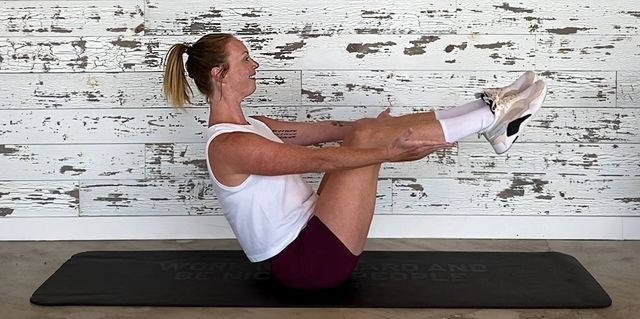
Whether you’re trying to build a six-pack or just trying to tone your body, ab workouts are a terrific way to get in shape and strengthen your core. Plus, ab exercises require no extra equipment and can be done from just about anywhere.
But there are many variations of ab workouts, so it can be hard to know which ones to try. To get a better idea of where to start, we talked to exercise physiologist Katie Lawton about six great ab workouts to add to your workout routine.
While these exercises all focus on your abdomen muscles, they also strengthen your entire core. Your abs are simply a component of the core muscle group, which includes the oblique muscles along your side, your gluteal muscles, certain muscles along your spine, your diaphragm, muscles of your pelvic floor and hip flexors.
Your core provides stability for your entire body and impacts your movements. Core strength even affects your posture and back pain. The bottom line: A healthy, strong core is important for your overall health.
Before getting down to the floor and getting your workouts in, though, Lawton has a few tips to remember.
Keeping these tips in mind, you can get started on all of these exercises. Be sure to wear comfortable workout clothing, but make sure your gear isn’t so loose it interferes with your movement.
And since these workouts all involve being on the floor, make sure you’ve got a yoga or workout mat that provides some padding and can keep you comfortable while you go through your reps.
Crunches are probably the most well-known of the major ab workouts, a variation on the classic sit-up. They’re also very simple to do, though you need to take care you don’t exacerbate any back and neck injuries.
“They’re a great workout that targets your abs and strengthens your core,” says Lawton. “But if you have any disc issues, complications or neck problems, you might want to skip crunches because of the stress that can be put on those parts of the body.”


